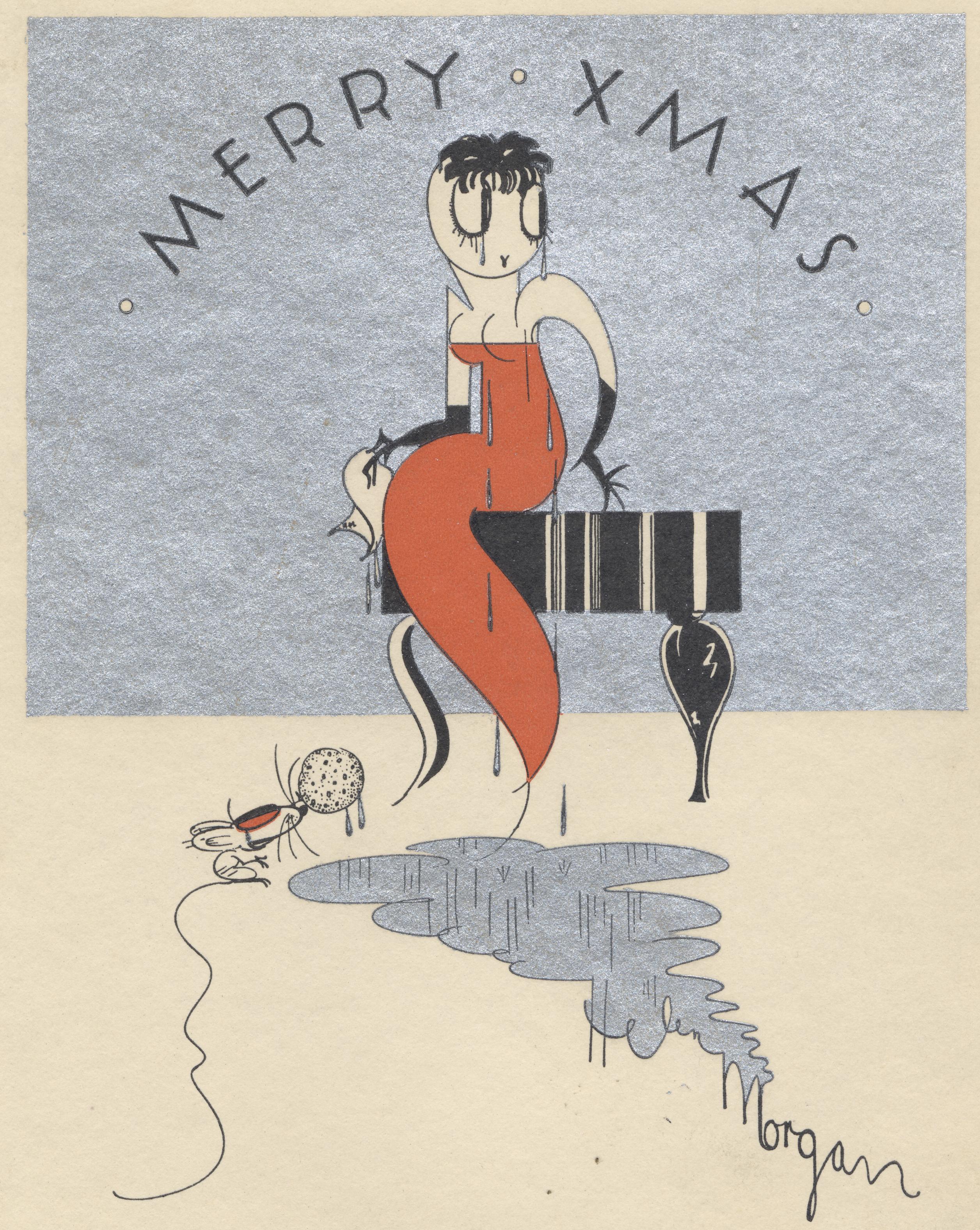
Ninety years ago today, Helen Morgan waxed her final commercial recordings.
Taking what she believed would be a month-long break to play club dates in Florida, Morgan entered the Brunswick studio to put down three vocals.
The first was “I See Two Lovers,” her song from the 1935 Warner Brothers musical Sweet Music. Oddly enough, the flip side of what became Brunswick 7391 was “Winter Overnight,” her other song intended for Sweet Music. Brunswick, a subsidiary of Warners, accepted her attempt at “Winter Overnight,” but rejected “I See Two Lovers.” Warners cut “Winter Overnight” but kept “I See Two Lovers” in the film.
Four and a half weeks later, Helen tried again and made Brunswick proud. Adding to the convoluted turn of events, Columbia appears to have issued the rejected take on its Art Deco CD series.
The song, by Mort Dixon and Allie Wrubel, was intended for Dick Powell in the 1934 Warners musical Flirtation Walk. Powell recorded it, with a slightly different lyric.
Morgan’s second vocal was “The Little Things You Used to Do,” her Harry Warren/Al Dubin song from her second Warners film, Go Into Your Dance.
Warner’s initial plan was for Morgan to have two numbers in each film. In the case of Go Into Your Dance, the issue was illness. Not Morgan’s, but songwriter Harry Warren. His temporary incapacitation put the writers behind schedule and rather than delay production, Warners kept the cue in the completed film, but inserted an off-screen reprise of “The Little Things You Used to Do” in its place.
To back “Little Things” on Brunswick 7424, Helen turned to her friend and former accompanist Louis Alter. She sang a song Alter wrote with Edward Heyman for the Poverty Row release Dizzy Dames. Florine McKinney sang “I Was Taken By Storm” on the screen, but Helen Morgan recorded it.
Morgan continued to sing and make films, but not for Warner Brothers. With the cancellation of her film contract came the cancellation of her association with Brunswick. And so, unknown to all parties at the time, on January 9, 1935, the chanteuse, recently made an officer in the American Society of Recording Artists … ended her career as a recording artist.
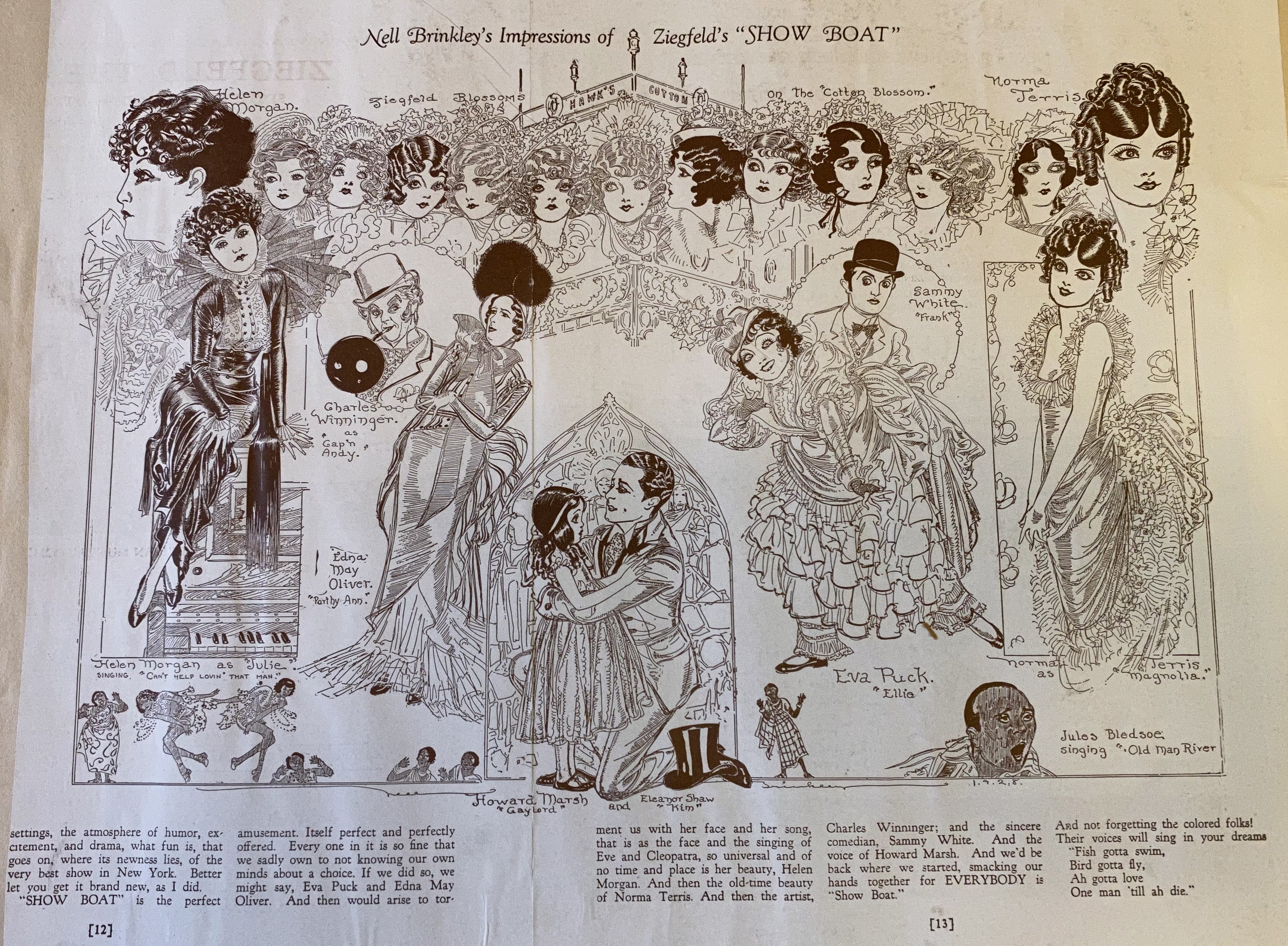
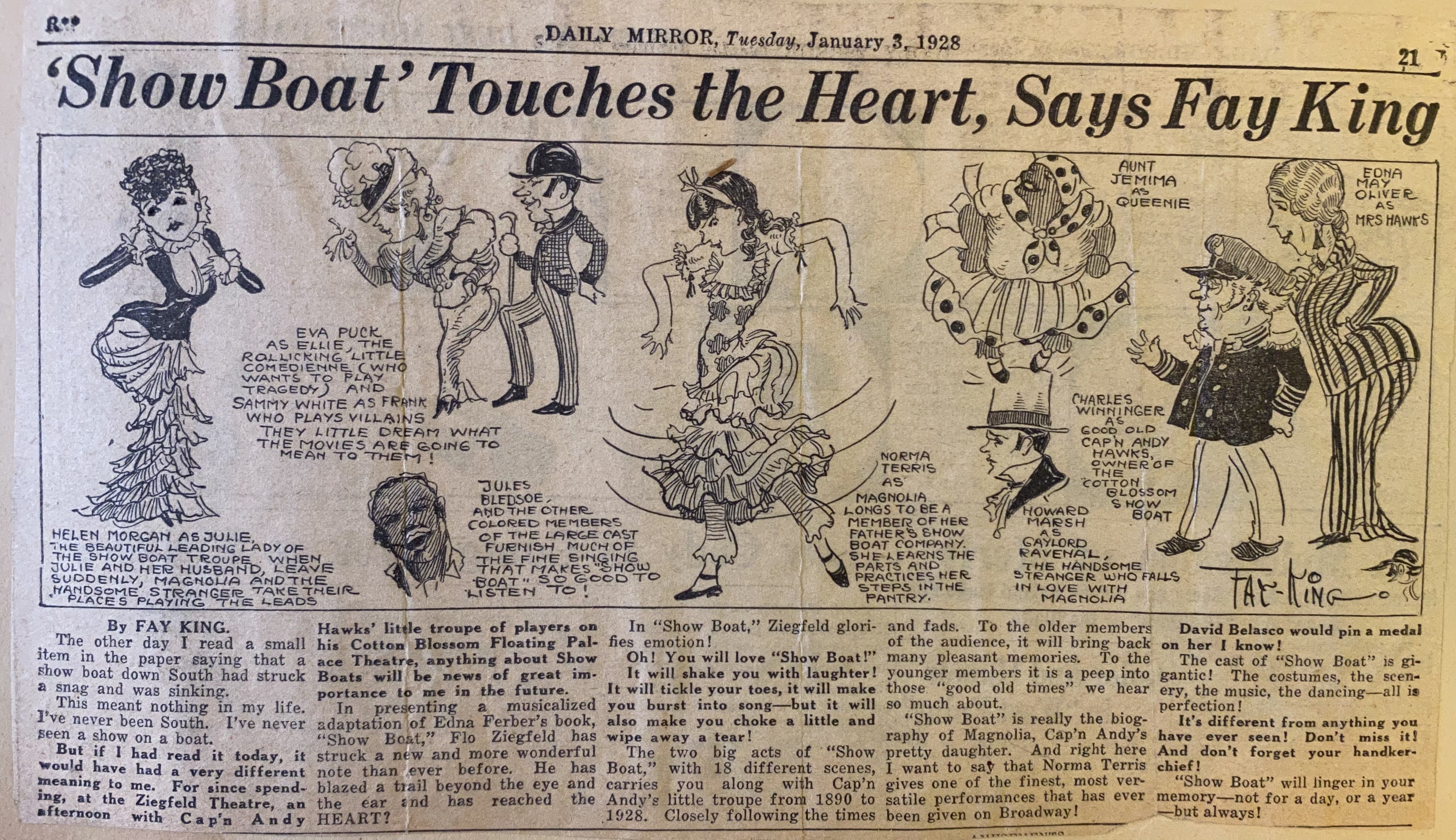
On January 5, 1946, seventy-nine years ago today, Show Boat returned to Broadway … and the Ziegfeld Theatre.
The production marked the first major American production of the perennial favorite without Helen Morgan as Julie, who had passed four years before.
For this production, Oscar Hammerstein II heavily revised his original book to mirror the style of his still-running revolutionary hit shows Oklahoma! and Carousel. Robert Russell Bennett also revisited his 1927 orchestrations.
Jerome Kern composed a new song for Kim to sing in the final scene. Sadly, “Nobody Else But Me” turned out to be the last song Kern ever composed. (Kern passed suddenly eight weeks before opening night.)
While planning its 1951 film re-make, MGM ear-marked Judy Garland to play Julie. To beef up her part, she was assigned “Nobody Else But Me.” Instead of leading a production number, the song was slowed down and delivered as a ballad during the miscegenation scene.
Well, it would have, had Garland stayed at Metro. When the studio dismissed her, they cut the song, although the cue remains in John Lee Mahin’s screenplay.
A few subsequent productions, notably the 1971 London outing, borrowed MGM’s idea. Here’s the London Julie, Cleo Laine, having her go at “Nobody Else But Me.”
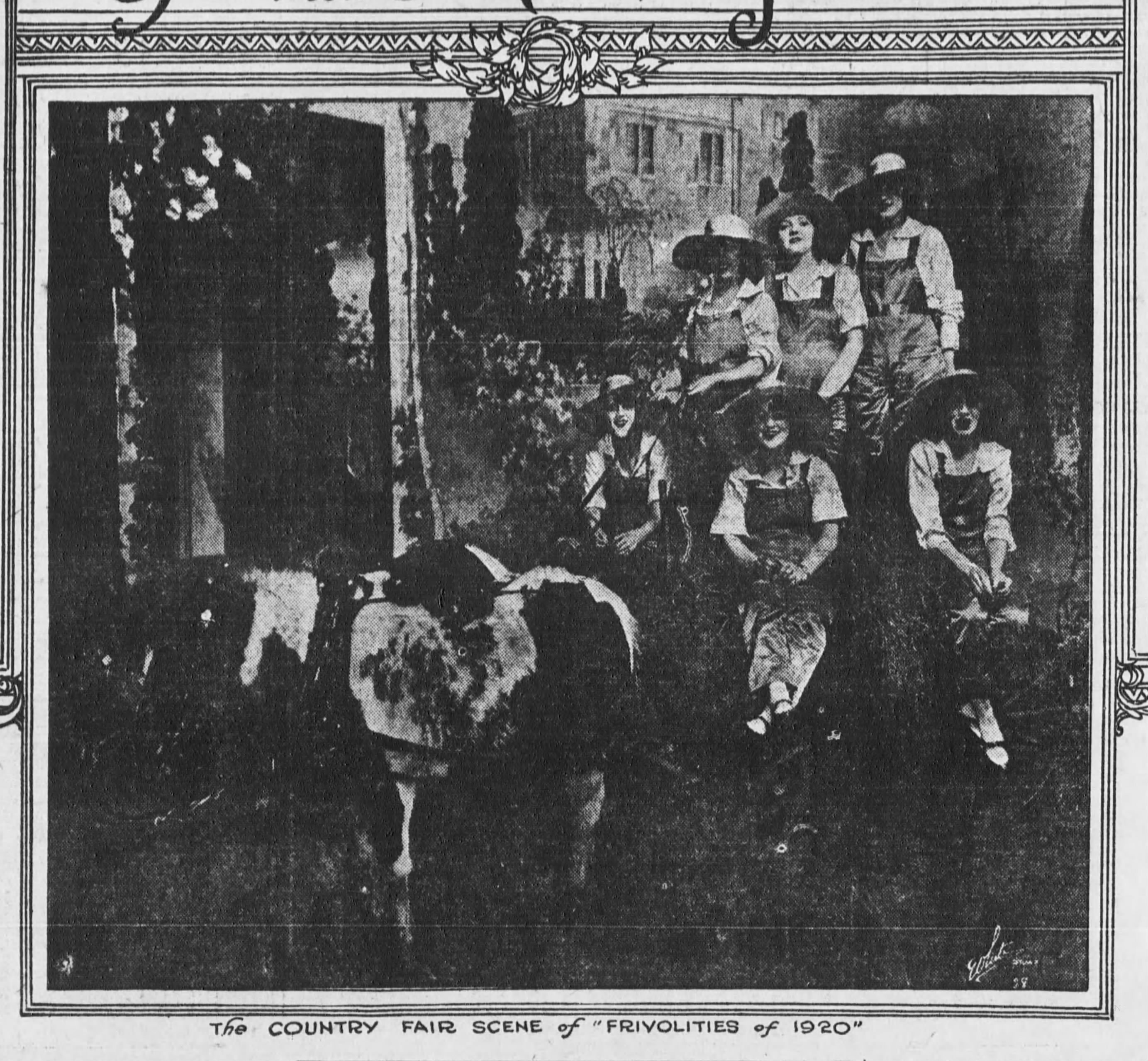
… 1920, the Frivolities of 1920 closed, and with it went Helen Morgan’s first job in a revue with a Broadway pedigree.
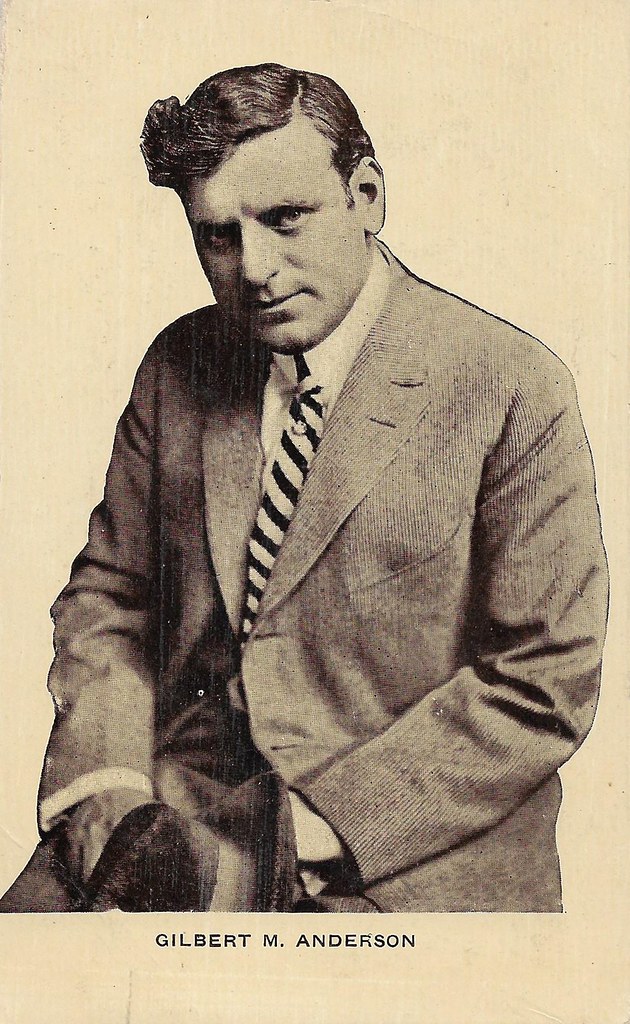
G. M. Anderson is best remembered as film pioneer “Bronco Billy.” He appeared in Edwin Porter’s 1903 The Great Train Robbery. In 1907, with George Kirke Spoor, he founded Essanay Studios. A decade later, Anderson became a Broadway producer and acquired the Longacre Theatre, where he produced four undistinguished plays between January 1918 and February 1919. Deciding that plays were not his ideal medium, he jumped on the bandwagon of those wishing to cash in on Ziegfeld’s Follies blueprint. With William Anthony McGuire to direct and write the sketches and, making his Broadway debut, William B. Friedlander to handle the score, Anderson readied his Friviolities of 1919 for a fall production.
Even in the most capable of hands, a revue of this size would be a daunting task, but for the three neophytes, the growing pains were excruciating. The 1919 Equity Strike of August-September 1919 put the production behind schedule and a late October tryout confirmed that the concoction was half-cooked. Anderson brought the production back into New York for more rehearsals … and for his writers to generate better material.[i]
On December 8, Anderson tried again, at the Boston Opera House.[ii] Critical and audience reaction was stronger than it had been in October, and, still called the Frivolities of 1919, the show opened at the 44th Street Theatre on January 6, 1920.[iii] The combination of bad reviews, an influenza outbreak, and a blizzard forced the production to shutter on Broadway after only seven and a half weeks.
With its box office momentum shattered, the production went to the road. A three week stand in Philadelphia was followed by one-week jumps throughout the Mid-Atlantic and Great Lakes cities throughout May.
So certain that the Democratic National Conventioneers would want a break from the action to ogle the girls, the Blake and Amber Agency sent several to join the company in Salt Lake City on June 10 to augment the line before the show arrived in San Francisco and the convention.[iv] Although in later years, Production Manager Frank Hill remembered scrambling in Chicago to fill the ranks of his chorus prior to the Broadway opening, more than likely, his faulty memory concerned this push to back-fill his back line. In any event, one day a girl trio auditioned. The Morgan girl seemed too shy to be a successful chorine, but, with so many spots to fill, in desperation, Hill hired her anyway.[v]
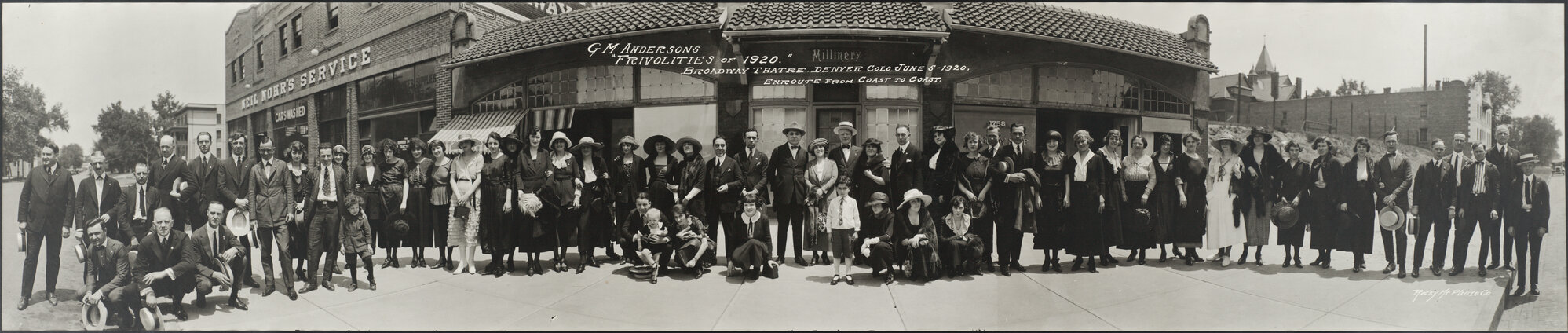
Some/most/all of the Frivolities cast during the Denver stand, just prior to Helen Morgan’s likely debut with the company.
Between Salt Lake and San Francisco, the show played a profitable week in Los Angeles. It was lucrative for the girls as well, as they spent their daytime hours appearing with Jimmy Aubrey and Oliver Hardy in a Vitagraph short.[vi] The Frivolities made money on the Barbary Coast. Anderson added an additional performance to lure conventioneers at a time when they would be expected on the floor, but in he end, the stand was not the goldmine he had banked on. However, when he did not pay his choristers for the extra performance, complaints were filed with Equity[vii] Specialty dancers Joseph Cole and Gertrude Denahy were also added to the Frivolities while in San Francisco. The couple debuted on July 6, were given a few requests for changes, but when they returned the following night, they were informed they had been cut from the show. When Anderson refused to pay them for the one performance, they sued, and Anderson, claiming there was no contract and he was merely offering the dancers a tryout, was arrested.[viii] By point of contrast, the Barr Twins (specialty dancers) left the show just prior to the exodus out west. One sister claimed to be ill. Perhaps, but a month later, the sister act was back on Broadway in the Shubert revue Cinderella on Broadway. Anderson sued them for the oddly precise sum of $4700.
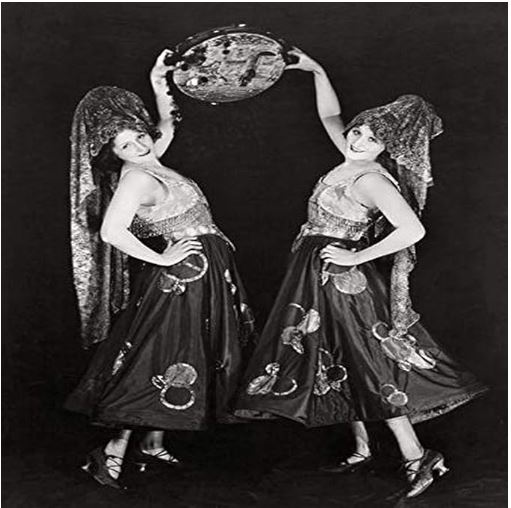
The Barr Twins – in their “Spanish Movement” specialty
In August, the production returned to San Francisco for an additional two weeks … but at reduced prices. After Labor Day, business dried up and money problems haunted the production. While in Oakland, the Gille Show Print Company attached the production for an outstanding bill of $700. No sets or costumes were permitted to leave the theatre until the bill was settled.[ix] Beginning August 29, the company endured fourteen weeks of (almost exclusively) one and two-night stands as the tired production inched its way back to the mid-west. If Helen did not join the company on the trip out west, she joined later in the fall.
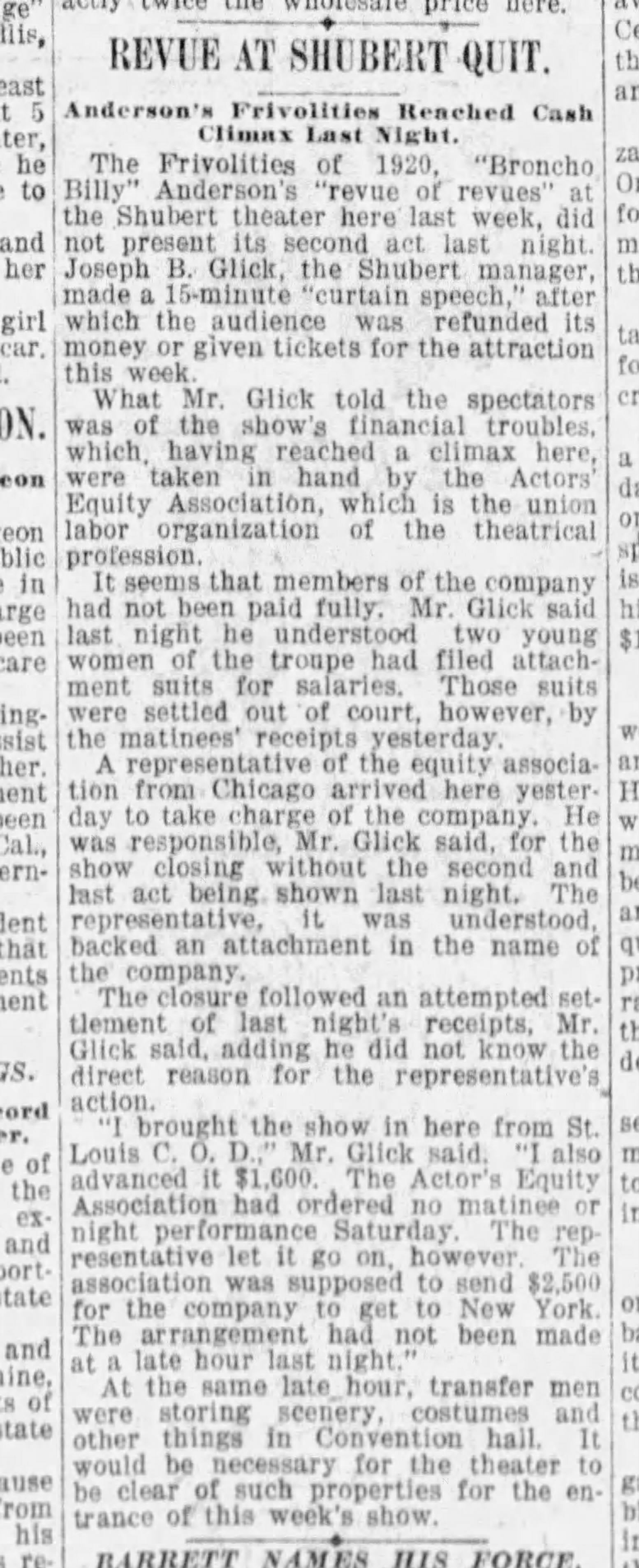
In December, things began to look up for the company as it settled back into full-week stands, but business in St. Louis was so bad, the production transferred to Kansas City C.O.D. The advance in Kansas City was adequate, but the press panned the production, which effectively dried up business for the remainder of the run. With no hope for payment, chorus girls Kittie Kelley and Marion Taylor appealed to a free legal aid society, claiming they had not received a penny in two weeks. Then …
The Kansas City Star, December 19, 1920
The production was stored in the Kansas City Convention Hall until May 1921, when Equity sold the collection, valued at $160,000 … for $7,000. It is unclear just who ended up with the Frivolities production, although in September, Anderson himself announced plans to produce a Frivolities of 1921, based on his original production.[x] In any event, a tabloid production with a new and unknown cast played two performances a day well into 1922.[xi]
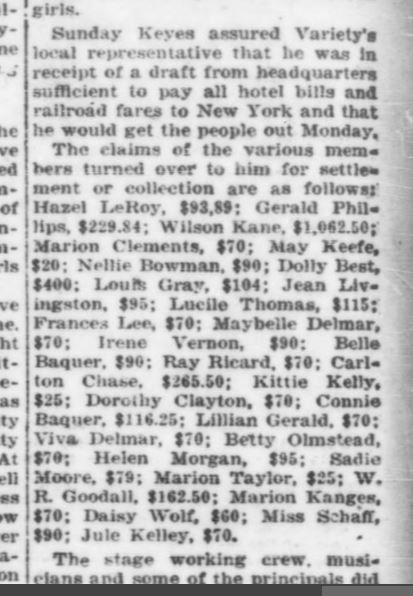
Equity made good on their promise to the company, many of whom had been subsisting on apples. One girl, who had threatened to quit a month or so before the contretemps was told she could walk back to Chicago if she didn’t like how she had been treated.[xii] Among the claims for back payment came one note for $95 … from Helen Morgan.[xiii]
Part of Anderson’s cash-flow problem was his new production, a west coast revival and tour of his last Longacre production, Just Around the Corner.[xiv]The production broke in at San Francisco’s Savoy on October 18 and, again, played one and two-nights stands anywhere west of the Mississippi where Anderson could find a booking. Business was no better and this company had also gone two weeks without payment when Anderson, on his own terms, closed the production on Christmas night at the Pueblo Opera House. Equity, once again, stepped in and wired money to the company to get back to San Francisco.[xv]
Below is the Frivolities schedule, from its Broadway premiere to its eventful closing night, one hundred and four years ago.
[iii]Frivolities of 1920 (January 8m 1920, 44th Street Theatre) The cast boasted the services of Edward Gallagher, just prior to his reteaming with Al Shean.
[v] Soanes, Wood. “Curtain Calls” Oakland Tribune, October 15, 1936, p. 27. The whole quote is: “[This is] the same youngster I hired for the line in Chicago one time with G. M. Anderson’s Frivolities. We’d had to get a few girls and I send (sic) the stage management out to rustle up some local talent. A trio showed up and one of them was a black-haired youngster who seemed altogether too shy to be a chorine. I hired her in desperation and she went on to New York with us. Always minded her own business and never showed up around the office except on pay nights. Somebody told me that she had tried out for opera but couldn’t cut the buck. Well, we finally folded, as you know, and I never saw her again until tonight.”
[vi]The Portsmouth Times, August 29, 1920, p. 18. identified this short as Paradise Alley. According to Richard M Roberts, “Paradise Alley” was the nickname for the Vitagraph tenement/slum set. Perhaps the short was His Jonah Day.
[viii]New York Clipper, July 28, 1920, p. 5. – Anderson apparently felt he could engage any act on a trial basis, contract or no contract. Saxi Holtsworth and his Jazz Band were promised 6 weeks employment at $300 per on October 18, 1919, but on November 4, 1919, while the show was back in New York for repairs, they received a letter stating their services were no longer required. They sued for the remaining four weeks of salary promised them. Variety, February 13, 1920, p. 13.
Ninety-one years ago today, Utah (yes, Utah) became the thirty-sixth state to ratify the 21st Amendment to the U. S. Constitution, thereby repealing the 18th Amendment, a.k.a., Prohibition.
And Utah did so unanimously.
For the record, the 18th Amendment, ratified on January 16, 1919 and which went into effect January 17, 1920 stated:
After one year from the ratification of this article the manufacture, sale, or transportation of intoxicating liquors within, the importation thereof into, or the exportation thereof from the United States and all territory subject to the jurisdiction thereof for beverage purposes is hereby prohibited.
The 21st stated:
The eighteenth article of amendment to the Constitution of the United States is hereby repealed.
However, the amendment added:
This article shall be inoperative unless it shall have been ratified as an amendment to the Constitution by conventions in the several States, as provided in the Constitution, within seven years from the date of the submission hereof to the States by the Congress.
Repeal did not take seven years to ratify. It took just over seven months.
On February 20, 1933, Congress passed the Blaine Act. The order of ratification at the state level is as follows:
Michigan: April 10, 1933 (99–1)
Wisconsin: April 25, 1933 (15–0)
Rhode Island: May 8, 1933 (31–0)
Wyoming: May 25, 1933 (65–0)
New Jersey: June 1, 1933 (202–2)
Delaware: June 24, 1933 (17–0)
Indiana: June 26, 1933 (246–83)
Massachusetts: June 26, 1933 (45–0)
New York: June 27, 1933 (150–0)
Illinois: July 10, 1933 (50–0)
Iowa: July 10, 1933 (90–0)
Connecticut: July 11, 1933 (50–0)
New Hampshire: July 11, 1933
California: July 24, 1933
West Virginia: July 25, 1933
Arkansas: August 1, 1933
Oregon: August 7, 1933
Alabama: August 8, 1933
Tennessee: August 11, 1933
Missouri: August 29, 1933
Arizona: September 5, 1933
Nevada: September 5, 1933
Vermont: September 23, 1933
Colorado: September 26, 1933
Washington: October 3, 1933
Minnesota: October 10, 1933
Idaho: October 17, 1933
Maryland: October 18, 1933
Virginia: October 25, 1933
New Mexico: November 2, 1933
Florida: November 14, 1933
Texas: November 24, 1933
Kentucky: November 27, 1933
Ohio: December 5, 1933
Pennsylvania: December 5, 1933
Utah: December 5, 1933 (20–0)
On the 5th of December, at exactly 5:33 in the afternoon, Joe Weber of Weber and Fields downed a glass of champagne in the Hunting Room of the Hotel Astor and New York went wet, but not wild.[i] Most nightclubs limited themselves to beer, wine, and champagne, lest some last-minute snag cause a legal hangover. Cocktails would wait a bit.
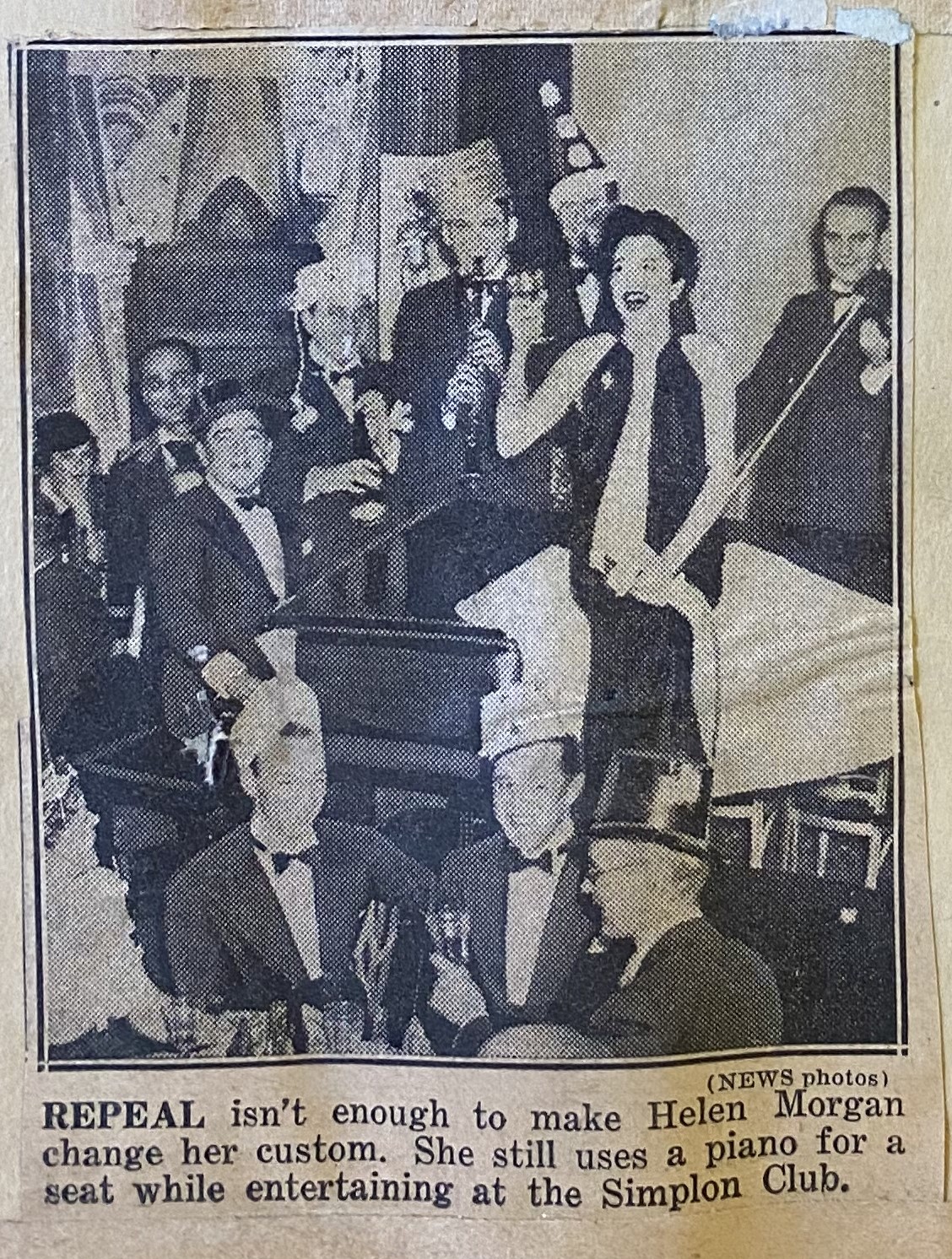
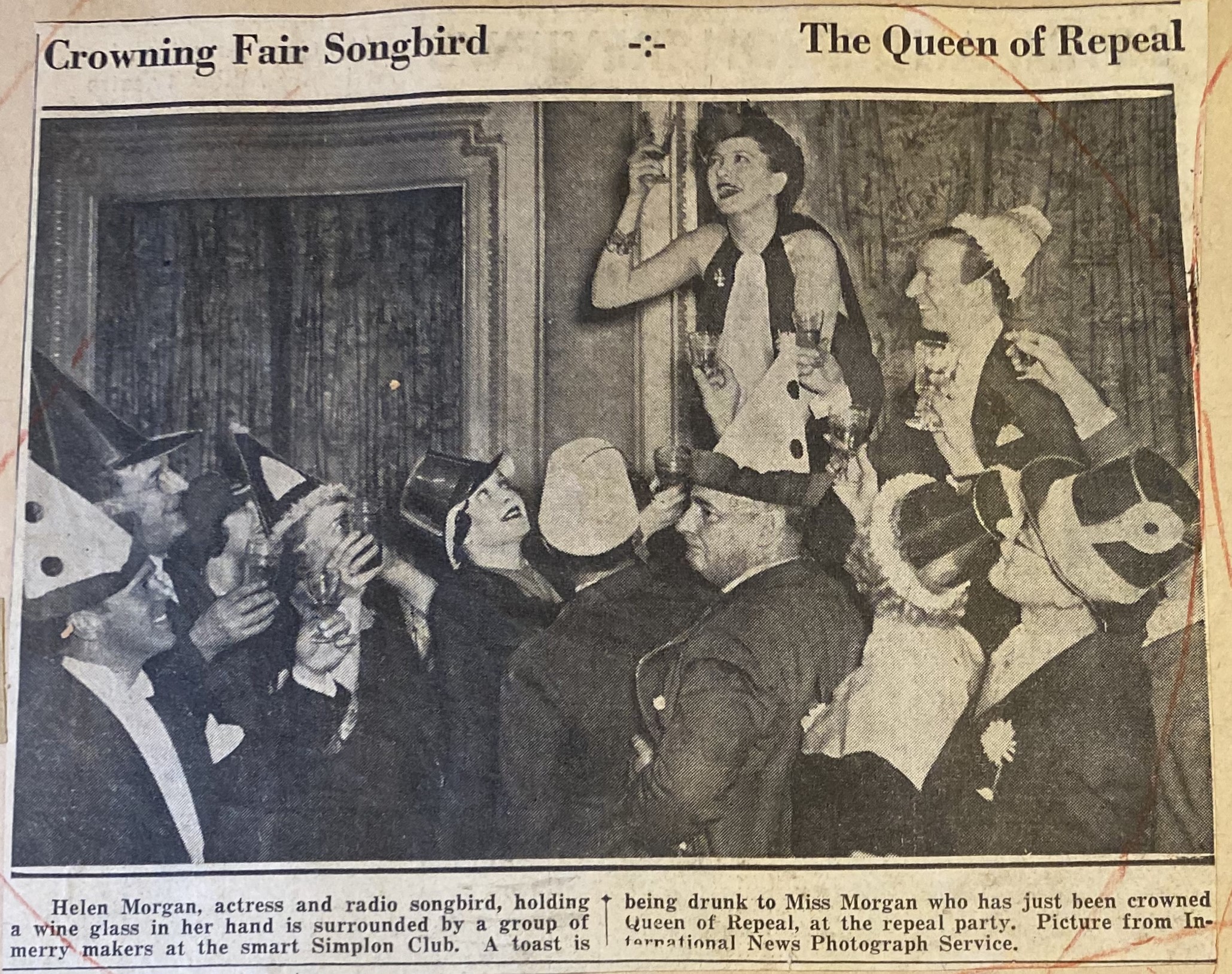
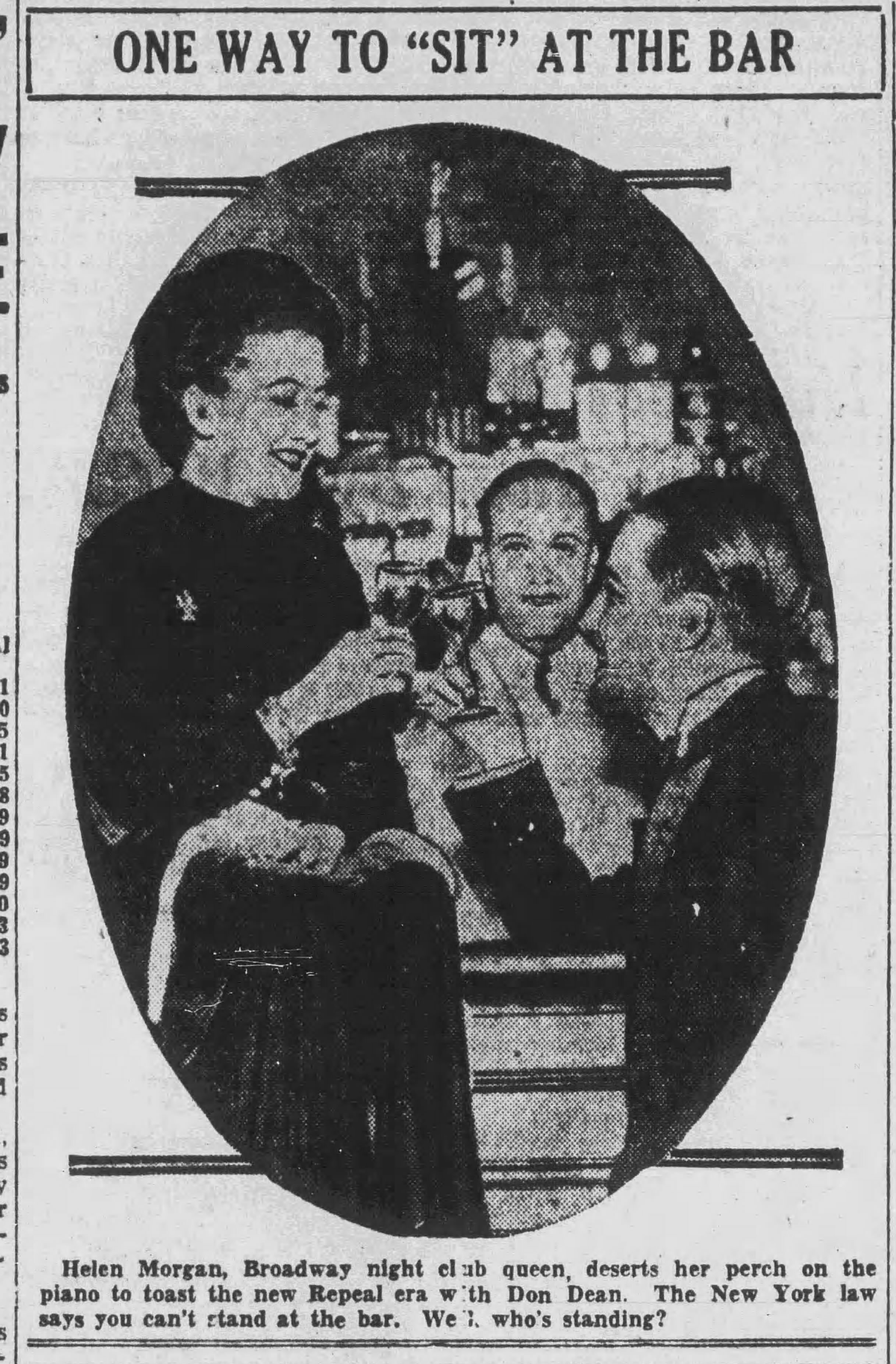
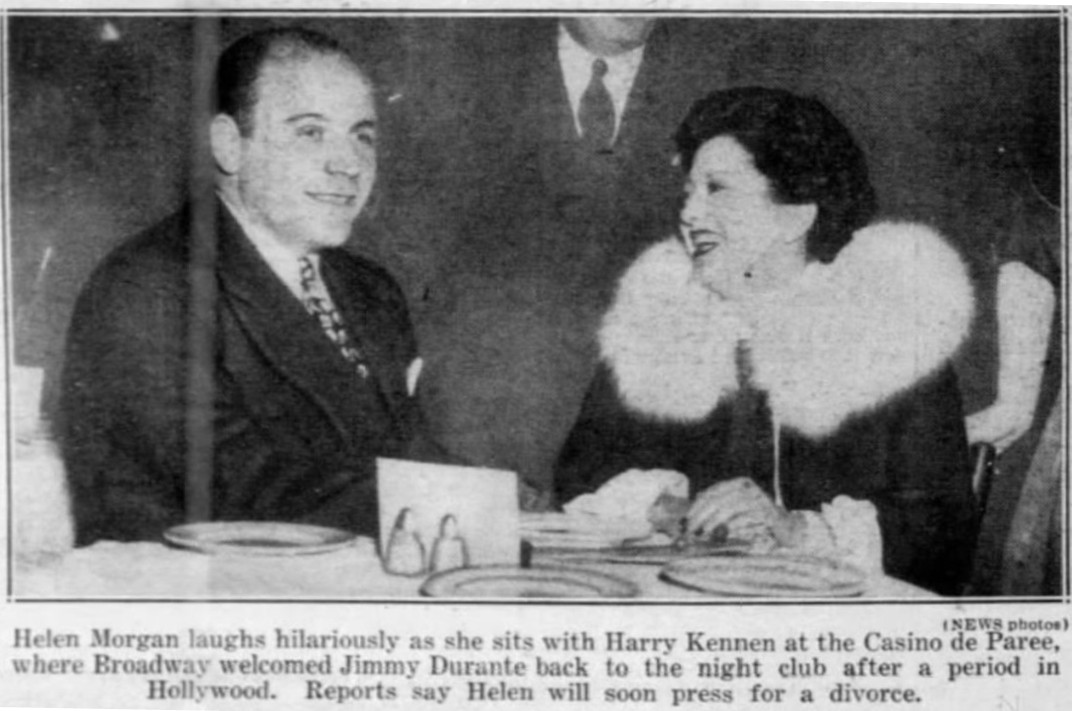
At the Simplon, also in New York, Helen was crowned ‘Queen of Repeal.’
Don Dean, the Oklahoma-born South American big band leader, in Los Angeles at the time, flew to New York and the Simplon just for the occasion.
On today’s anniversary, follow Helen’s lead – responsibly – and lift a glass to Repeal!
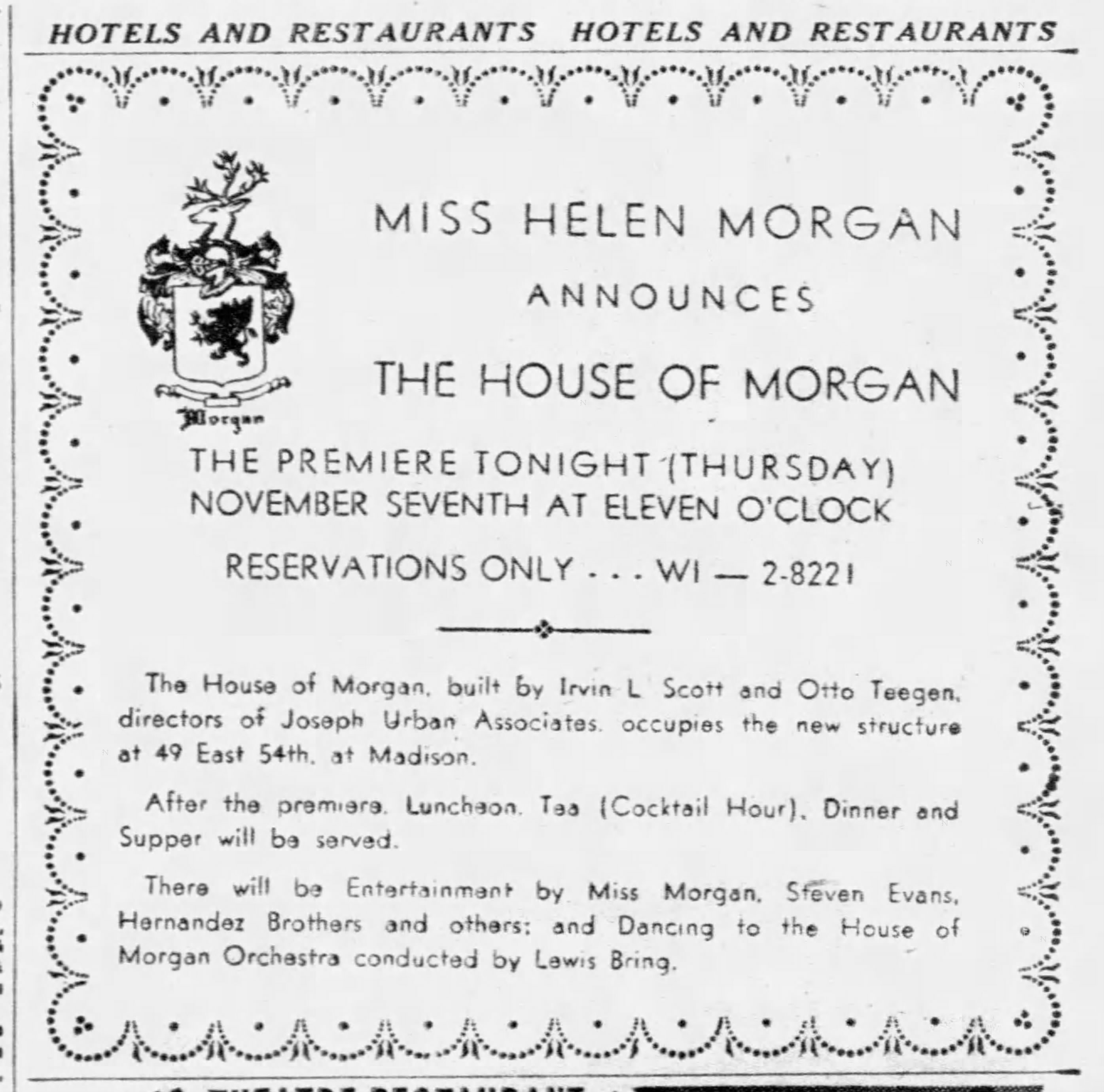
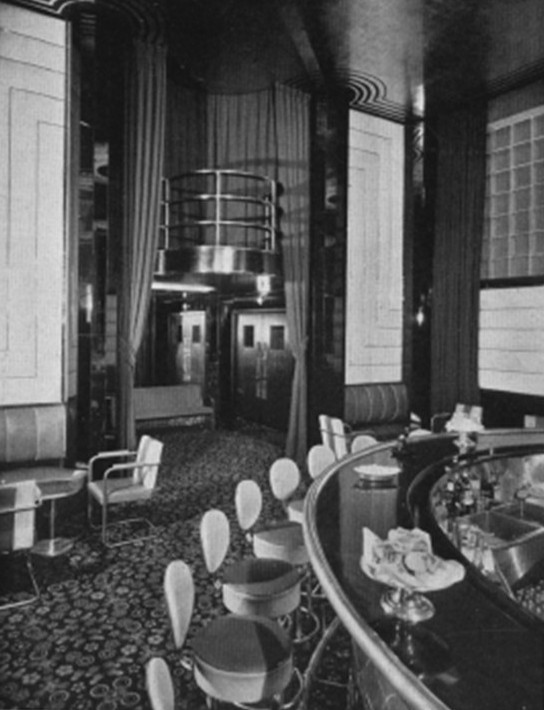
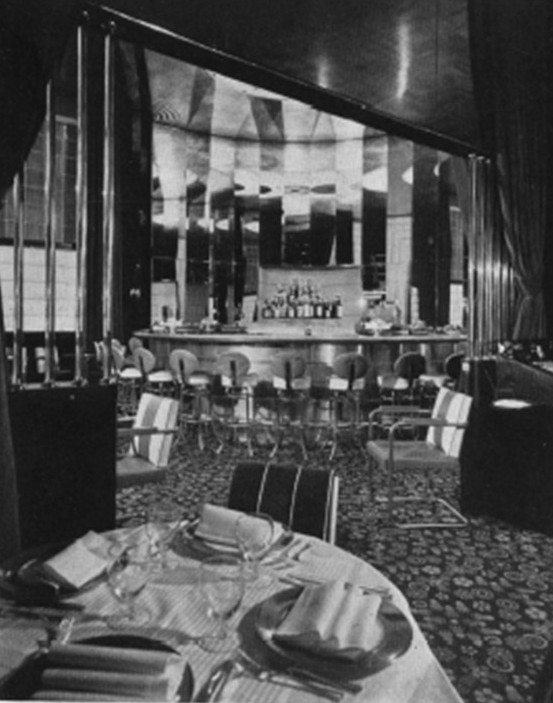
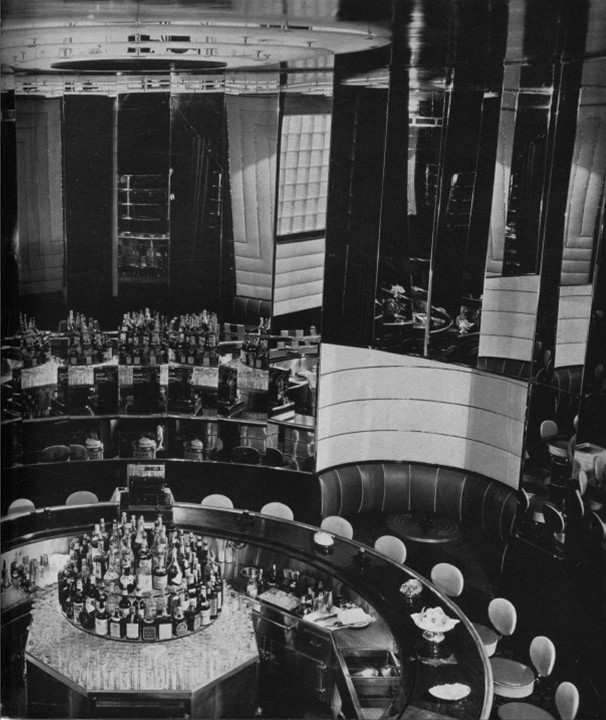
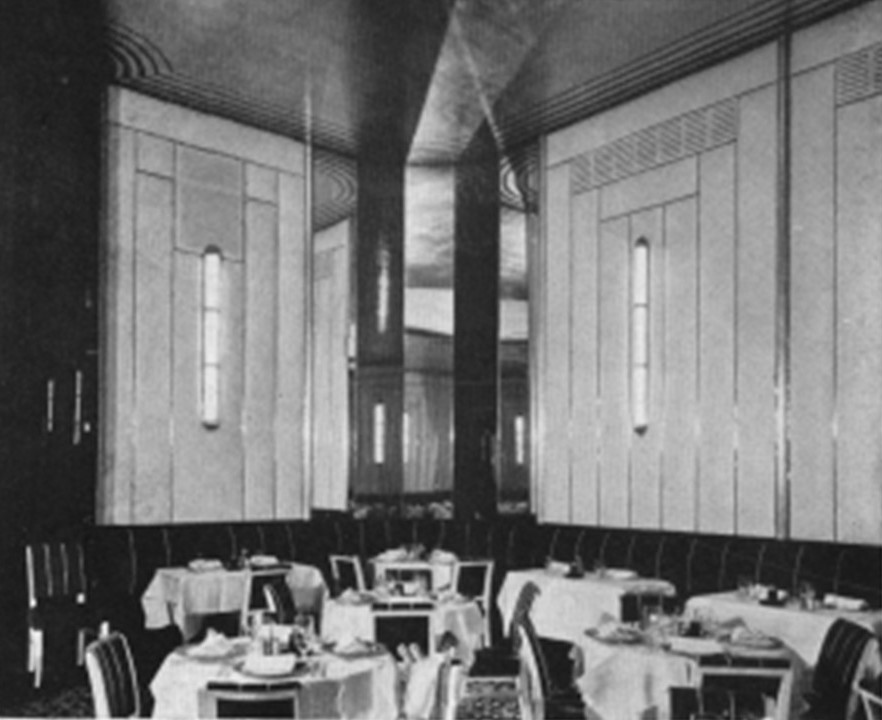
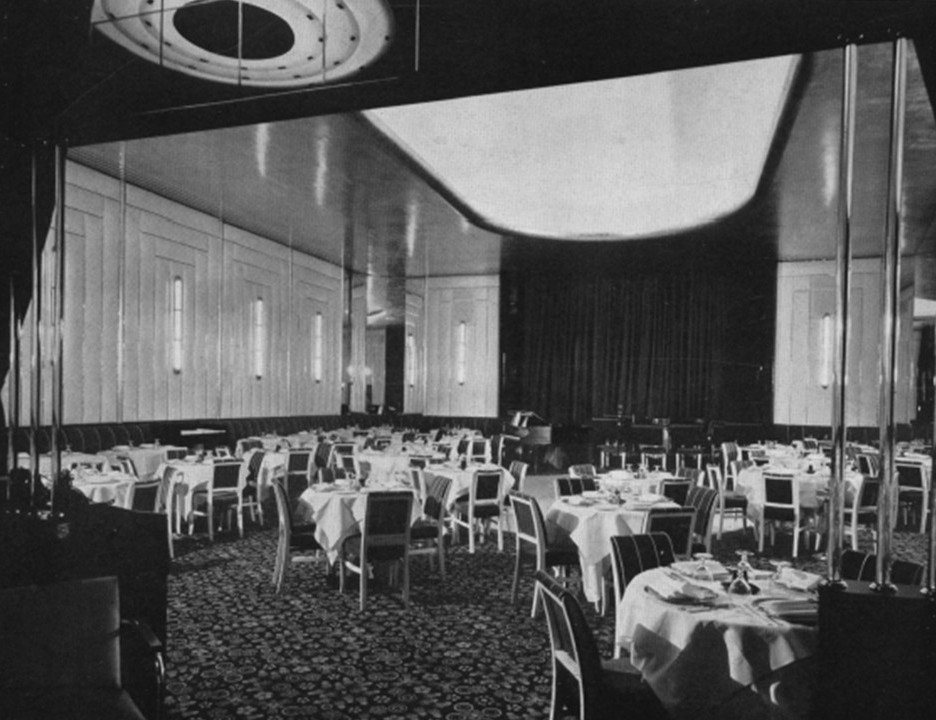
Originally scheduled to open on Hallowe’en, the extensive work decorating the interior of The House of Morgan pushed the premiere back a week. The wait added to the pressure, to the list of almost a thousand denied opening night reservations, and to Helen’s legendary dressing-room hysterics.[i] Part of her anxiety stemmed from a shake-up in the opening night floorshow. The original lineup was to have been: Morgan, mimic Steve Evans, and two bands: the Hernandez Brothers & Lou Bring’s orchestra. A late addition was Frosini, an accordionist – until he suffered a heart attack. To replace his act as well as the dance couple he accompanied, Kannen found Cartier, a less than mesmerizing magician, whose own opening night jitters threatened to sink the production.
Morgan need not have worried: the club and she earned raves. Cartier aside, the rest of the show, including Evans, Beatrice Ide and Jose Limon (dance team), Frances Hunt (singer), columnist-turned emcee S. Jay Kaufman (who also directed) and the dueling orchestras were all top notch.[ii] Helen was back where she belonged. Within days, the club was the most popular nightspot in Manhattan.[iii] As at Chez Helen Morgan, black tie was required to gain entrance to the clubroom although the bar had a less stringent dress code.
After only three weeks, Helen abandoned her House of Morgan to film the 1936 film version of Show Boat. Back east, eight weeks without Morgan placed her House in financial jeopardy. The first post-Morgan line-up consisted of chanteuse June Knight, dancers Escudero and Carmita, and crooner/actor Georges Metaxa. Each act demanded, and was denied, the opulent Morgan dressing room and balcony. Each act sparred over billing; rotating the order in the print ads failed to appease the temperamental players. Each wanted the coveted last spot in the floorshow. Part this problem was temporarily solved when Metaxa was recruited to be the emcee, until a dispute over his flowery excesses in introducing each act prompted him to scream “Double crosser!” and walk out of the second show. Gertrude Niesen and the dance team of Rosita and Fontana completed the remainder of the three-week contract.
In late December, Kannen changed out his personnel, on-stage and off.
Off-stage was Toots Shor, who assisted Kannen in running the room. His greatest accomplishment at the House of Morgan was finding suitable acts to fill in while Helen filmed Show Boat. Drinking one night with the owners of the competing Versailles Club, Toots heard them complain of a lack of original acts in New York. Toots recommended a ventriloquist act. They thought he was mad but gave Shor’s pet act a trial. The ventriloquist went over like gangbusters with the audience, but not the Versailles brass. Toots took the act to Kannen, who booked it into the House of Morgan for the new show, which opened Christmas night, 1935.[iv] The act once again went over big. So big, that Rudy Vallée signed the guy to appear on his radio show and Nelson Rockefeller lured him away to the Rainbow Room.[v] The ventriloquist was Edgar Bergen.[vi]
Sophie Tucker, with a following as loyal as Helen’s, headlined the new bill, which, in addition to Bergen, included Phil Tiltman and Jimmy Lee. She opened to such acclaim she held over for a four week run. Soph also came at $2,500 a week, a grand more than Kannen paid Helen. Out front opening night was Louis B. Mayer, who was so taken by the voluminous entertainer, he hired her. A year later, with pre-Oz Judy Garland, she shot Broadway Melody of 1938 and Thoroughbreds Don’t Cry.
Even with a sold-out New Year’s Eve gala at $30 per couple, the House of Morgan stayed in the red. New Year’s Eve was almost as exciting outside the club as inside. Toots Shor heard a scuffle outside, ran to investigate, and saw the doorman Sam Thorpe take on three men at once. In short order, Thorpe beat each man unconscious. A fourth came up to him and Thorpe knocked him out before Toots could stop him. The last victim was a cop running up to investigate the fracas. Kannen and Toots argued over the incident. The two had words on previous occasions because Kannen would glad-hand his patrons, a responsibility of the club manager. With the dawn of 1936, Toots Shor was gone from the House of Morgan.
Helen returned to the House of Morgan on January 24, 1936. Joining her were Clifford Newdahl, Carl Randall, and Phyliss Cameron. Dissatisfied with the way Kannen was running her club, in early March she left again, picking up club work in Florida. Beginning March 5, Lillian Roth led the floorshow. When Morgan picked up additional work in Chicago, the House of Morgan closed, on March 21, 1936.
There were certainly problems and a lot of bad timing involved with the House of Morgan. The location itself seemed to be problematic, being just outside the theater district. Further attempts to establish new businesses on the site would also result in failure. First Johnny Borgiani, Nick Prounis and Arnold Rosenfield, owners of the Versailles bought the site off of Kannen, planning to open a club on the site and reverting the Versailles into a straight restaurant. This did not work out. Next, Nick Bates bought the place and re-opened it as the Merry-Go-Round. Dave Appollan, an old vaudeville maestro took the joint off Bates’ hands and opened his club under the handle Club Casanova on October 7, 1938. It was dark again by Armistice Day at a $30,000 loss.
By 1938, if not before, café society in NYC had changed. While successful earlier in the decade, The Stork Club and 21 took over as the premiere niteries. Instead of expensive floor shows, the celebrities who drank and dined in these clubs became the point of interest. Winchell set up his virtual office at the Stork, where he could report on the comings and goings of the café society. Bands would serenade celebrities as they entered the room by striking up a tune s/he had made famous. Even had The House of Morgan survived its season, it could not have survived as the “event” and restricted club it was created to be.[vii]
[i] House of Morgan opening: McIntyre, O. O. “New York Day By Day,” December 18, 1935. Also Richard S. Davis, “Not Exactly a Column”, Milwaukee Journal, January 25, 1936, Daily Variety, October 2, 1935, NYT, October 19, 1935 and Ed Sullivan’s “Broadway,” New York Daily News, November 8, 1935.
[ii]NYT, November 2, 1935 and advertisement, November 7, 1935. Also New York Sun, November 9, 1935 and Abel, Variety, November 27, 1935
[iii] Its popularity even ‘ruined’ the gala openings of the 54th Street Montmartre – Variety, November 13, 1935
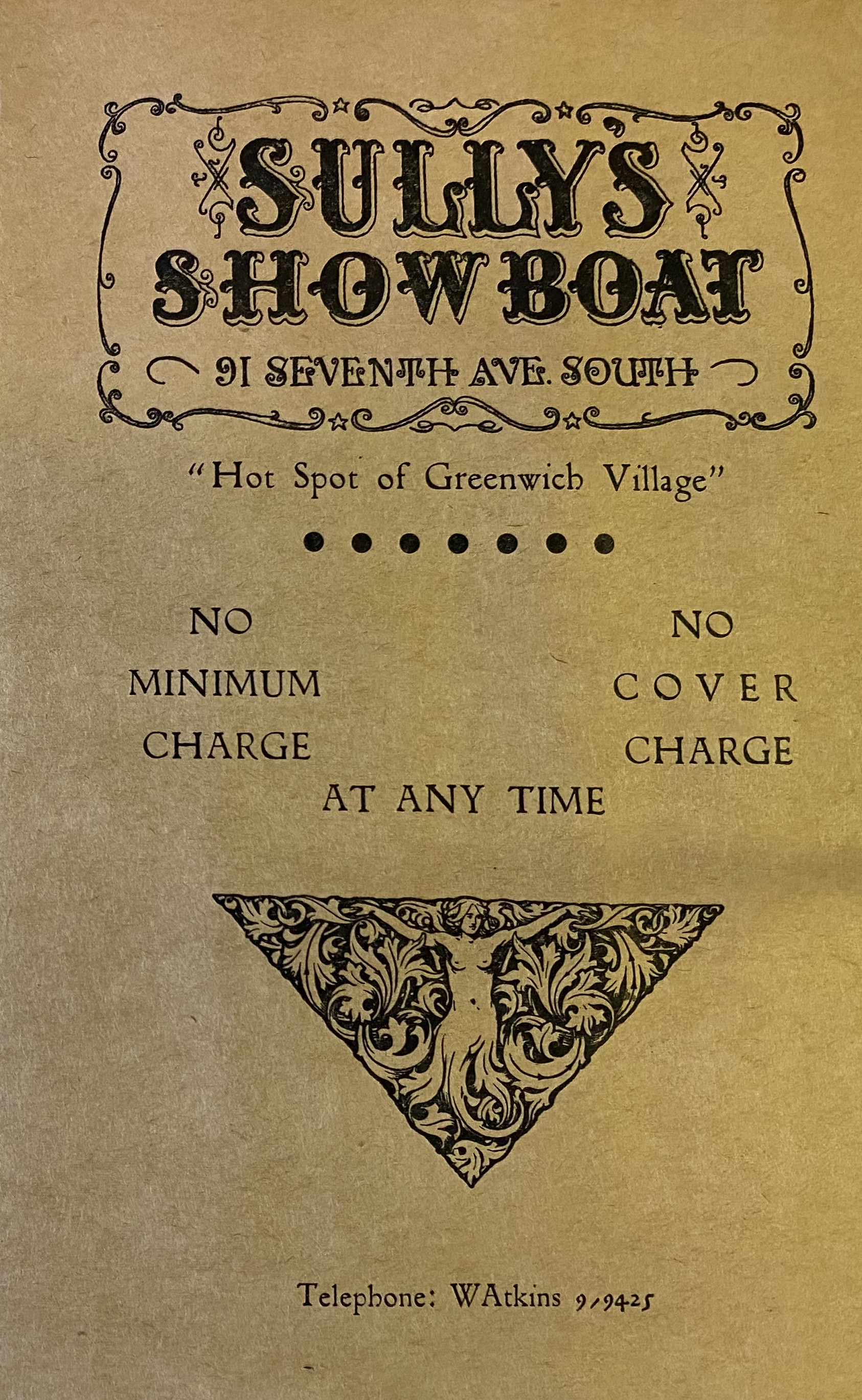
In March 1933, Joseph Urban’s original, classic sets for Ziegfeld’s Broadway production of Show Boat were consigned, like so many others, to the Globe Storage Warehouse Company. But not for long. Harold “Sully” Sullivan opened a Show Boat themed restaurant at 91 7th Avenue in Greenwich Village.
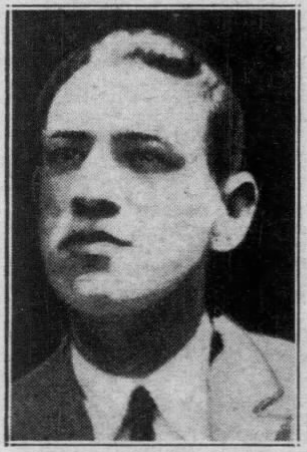
Harold “Sully” Sullivan
As would be done a few years later with the fittings from the White Star Liner Olympic, Cleon Throckmorton went to the source. He acquired the original Urban sets and incorporated them into his design.
He also recycled the bar from the old Prohibition-era Stork Club.
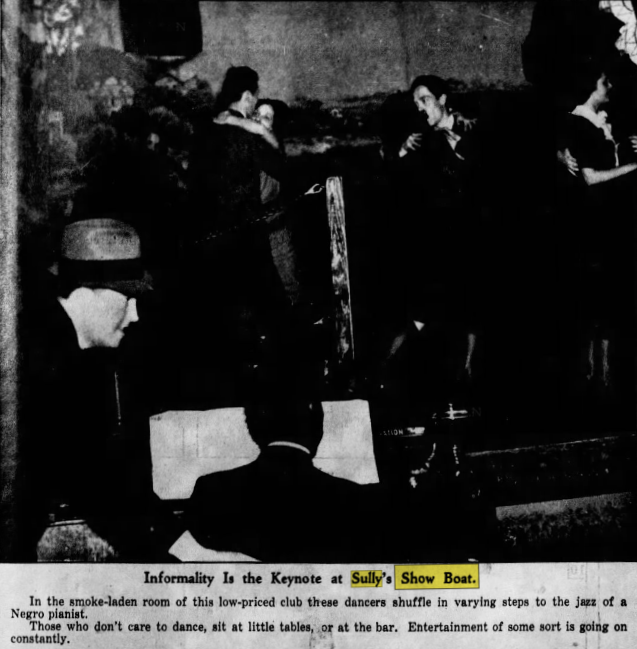
Sully’s Showboat opened its doors in December 1934 and quickly became a Village staple. Hall Johnson and his Choir headed the inaugural floorshow.
Other African-American musical acts followed, including Rudy Smith and the Four Cabin Boys.
By 1936, the “southern” theme was largely abandoned, although the décor remained. In its stead was a varied floorshow with an emphasis on dance and strip-teases. Between shows, there was dancing for the customers, and silent comedy shorts.
Through it all was that long, long bar serving competitively priced beer and cocktails.
Everything changed in the early hours of September 21, 1936. Coming out of Hymie’s Bar in the basement at 55 Christopher Street at 4 a.m., Sully and four other friends were accosted by off-duty policeman James Bell, who demanded to know where he could get a drink. Sully told Bell everything in the Village was closed, but Bell insisted. The conversation morphed into a heated argument. Someone threw a punch at Bell and his buddy, fellow cop John V. Buckley, came to his rescue, turning the fight into a brawl. Sullivan hit Buckley, who fell down three steps and into a vestibule door, breaking six panes of the glass in the door. Buckley pulled his gun and fired. When the melee was over, Sullivan lay dying on the sidewalk, shot in the abdomen.[i] Buckley staggered to a nearby police station, surrendered his gun and requested medical attention. Buckley, Bell, and Patrolman Richard Maher were all suspended from duty, but when Buckley faced trial for first degree manslaughter, he was acquitted.[ii]
When the restaurant re-opened a year later as The Place, Urban’s sets, like Sully himself, was little more than a memory.[iii] Later, as the Limelight, the space enjoyed a longer tenancy, from the 1950s until, yes, another gun fight forced a shuttering of doors in 1978. From the early 1990s until 1922, the building housed the touristy Jekyll and Hyde.