Working actors, especially those who plied their trade a century ago, worked.
Whenever and wherever they could.
New York actors in the 1920s and ’30s often doubled, even tripled, into other venues while still playing eight performances a week on Broadway.
It was not uncommon for performers to double into radio, nightclubs, and films while a Broadway show was running. Some also augmented their income by modeling, personal appearances, recording, and playing private parties.
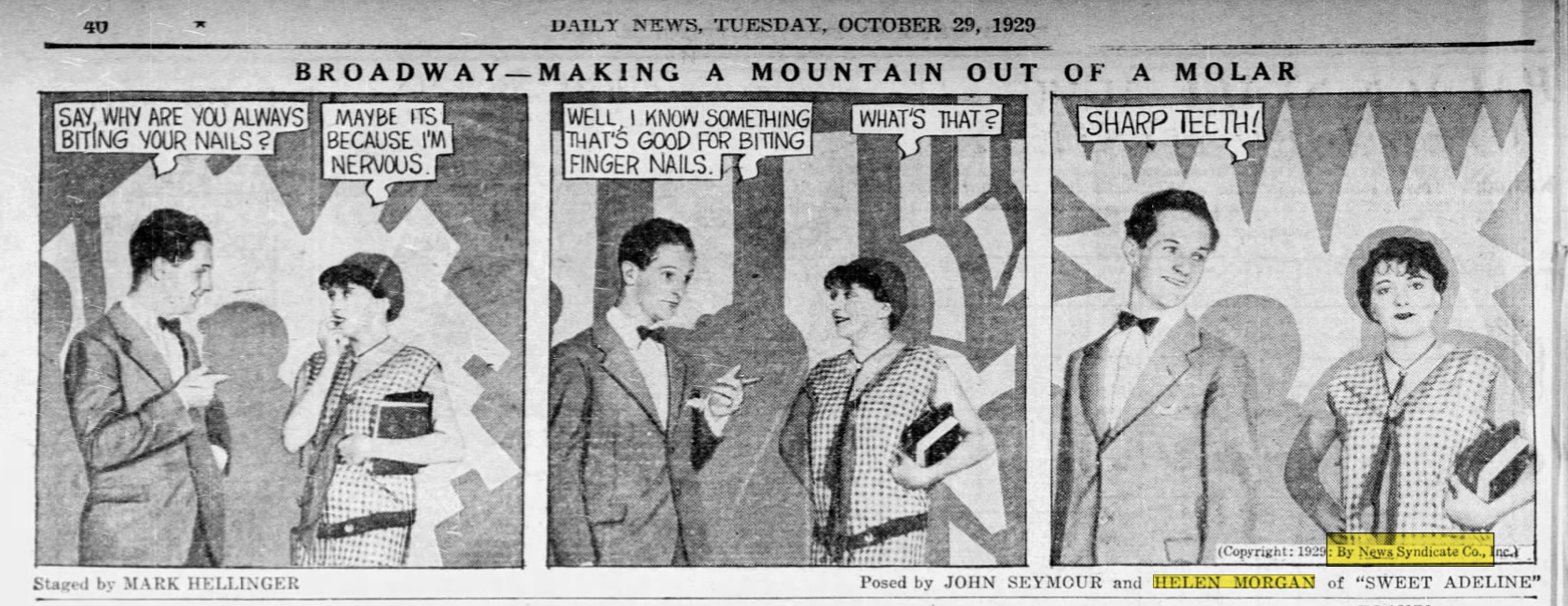
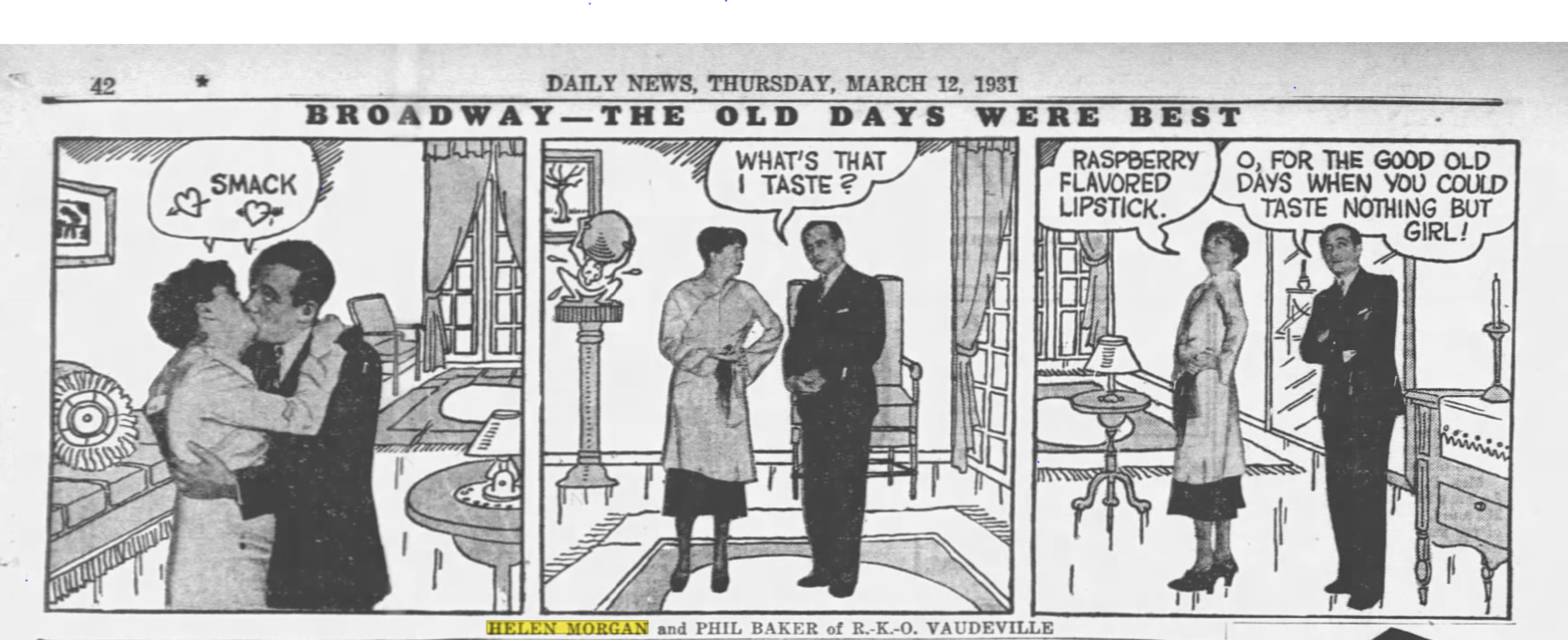
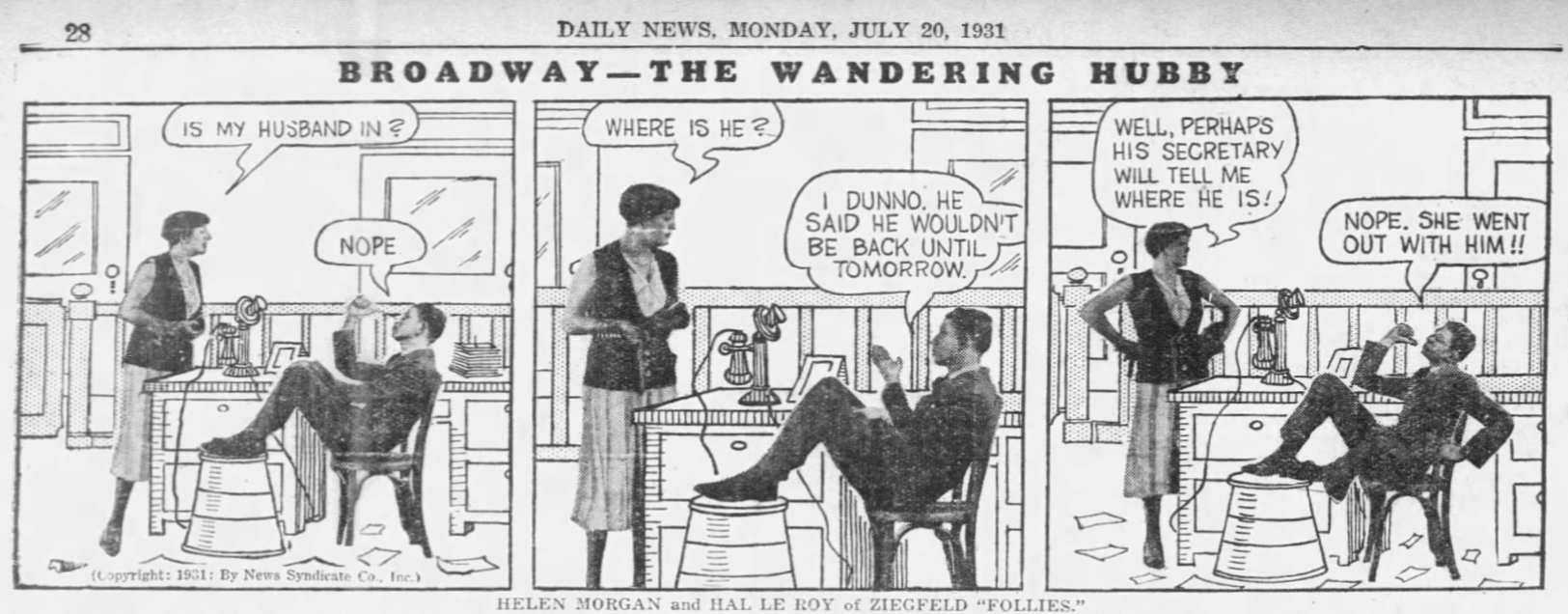
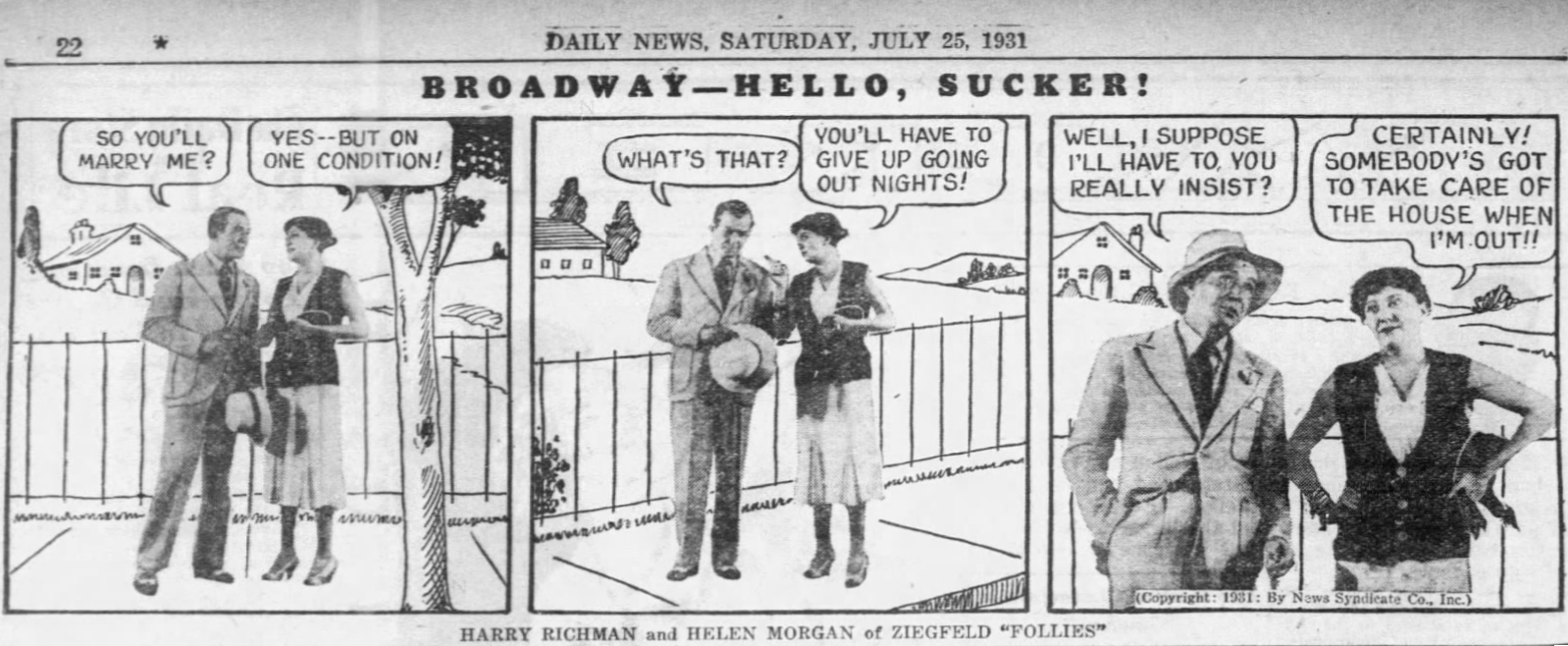
But perhaps the most unusual way Broadway-ites picked up quick coin back in the day was working the funny pages. Beginning in February 1927, the New York Daily News ran a daily comic strip. But instead of cartoon characters, Broadway actors acted out little blackout sketches, one panel at a time, staged, at least originally, by Mark Hellinger.
Everybody working the Main Stem at the time posed for these Broadway comics: Fanny Brice, Eddie Cantor, W. C. Fields, various Marx brothers, Bob Hope, Ethel Merman, Eve Arden, Buddy Ebsen, Harry Richman, and Helen Kane (just to name a few) played the series, which lasted until December 1934.
In addition to whatever the actors earned, the panels advertised the Broadway show in which the performers appeared. The lead time must have been fairly short, as sometimes acts playing the Palace also got in on the action.
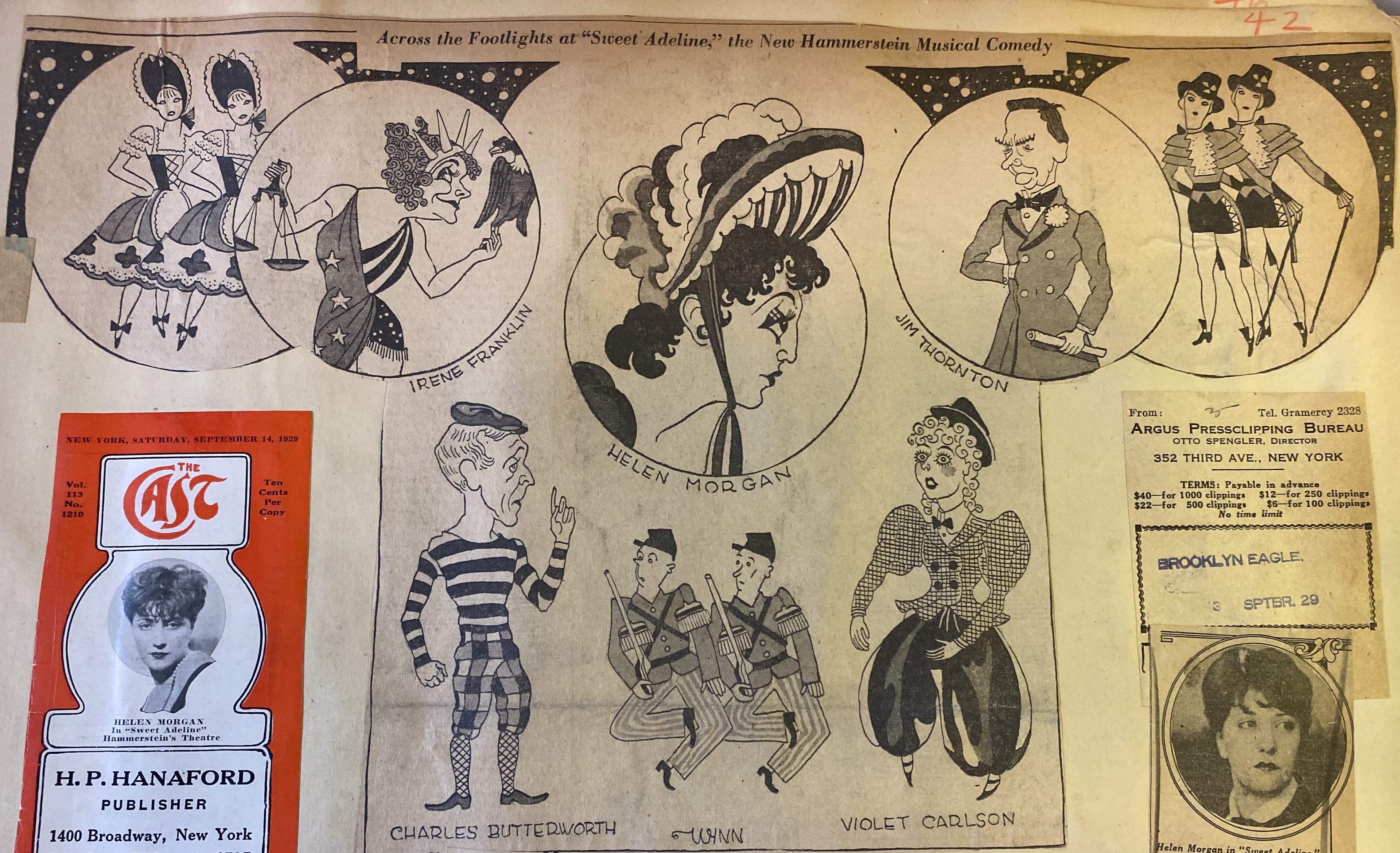
… 1929, ninety-five years ago today, Sweet Adeline opened at the Hammerstein Theatre in New York.
The musical reteamed Helen Morgan with Show Boat authors Jerome Kern (music) and Oscar Hammerstein II (book and lyrics). New this go round was Oscar’s Uncle Arthur replacing Florenz Ziegfeld Jr. as producer, and Oscar’s brother Reginald (and Helen’s ex-boyfriend) as the nominal director (Oscar supervised the production).
Oscar’s original story revolved around Addie, later Adeline, Schmidt (Helen), with several characters and situations modeled on Helen’s parents and her own upbringing.
As with Show Boat, Helen was the only original cast member to commercially record any vocals from the score. Sadly, she did not record every song assigned to her, but others were happy to fill in the blanks from Kern’s cornucopia of a score:
And then there’s this:
While a Morgan vehicle, she shared the stage with ten other principals. That said, only the two main comics, Charles Butterworth and Irene Franklin, had roles comparable in size to Helen’s in terms of dialogue, although Morgan still sang the majority of Kern’s score.
Franklin’s clout extended to writing her own lyrics. She even preserved her opening Sweet Adeline number on film a few years after the fact:
In 1934, Warner Brothers filmed Sweet Adeline. Typical for the era, the studio recast Morgan, Butterworth and Franklin – all working in Hollywood at the time – with Irene Dunne, Hugh Herbert and Wini Shaw. Hammerstein’s plot gets thrown out the window in the second half, but much of the stage score remains. In addition to “‘Twas Not So Long Ago,” “Here am I,” “Don’t Ever Leave Me” and “Why Was I Born?” the film score includes “Play Us a Polka, Dot,” “Oriental Moon” and “Molly O’Donahue.” For added measure, Kern and Hammerstein interpolated “Lonely Feet,” rescued from the recently closed London production Three Sisters, and a new composition. “We Were So Young” into the proceedings. The film shows up from time to time on TCM and was released on disc as part of the Warner Archive Collection.
John McGlinn intended to follow up his landmark 1988 recording of Show Boat with a complete reading of the Sweet Adeline score, but such a thing was not to be. Thankfully, he peppered other collections with five Sweet Adeline tracks, and all featuring the original orchestrations.
First is the clever fin de siècle Overture, in which Kern utilized famous 1890s tunes, saving his own writing for later in the show:
More importantly, McGlinn recorded the show-stopping ten o’clock number, “Some Girl is On Your Mind.” After “All the Things You Are,” this may be the single best thing Kern ever wrote yet, oddly, not one critic in 1929 singled out this expanded barber shop quartet for comment.
McGlinn also waxed the original duet setting for “Don’t Ever Leave Me.”
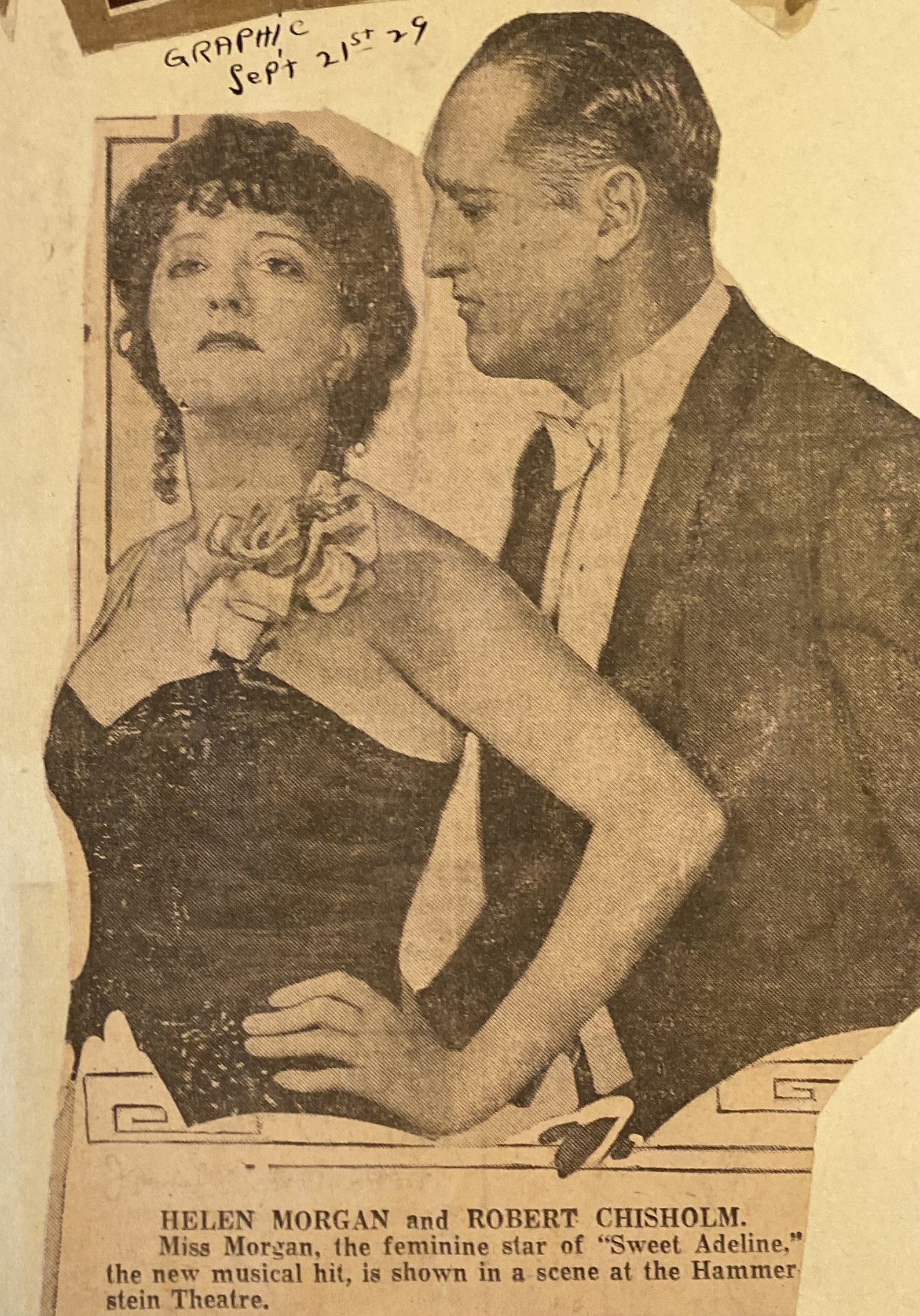
Helen and Robert Chisholm first sang the song as a triumphant expression of their love (think Hammerstein’s later effort “I Have Dreamed”).
Only later in the show did Helen give the song its tragic, torchy spin.
Last but not least, Helen’s biggest hit of the night:
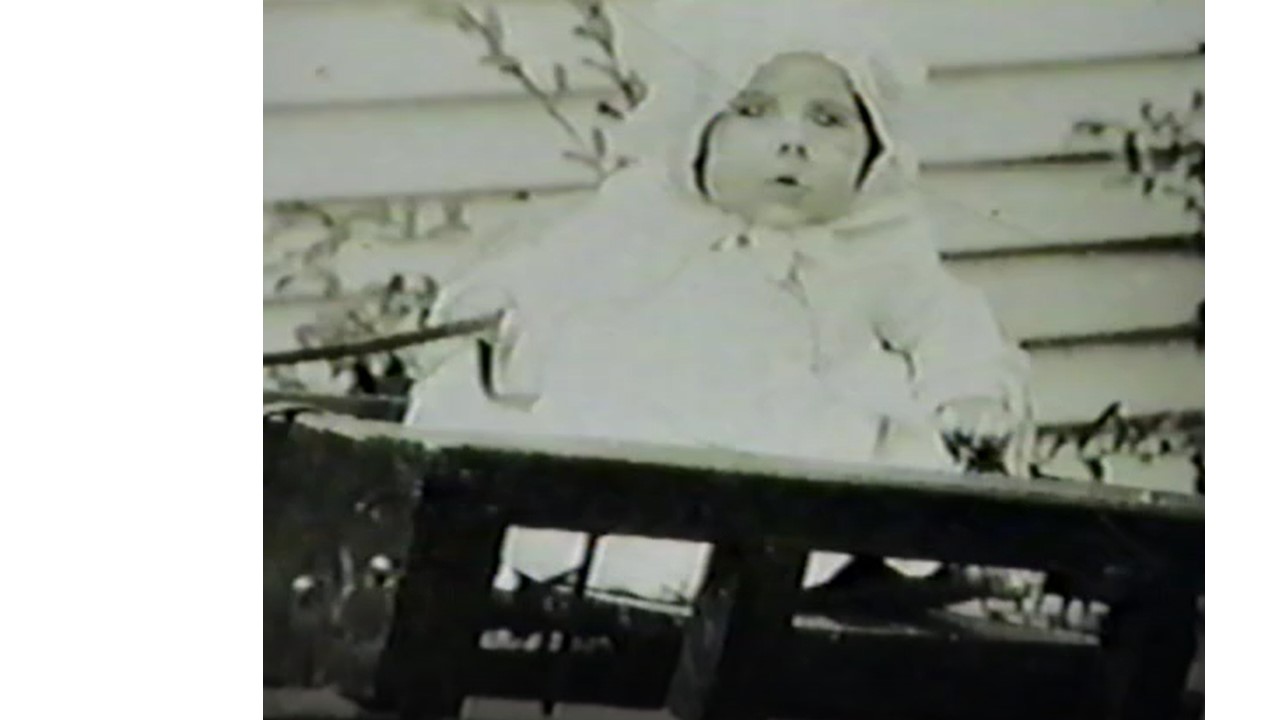
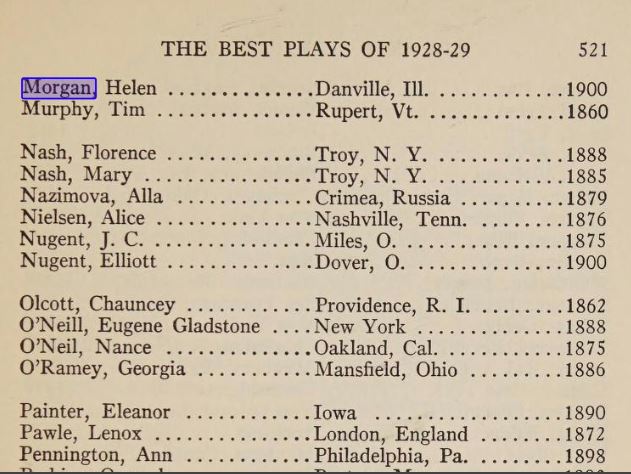
Primary source material prior to 1927 all point to Helen being born August 2, 1902. Case in point: the 1910 Federal Census.
Helen was not quite 8 years old when enumerated in April 1910. And 8-year-olds rarely lie about their age. However, her stepfather, Thomas Morgan *did* lie to state that he and Helen’s mother, Lulu, had been married for eight years, with the implied claim that Helen was Tom’s daughter, and a legitimate one.
Actually, Helen’s father was Lulu’s first husband, Frank Riggin. They separated in April 1902, four months before Helen was born. The Riggins divorced in early 1903, when Helen was still an infant.
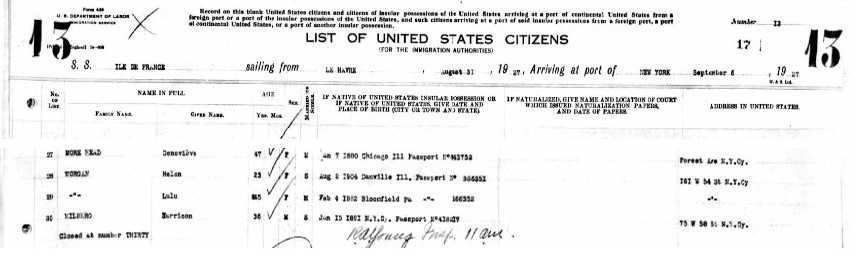
And to add to the fun, starting with her 1927 trip abroad, Helen began claiming she was born in 1904, as her arrival form states:
It’s a little fuzzy, but it states her date of birth as August 2, 1904.
At the end of the day, what matters is that Helen was born and left us her music.
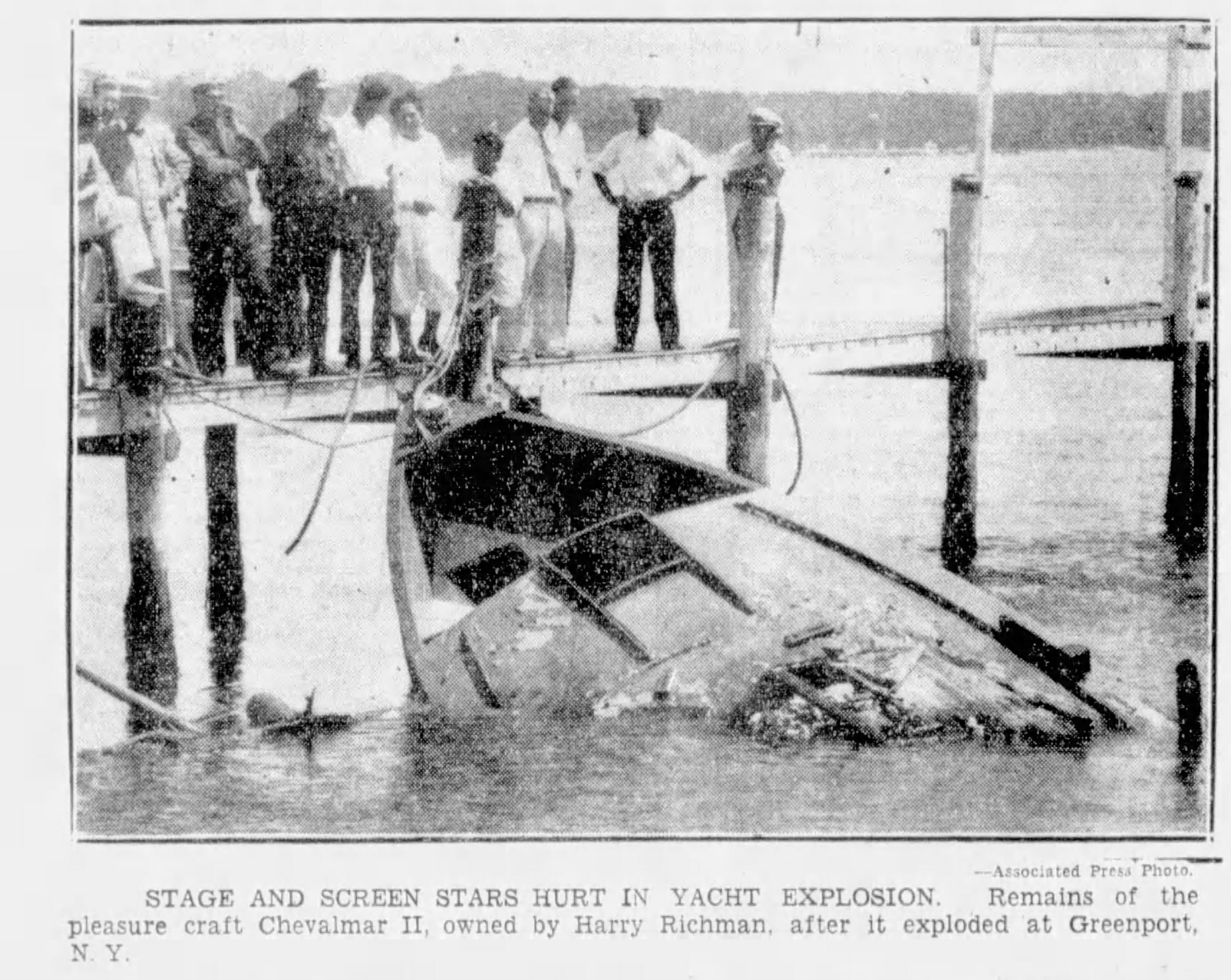
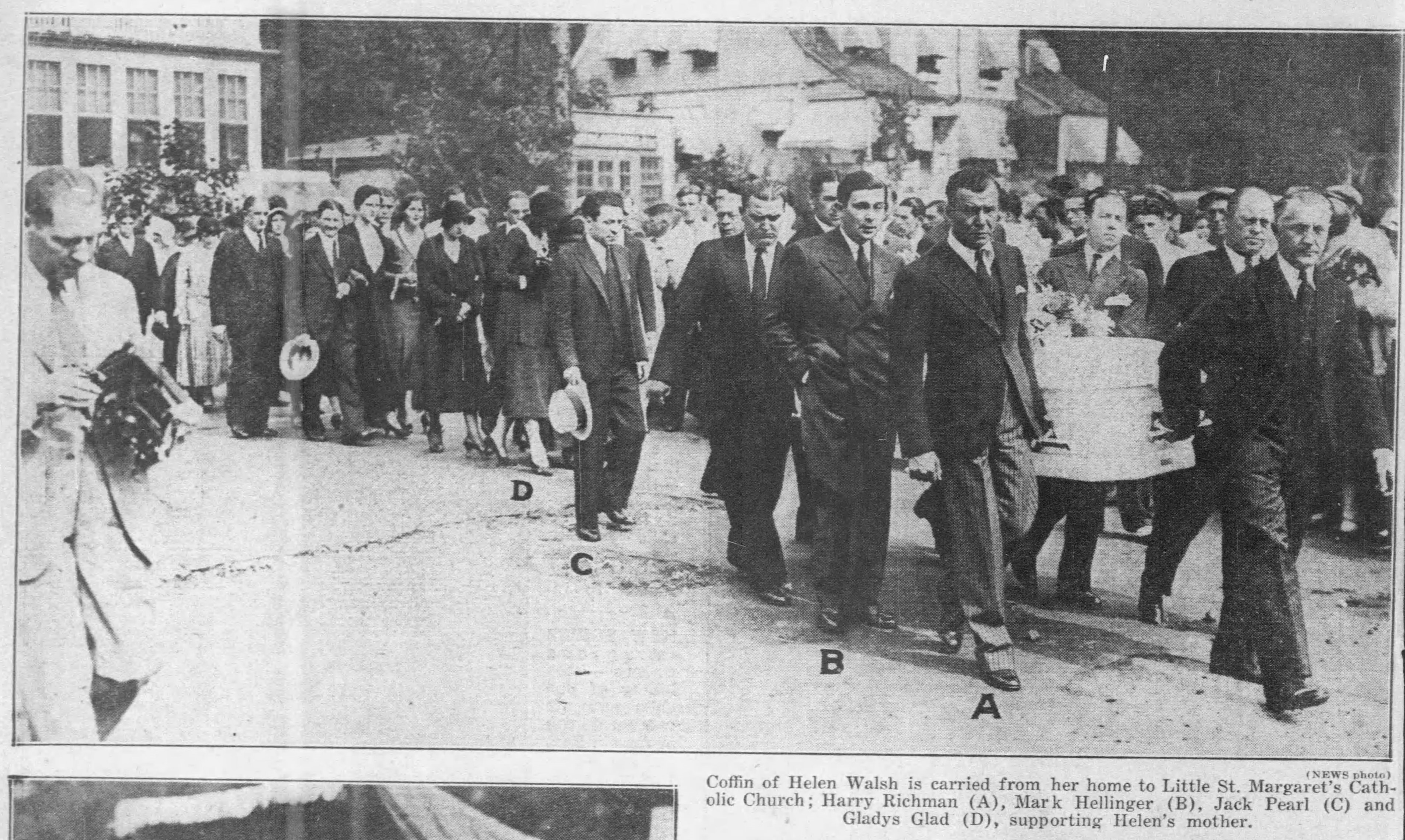
… Tragedy struck the company of the Ziegfeld Follies of 1931. Immediately following the evening performance on Saturday the 25th, Harry Richman invited Gladys Glad, her husband Mark Hellinger, and showgirls Virginia Biddle and Helen Walsh for a weekend excursion around Long Island Sound on his yacht Chavalmar II.
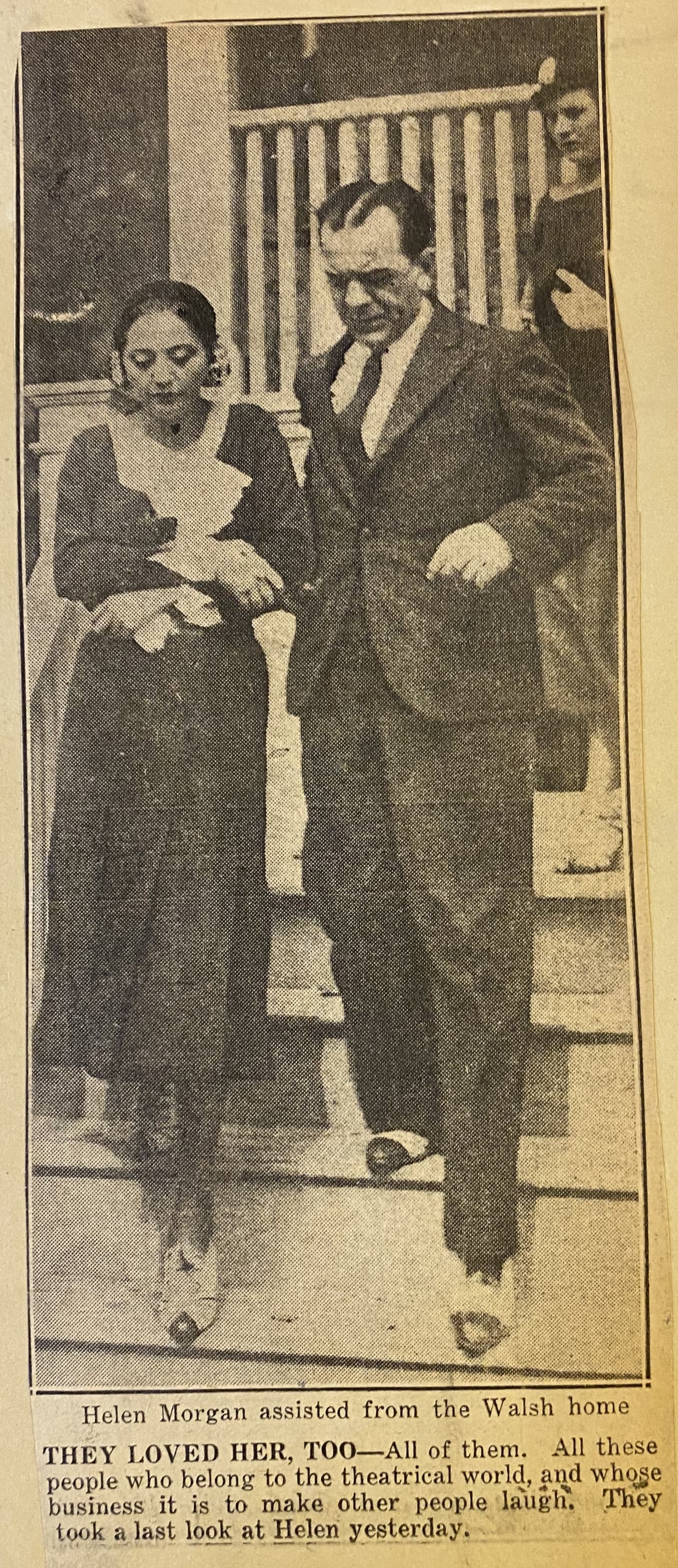
Helen Walsh was a good Irish girl who, like Helen Morgan, started behind a department store counter. From there, Walsh joined the Ziegfeld stable as a showgirl. She played in Rosalie, then Whoopee and Simple Simon before landing in the Follies. Like Morgan, Helen Walsh also had a ‘widder’ mother at home, but here the similarities ended. Almost without fail, Walsh ran home to Riverdale every Saturday night to hand over her pay to her mother before enjoying her weekend.
The company met at Richman’s Beechhurst home, had cocktails, and boarded the yacht and set off on their voyage to nowhere. With the dawn, the ship’s captain docked at Greenport to refuel the yacht’s 140-gallon gas tank. Richman held court with Hellinger and his chauffeur Levy on deck while the women enjoyed the warmer conditions below. Gas fumes flooded the cabin and when the Captain White started the yacht’s engine, the Chavalmar II was engulfed in a huge fireball.
With amazing presence of mind, Levy, his hair afire, ran below deck and managed to rescue Glad and Biddle. Richman also scrambled below, got Helen Walsh above deck and jumped into the flaming water with her. When Walsh came up, Richman grabbed her and following the others, paddled the two to shore. So relieved was Gladys Glad to see her friend, she grabbed her arm. Some of Helen Walsh’s skin came off at the touch.
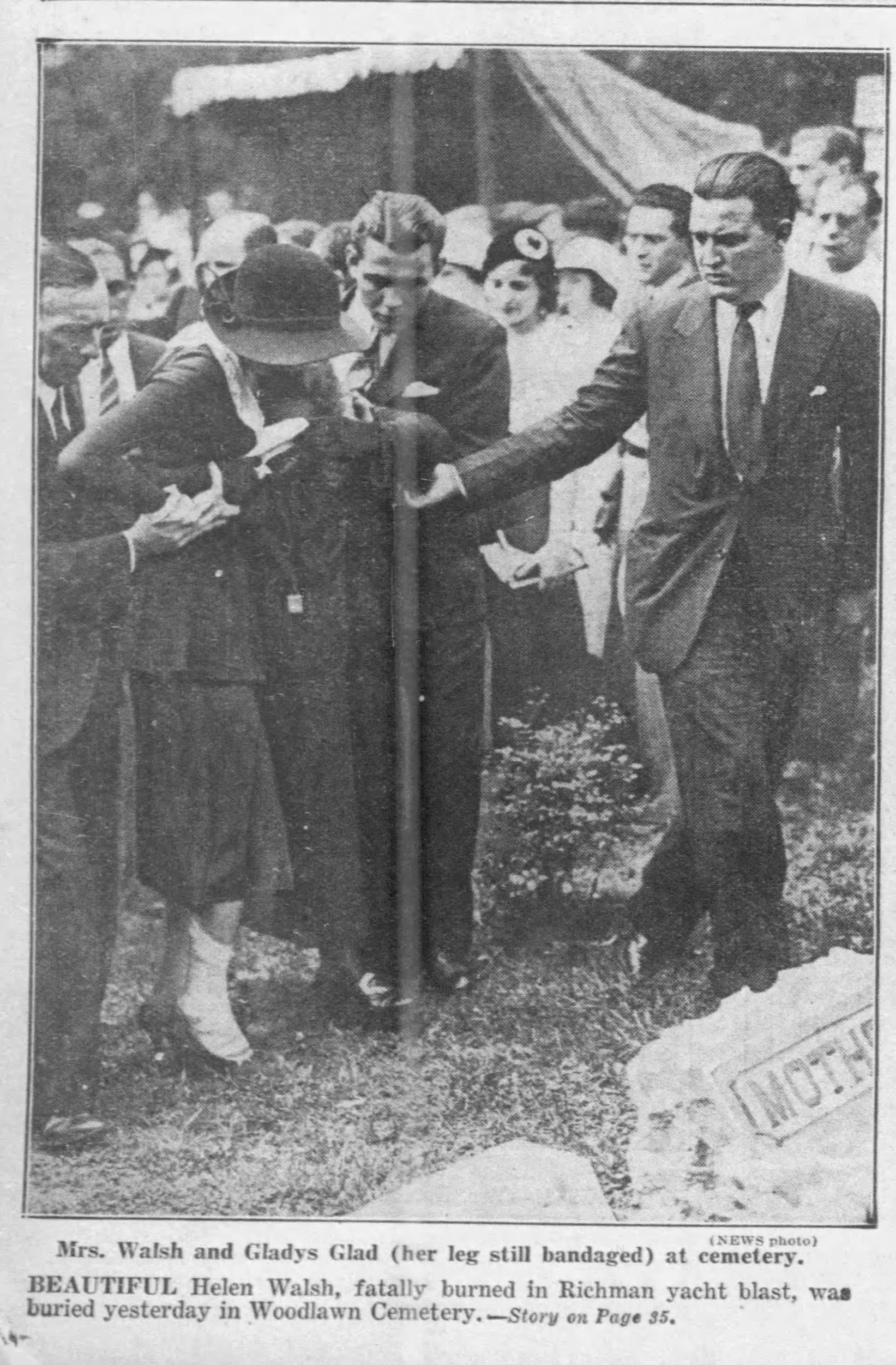
Glad commandeered a nearby policeman to drive a “borrowed” car and got Walsh and the others to the nearest hospital. Still conscious, Walsh asked repeatedly if she was badly burned – particularly if her wage-earning face was badly burned. The doctor assured her she was not badly burned externally. However, she lost a lot of fluid, and there was a possibility her lungs had been seared. The men were treated in the emergency room for their burns and released.
Helen’s mother, her sister Marion, and Doctor Michael Tetelman were called to Walsh’s side to begin the grim waiting game. Sunday evening, a nurse fed Walsh some soup, which caused her further nausea. Gladys Glad ordered chilled champagne, poured it over ice and spoon-fed her friend. This she was able to keep down.
Monday morning a priest arrived, heard Helen Walsh’s confession, granted absolution, and administered Communion. She began to rally. Having been assured Walsh was recovering nicely, Richman returned to New York for the evening performance. Soon after he left, Helen Walsh quietly died of shock.
Hellinger followed Richman to New York where the press already knew of Helen’s death. He managed to keep word from Harry until after the performance, when the two cried together.
Following the funeral, Richman announced his intention to take out a $25,000 life insurance policy naming Mrs. Walsh as the beneficiary. Considering the unlikeliness of Mrs. Walsh living long enough to collect, the gesture struck many as a hollow ploy for publicity.
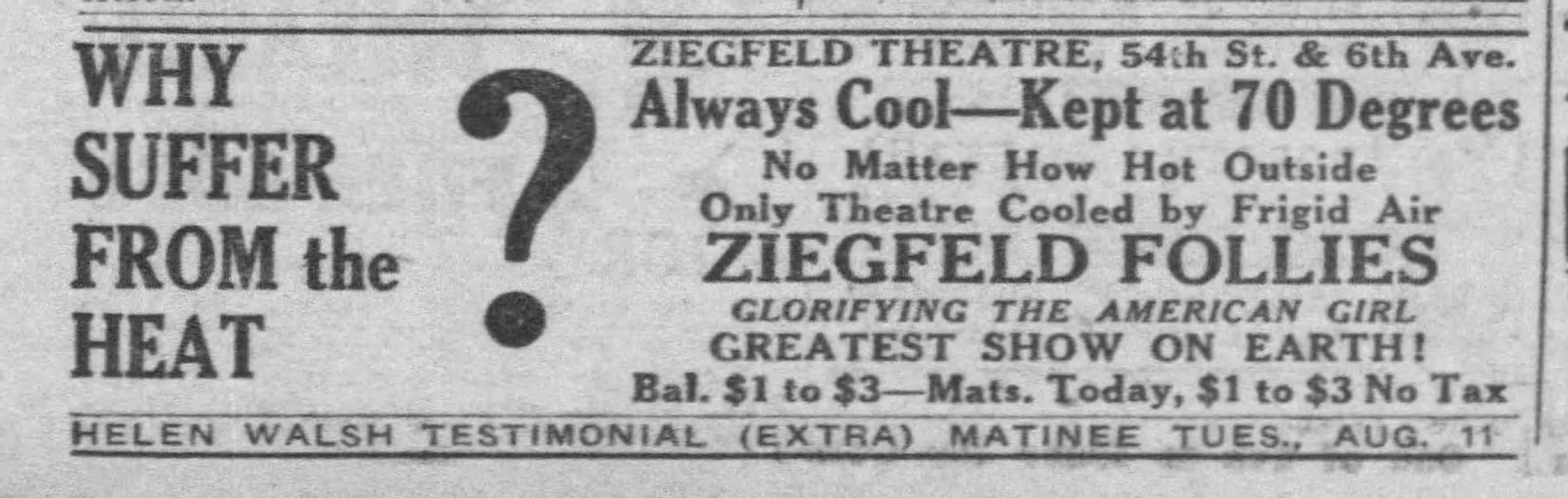
Hellinger and Richman then promised they would pay Mrs. Walsh her daughter’s salary for the remainder of her life. This offer went over better, but concerns over paying off the $7,500 mortgage on her house worried Mrs. Walsh more than a weekly income. Ziegfeld came to the rescue and added a matinee performance the following Tuesday, the 11th, as a benefit.[i] With a possible gate of $4,800, the performance brought in an astounding $18,000 (many people bought tickets only to return them to the box office for resale).
Ziegfeld’s shining moment, however, was short-lived. When he presented Mrs. Walsh with the check in front of a sea of reporters and photographers, the widow announced she didn’t want to stay in the old house any longer. With just her daughter Marion and herself needing accommodations, they decided to sell the place and take an apartment in the city.[ii]