.. and the grand (?) finale of my discussion on Broadway Nation.
Again, my thanks to Broadway Nation for a great discussion and a better time.
.. and the grand (?) finale of my discussion on Broadway Nation.
Again, my thanks to Broadway Nation for a great discussion and a better time.
Posted in Uncategorized
… 1928, Helen Morgan recorded her Show Boat songs.
The event was historic for multiple reasons.
Morgan would record exclusively for Victor for the next six years. Frustratingly, she was an infrequent guest to the Victor studio and a year would pass before she again appeared before their microphone. During this era, Victor was more interested in dance bands than vocalists: they only hired Morgan to sing songs they knew would sell … and sell they did.
First up was “Can’t Help Lovin’ Dat Man.” Helen begins this cut with her brief solo from “Mis’ry’s Comin’ Aroun’,” despite the fact that the latter number was cut prior to the Broadway premiere. She repeated the verse as an introduction to her 1932 recording for Brunswick.
Note her billing. The label “comedienne” hardly applies to the flip-side, her initial go at “Bill.”
I wrote that, essentially, these are the only commercial recordings made by the original Broadway cast of Show Boat. A few caveats are in order.
Jules Bledsoe, who originated the role of Joe in 1927, eventually recorded “Ol’ Man River” in 1930 … in London. Paul Robeson, for whom the role was written, was unable to participate in the 1927 Broadway production, but did play the role in London (1928) and appeared in the first Broadway revival (1932) and the Universal film adaptation (1936.) He recorded “Ol’ Man River” multiple times over the years.
In the stage play, Helen Morgan, as Julie, sang “Can’t Help Lovin’ Dat Man” as a solo, before being joined by Queenie, Joe, Magnolia and chorus. Tess Gardella, who originated the role of Queenie – in blackface as her stage persona Aunt Jemina – also recorded “Can’t Help Lovin’ Dat Man” – also on February 14, 1928 – for Columbia.
Neither her vocal nor the bluesy arrangement have much to do with how the song was originally presented on stage, but at the forty-two second mark, she sings Queenie’s brief solo verse that starts the quartet reprise of the song. As such, twenty-five seconds of this recording constitutes an original cast recording.
Howard Marsh, the original Ravenal, made a few recordings for Columbia in the early 1920s. Curiously, most of his output were Irish folk tunes, not souvenirs from his Broadway appearances at the time.
A decade would pass before he recorded again, and so, his most most impressive stage work, in Blossom Time, The Student Prince, and, most importantly, Show Boat, went unrecorded.
Norma Terris, the original Magnolia, never recorded anything, although she appeared in a couple of early film musicals. The team of Eva Puck and Sammy White (Frank and Ellie) never recorded either, although they appeared in a couple of experimental sound films. The team broke up before Universal produced its film adaptation in 1936. White teamed with Queenie Smith and preserved his stage role, including the interpolated song “Goodbye My Lady Love,” for the motion picture camera. Veterans from the 1927 production, Charles Winninger (Cap’n Andy) and Francis X. Mahoney (Rubber Face) also appeared in the 1936 film.
Finally, Bledsoe, Gardella … and Helen … appeared before the cameras in the sound prologue of the 1929 part-talkie film version of Show Boat. As with the paucity of audio recordings, Universal chose to preserve only the vocals assigned to the Black characters.
As of this writing, the film prologue has not been fully stitched back together, but much of it can be seen here.
This site serves as a companion to the book Helen Morgan: The Original Torch Singer and Ziegfeld’s Last Star.
Posted in Uncategorized | Tags: Aunt Gemina, Aunt Jemina, comedy, Eva Puck, history, Howard marsh, Jerome Kern, Jules Bledsoe, music, Norma Terris, Oscar hammerstein, Paul Robeson, Puck and White, reviews, Sammy White, Show Boat, Showboat, Tess Gardella, theatre, Victor records, Ziegfeld
Posted in Uncategorized
Here’s (part 1) of another podcast discussion of the life and career of Helen Morgan.
My sincere thanks to David Armstrong and everyone at Broadway Nation for the opportunity to discuss Morgan in such detail.
Posted in Uncategorized
Ninety years ago today, Helen Morgan waxed her final commercial recordings.
Taking what she believed would be a month-long break to play club dates in Florida, Morgan entered the Brunswick studio to put down three vocals.
The first was “I See Two Lovers,” her song from the 1935 Warner Brothers musical Sweet Music. Oddly enough, the flip side of what became Brunswick 7391 was “Winter Overnight,” her other song intended for Sweet Music. Brunswick, a subsidiary of Warners, accepted her attempt at “Winter Overnight,” but rejected “I See Two Lovers.” Warners cut “Winter Overnight” but kept “I See Two Lovers” in the film.
Four and a half weeks later, Helen tried again and made Brunswick proud. Adding to the convoluted turn of events, Columbia appears to have issued the rejected take on its Art Deco CD series.
The song, by Mort Dixon and Allie Wrubel, was intended for Dick Powell in the 1934 Warners musical Flirtation Walk. Powell recorded it, with a slightly different lyric.
Morgan’s second vocal was “The Little Things You Used to Do,” her Harry Warren/Al Dubin song from her second Warners film, Go Into Your Dance.
Warner’s initial plan was for Morgan to have two numbers in each film. In the case of Go Into Your Dance, the issue was illness. Not Morgan’s, but songwriter Harry Warren. His temporary incapacitation put the writers behind schedule and rather than delay production, Warners kept the cue in the completed film, but inserted an off-screen reprise of “The Little Things You Used to Do” in its place.
To back “Little Things” on Brunswick 7424, Helen turned to her friend and former accompanist Louis Alter. She sang a song Alter wrote with Edward Heyman for the Poverty Row release Dizzy Dames. Florine McKinney sang “I Was Taken By Storm” on the screen, but Helen Morgan recorded it.
Morgan continued to sing and make films, but not for Warner Brothers. With the cancellation of her film contract came the cancellation of her association with Brunswick. And so, unknown to all parties at the time, on January 9, 1935, the chanteuse, recently made an officer in the American Society of Recording Artists … ended her career as a recording artist.
This site serves as a companion to the book Helen Morgan: The Original Torch Singer and Ziegfeld’s Last Star.
Posted in Uncategorized | Tags: "I See Two Lovers", "Winter Overnight", Al Dubin, Allie Wrubel, Dick Powell, Dizzy Dames, Edward Heyman, film, Flirtation Walk, Go Into Your Dance, Harry Warren, Lou Alter, Louis Alter, Mort Dixon, movies, music, news, Sweet Music, The Little Things You Used to To, Warner Brothers, warner-bros, Warners
On January 5, 1946, seventy-nine years ago today, Show Boat returned to Broadway … and the Ziegfeld Theatre.
The production marked the first major American production of the perennial favorite without Helen Morgan as Julie, who had passed four years before.
For this production, Oscar Hammerstein II heavily revised his original book to mirror the style of his still-running revolutionary hit shows Oklahoma! and Carousel. Robert Russell Bennett also revisited his 1927 orchestrations.
Jerome Kern composed a new song for Kim to sing in the final scene. Sadly, “Nobody Else But Me” turned out to be the last song Kern ever composed. (Kern passed suddenly eight weeks before opening night.)
While planning its 1951 film re-make, MGM ear-marked Judy Garland to play Julie. To beef up her part, she was assigned “Nobody Else But Me.” Instead of leading a production number, the song was slowed down and delivered as a ballad during the miscegenation scene.
Well, it would have, had Garland stayed at Metro. When the studio dismissed her, they cut the song, although the cue remains in John Lee Mahin’s screenplay.
A few subsequent productions, notably the 1971 London outing, borrowed MGM’s idea. Here’s the London Julie, Cleo Laine, having her go at “Nobody Else But Me.”
This site serves as a companion to Helen Morgan: The Original Torch Singer and Ziegfeld’s Last Star. Ask your local independent bookseller to stock it today!
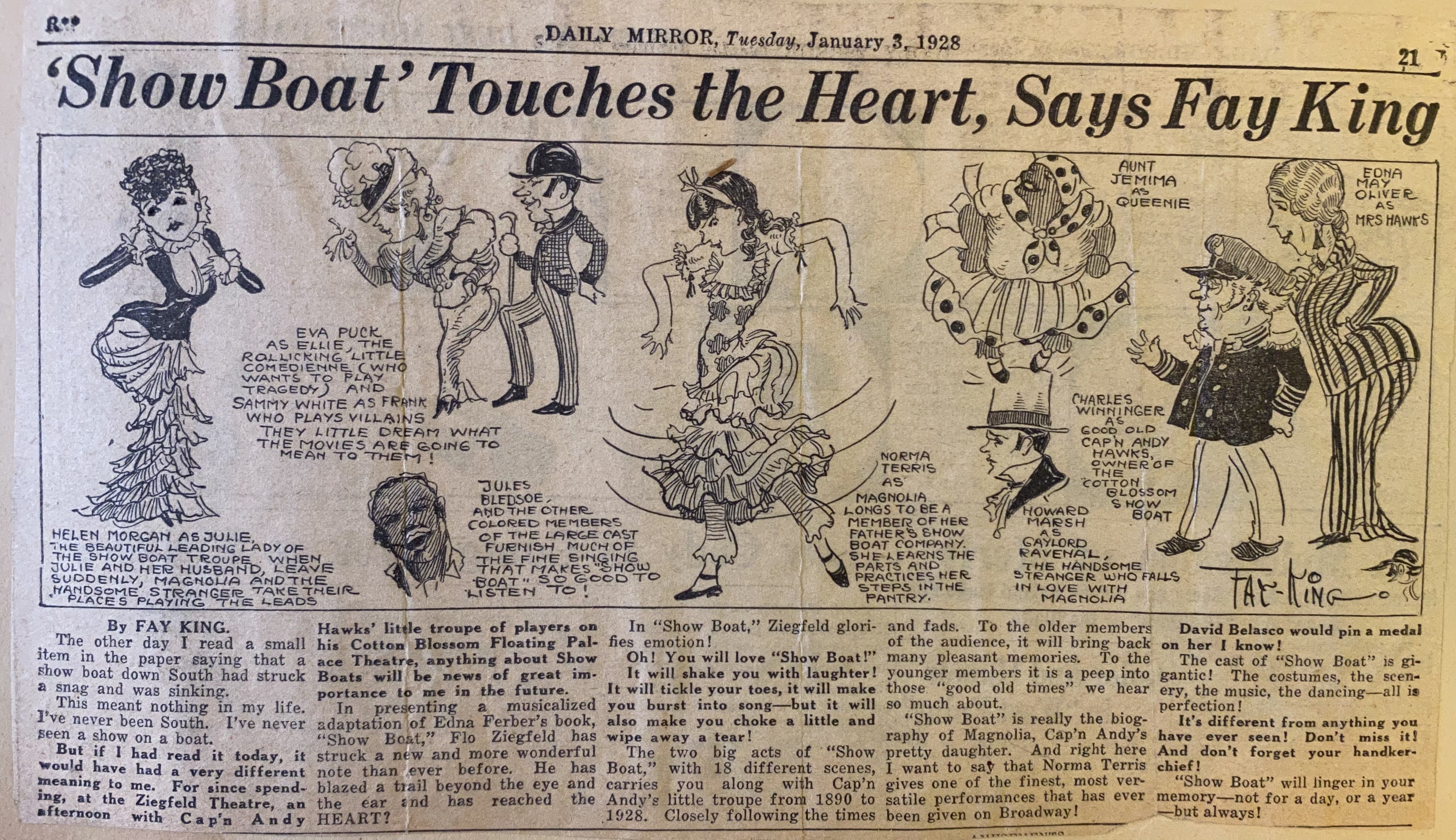
Musical theatre changed forever on December 27, 1927, when Kern and Hammerstein’s Show Boat opened at the Ziegfeld Theatre.
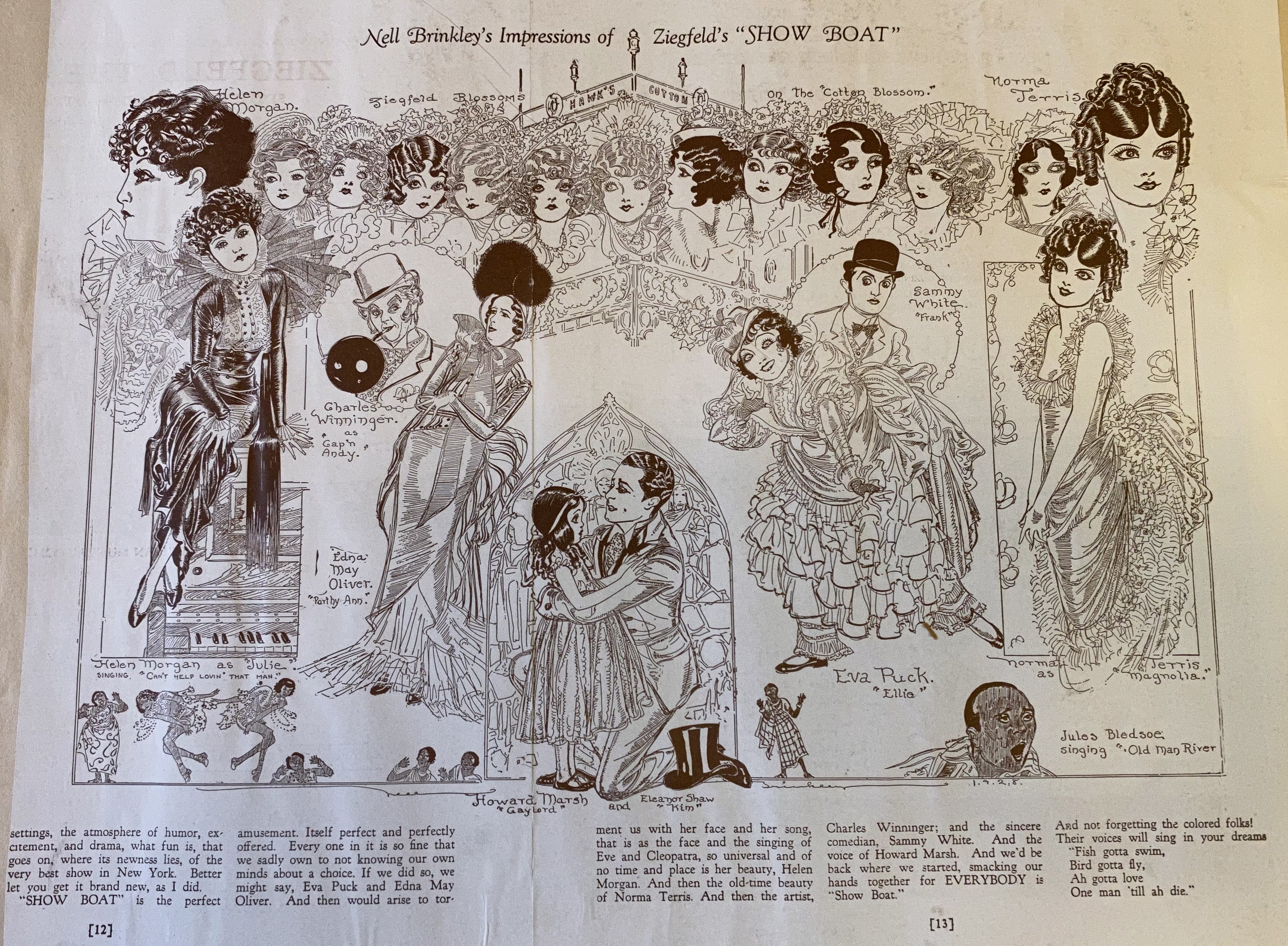
Take a moment today and revisit some of the gems from Kern’s score.
For starters …
… and a film record of the original production …
This site serves as a companion to Helen Morgan: The Original Torch Singer and Ziegfeld’s Last Star. Ask your local independent bookseller to stock it today!
Posted in Uncategorized | Tags: Jerome Kern, Oscar hammerstein, Show Boat, Showboat, Ziegfeld
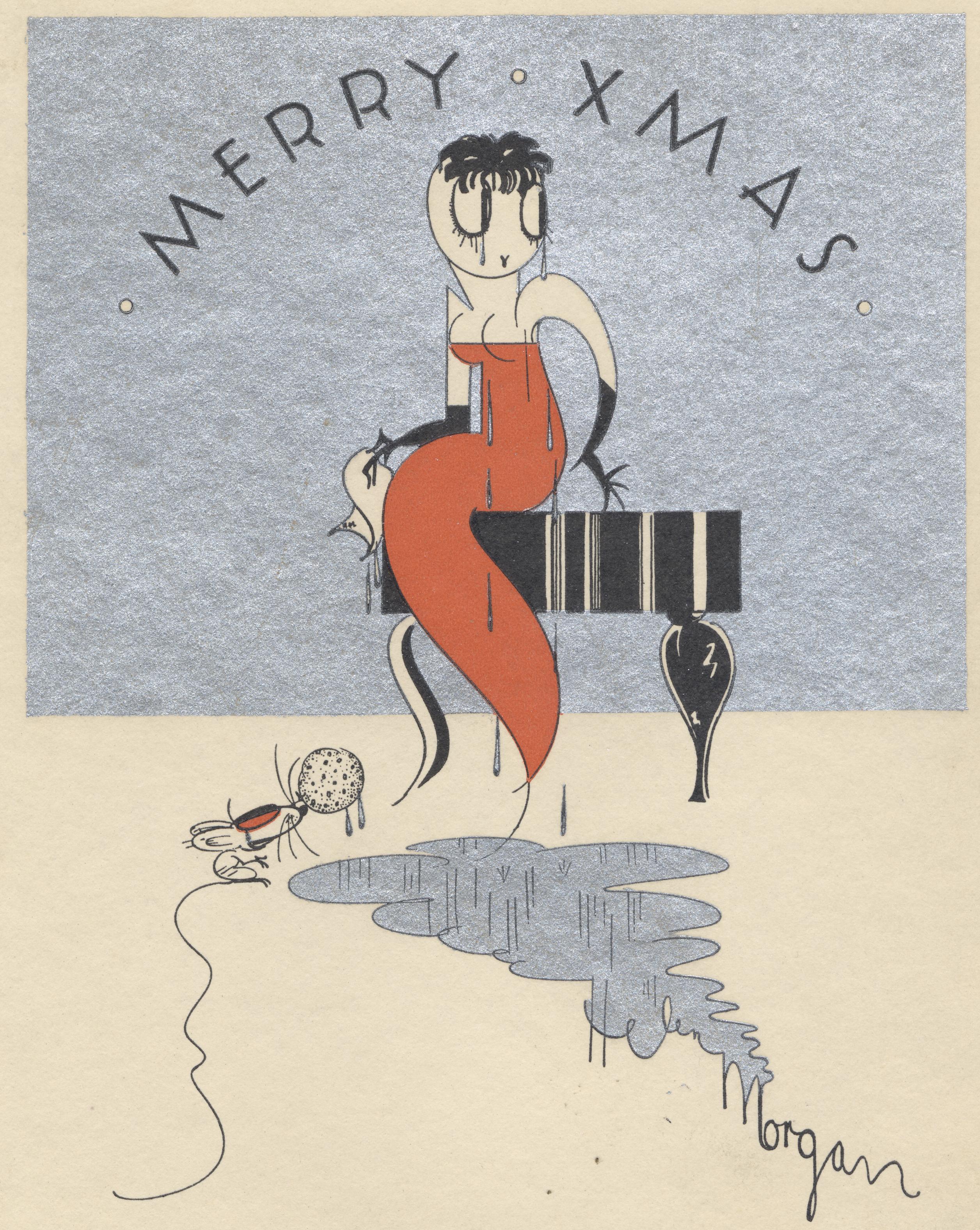
Best wishes for the holiday season from everyone here at helen-morgan.net
This site serves as a companion to Helen Morgan: The Original Torch Singer and Ziegfeld’s Last Star. Ask your local independent bookseller to stock it today!
Posted in Uncategorized | Tags: vintage christmas card, vintage xmas card
… 1920, the Frivolities of 1920 closed, and with it went Helen Morgan’s first job in a revue with a Broadway pedigree.
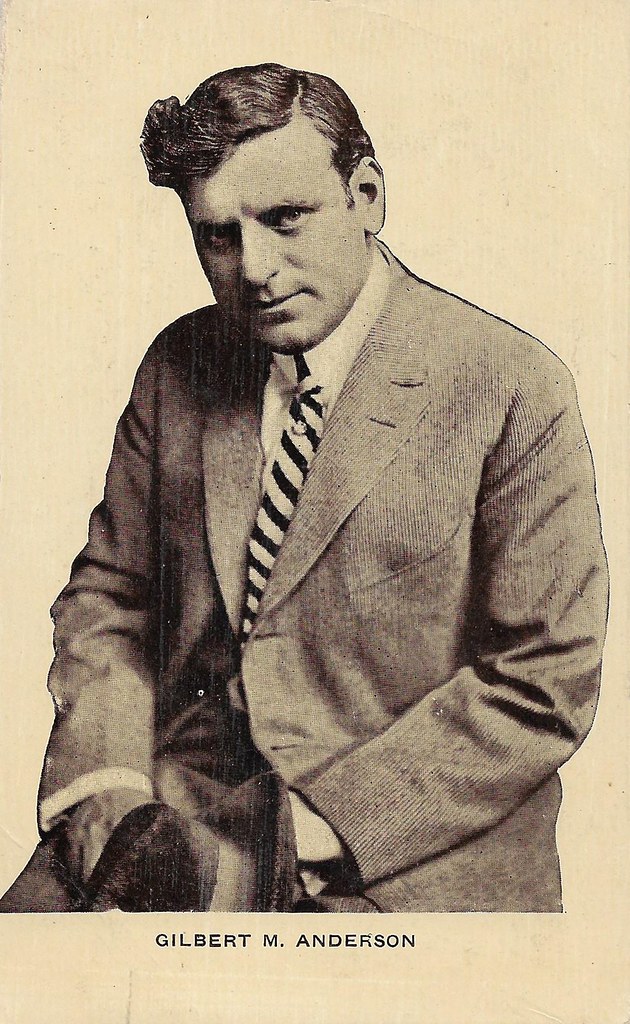
G. M. Anderson is best remembered as film pioneer “Bronco Billy.” He appeared in Edwin Porter’s 1903 The Great Train Robbery. In 1907, with George Kirke Spoor, he founded Essanay Studios. A decade later, Anderson became a Broadway producer and acquired the Longacre Theatre, where he produced four undistinguished plays between January 1918 and February 1919. Deciding that plays were not his ideal medium, he jumped on the bandwagon of those wishing to cash in on Ziegfeld’s Follies blueprint. With William Anthony McGuire to direct and write the sketches and, making his Broadway debut, William B. Friedlander to handle the score, Anderson readied his Friviolities of 1919 for a fall production.
Even in the most capable of hands, a revue of this size would be a daunting task, but for the three neophytes, the growing pains were excruciating. The 1919 Equity Strike of August-September 1919 put the production behind schedule and a late October tryout confirmed that the concoction was half-cooked. Anderson brought the production back into New York for more rehearsals … and for his writers to generate better material.[i]
On December 8, Anderson tried again, at the Boston Opera House.[ii] Critical and audience reaction was stronger than it had been in October, and, still called the Frivolities of 1919, the show opened at the 44th Street Theatre on January 6, 1920.[iii] The combination of bad reviews, an influenza outbreak, and a blizzard forced the production to shutter on Broadway after only seven and a half weeks.
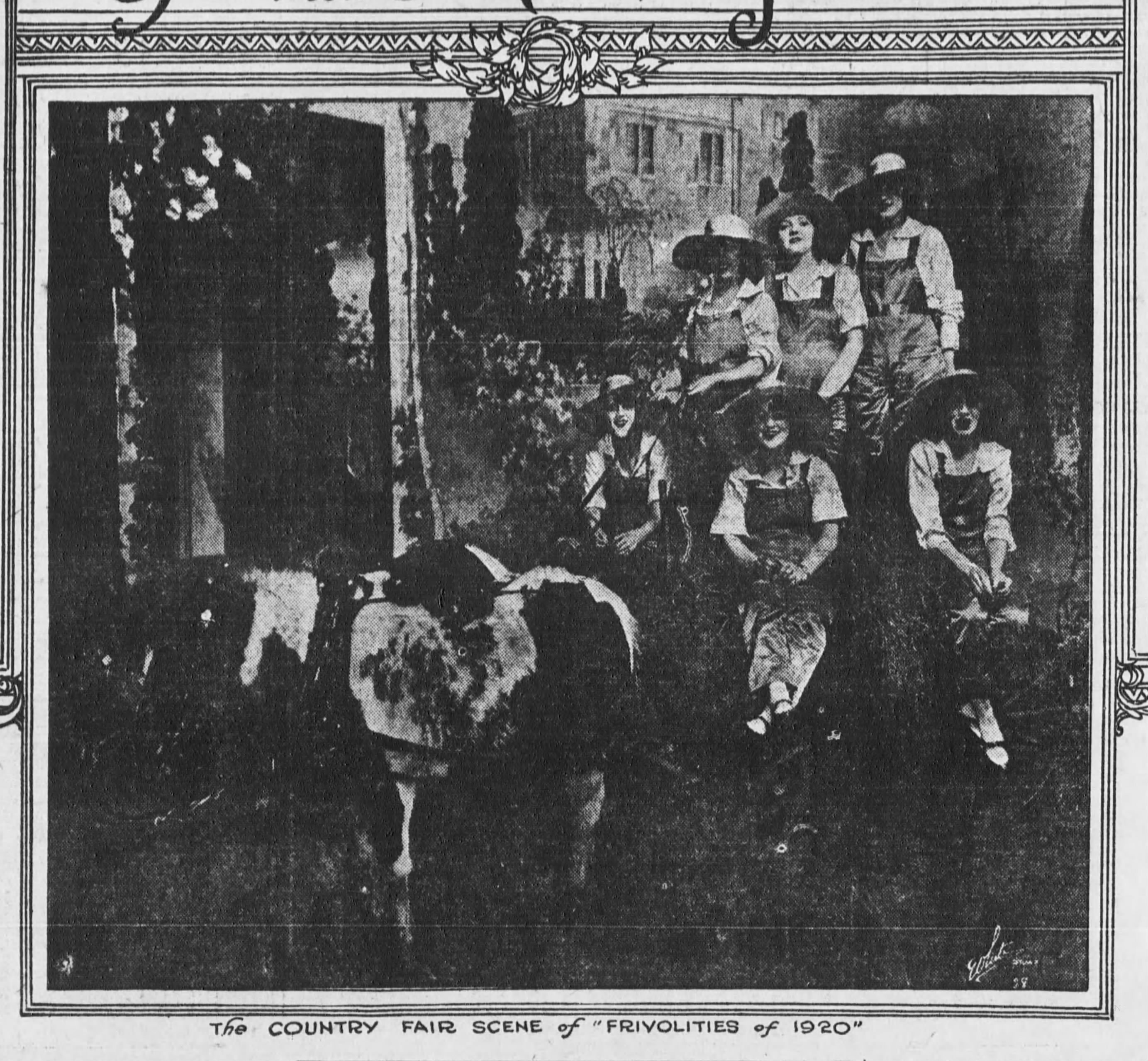
With its box office momentum shattered, the production went to the road. A three week stand in Philadelphia was followed by one-week jumps throughout the Mid-Atlantic and Great Lakes cities throughout May.
So certain that the Democratic National Conventioneers would want a break from the action to ogle the girls, the Blake and Amber Agency sent several to join the company in Salt Lake City on June 10 to augment the line before the show arrived in San Francisco and the convention.[iv] Although in later years, Production Manager Frank Hill remembered scrambling in Chicago to fill the ranks of his chorus prior to the Broadway opening, more than likely, his faulty memory concerned this push to back-fill his back line. In any event, one day a girl trio auditioned. The Morgan girl seemed too shy to be a successful chorine, but, with so many spots to fill, in desperation, Hill hired her anyway.[v]
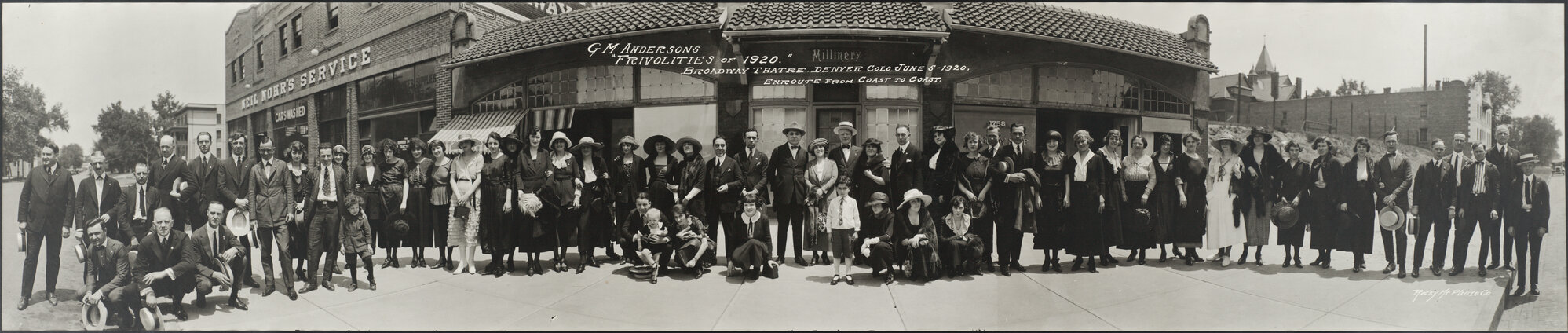
Between Salt Lake and San Francisco, the show played a profitable week in Los Angeles. It was lucrative for the girls as well, as they spent their daytime hours appearing with Jimmy Aubrey and Oliver Hardy in a Vitagraph short.[vi] The Frivolities made money on the Barbary Coast. Anderson added an additional performance to lure conventioneers at a time when they would be expected on the floor, but in he end, the stand was not the goldmine he had banked on. However, when he did not pay his choristers for the extra performance, complaints were filed with Equity[vii] Specialty dancers Joseph Cole and Gertrude Denahy were also added to the Frivolities while in San Francisco. The couple debuted on July 6, were given a few requests for changes, but when they returned the following night, they were informed they had been cut from the show. When Anderson refused to pay them for the one performance, they sued, and Anderson, claiming there was no contract and he was merely offering the dancers a tryout, was arrested.[viii] By point of contrast, the Barr Twins (specialty dancers) left the show just prior to the exodus out west. One sister claimed to be ill. Perhaps, but a month later, the sister act was back on Broadway in the Shubert revue Cinderella on Broadway. Anderson sued them for the oddly precise sum of $4700.
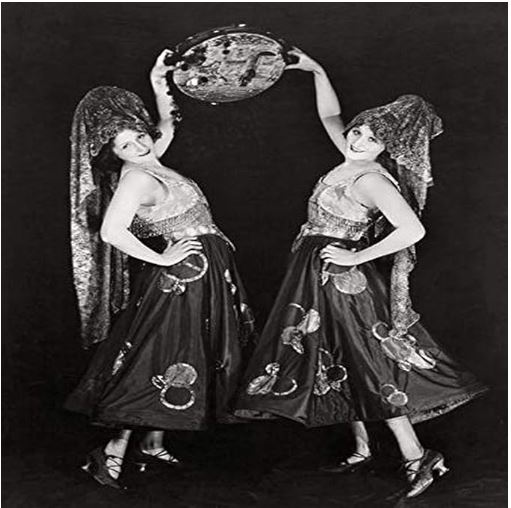
In August, the production returned to San Francisco for an additional two weeks … but at reduced prices. After Labor Day, business dried up and money problems haunted the production. While in Oakland, the Gille Show Print Company attached the production for an outstanding bill of $700. No sets or costumes were permitted to leave the theatre until the bill was settled.[ix] Beginning August 29, the company endured fourteen weeks of (almost exclusively) one and two-night stands as the tired production inched its way back to the mid-west. If Helen did not join the company on the trip out west, she joined later in the fall.
In December, things began to look up for the company as it settled back into full-week stands, but business in St. Louis was so bad, the production transferred to Kansas City C.O.D. The advance in Kansas City was adequate, but the press panned the production, which effectively dried up business for the remainder of the run. With no hope for payment, chorus girls Kittie Kelley and Marion Taylor appealed to a free legal aid society, claiming they had not received a penny in two weeks. Then …
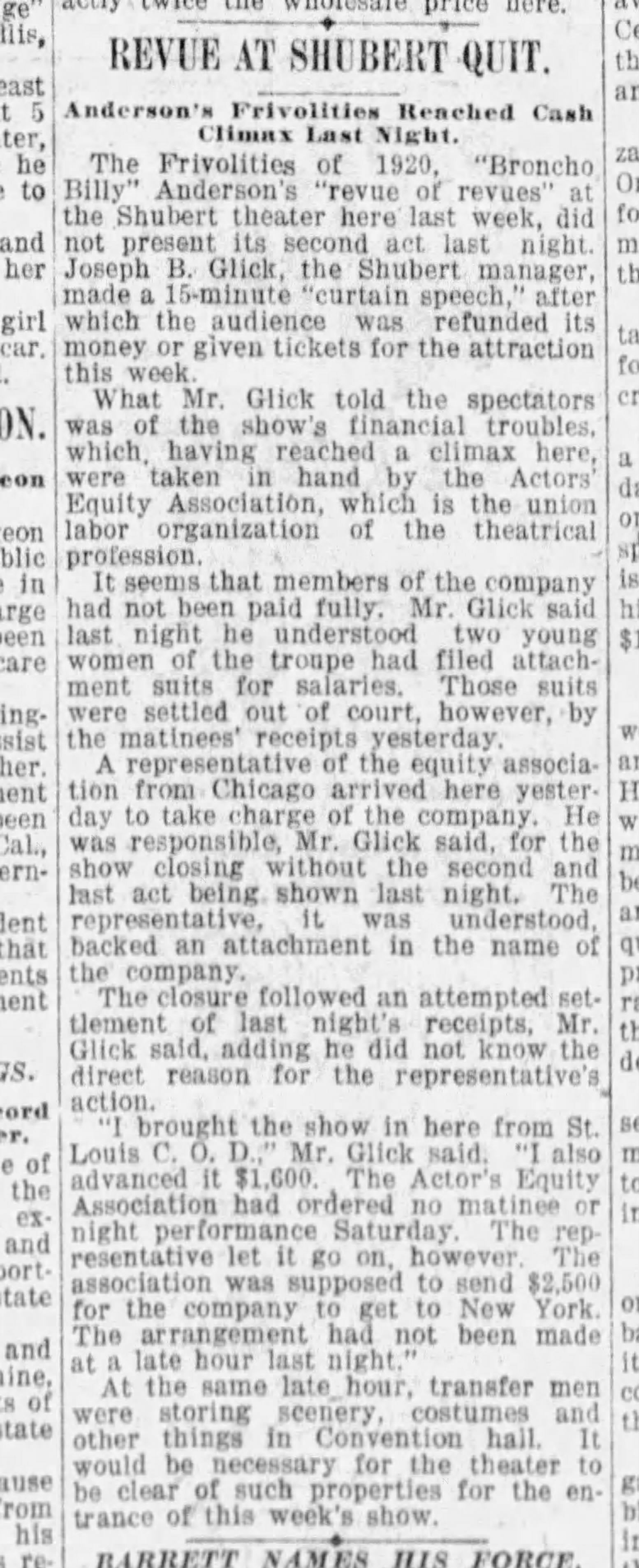
The production was stored in the Kansas City Convention Hall until May 1921, when Equity sold the collection, valued at $160,000 … for $7,000. It is unclear just who ended up with the Frivolities production, although in September, Anderson himself announced plans to produce a Frivolities of 1921, based on his original production.[x] In any event, a tabloid production with a new and unknown cast played two performances a day well into 1922.[xi]
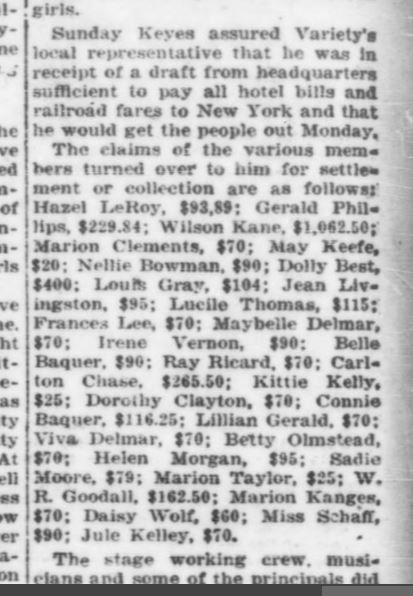
Equity made good on their promise to the company, many of whom had been subsisting on apples. One girl, who had threatened to quit a month or so before the contretemps was told she could walk back to Chicago if she didn’t like how she had been treated.[xii] Among the claims for back payment came one note for $95 … from Helen Morgan.[xiii]
Part of Anderson’s cash-flow problem was his new production, a west coast revival and tour of his last Longacre production, Just Around the Corner.[xiv]The production broke in at San Francisco’s Savoy on October 18 and, again, played one and two-nights stands anywhere west of the Mississippi where Anderson could find a booking. Business was no better and this company had also gone two weeks without payment when Anderson, on his own terms, closed the production on Christmas night at the Pueblo Opera House. Equity, once again, stepped in and wired money to the company to get back to San Francisco.[xv]
Below is the Frivolities schedule, from its Broadway premiere to its eventful closing night, one hundred and four years ago.
| 1920 Jan 8 – Feb 28 | 44th Street | New York |
| Mar 1-20 | Chestnut St. Opera House | Philadelphia |
| 21-27 | Poli’s | Washington, DC |
| Mar 29 – Apr 3 | Auditorium | Baltimore |
| Apr 5-10 | Playhouse | Wilmington, DE |
| 12-17 | Globe | Atlantic City |
| 19-24 | Sam S. Shubert | New Haven, CT |
| Apr 26- May 1 | Tech | Buffalo |
| May 3-8 | Royal Alexandra | Toronto |
| 10-15 | Colonial | Cleveland |
| 17-22 | Sam S. Shubert | Detroit |
| 24-29 | Alvin | Pittsburgh |
| 30-31 | Oliver | South Bend, IN |
| Jun 1 | Englert | Iowa City |
| 3-6 | Broadway | Denver |
| 7 | Burns | Colorado Springs |
| 9 | Orpheum | Ogden, UT |
| 10-12 | Salt Lake | Salt Lake City |
| 14-19 | Mason Opera House | Los Angeles |
| Jun 21 – Jul 17 | Loew’s Casino | San Francisco |
| Jul 22-23 | Cline | Santa Rosa |
| 24 | Hill | Petaluma, CA |
| 25-26 | Victory | San Jose |
| 27 | T&D | Stockton, CA |
| 29 | Modesto Theatre | Modesto, CA |
| 31 | California | Turlock, CA |
| Aug 2-14 | Columbia | San Francisco |
| 15-17 | Clunie | Sacramento |
| 18 | Victory | San Jose (return engagement) |
| 19 | Monterey | Monterey |
| 20 | T&D | Watsonville, CA |
| 21 | Casino | Santa Cruz |
| 22-28 | Liberty | Oakland |
| 29 | T&D | Stockton (return engagement) |
| 30 | Theatre Visalia | Visalia, CA |
| Sep 1 | Bakersfield | Bakersfield |
| 3 | T & D | Hanford, CA |
| 5-6 | Orpheum | Fresno |
| 8 | Majestic | Chico, CA |
| 11-12 | Page | Medford, OR |
| 14 | Grand Opera House | Salem, OR |
| 16-17 | Tacoma | Tacoma, WA |
| 18 | Liberty | Centralia, WA |
| 20-21 | Royal Victoria | Victoria, BC |
| 22-23 | Avenue | Vancouver, BC |
| Sep 28 – Oct 1 | Auditorium | Spokane, WA |
| Oct 2 | Liberty | Missoula, MT |
| 3 | Margaret | Anaconda, MT |
| 4-5 | Colonial | Idaho Falls, ID |
| 6-7 | Broadway | Butte, MT |
| 8-9 | Grand | Great Falls, MT |
| 10 | Marlowe | Helena, MT |
| 12-13 | Babcock | Billings, MT |
| 14 | Auditorium | Bismarck, ND |
| 15 | Opera House | Jamestown, ND |
| 16 | Grand Opera House | Fargo, ND |
| 18 | Rex | Chippewa Falls, WS |
| 19 | Grand Opera House | Eau Claire, WS |
| 20 | Grand Opera House | Winona, MN |
| 21 | Grand Opera House | Dubuque, IA |
| 22 | Waterloo | Waterloo, IA |
| 23 | Odeon | Marshalltown, IA |
| 24 | Grand Opera House | Ottumwa, IA |
| 25 | Grand Opera House | Burlington, IA |
| 26 | Grand Opera House | Keokuk. IA |
| 27-28 | Burtis Opera House | Davenport, IA |
| 29 | Greene’s | Cedar Rapids, IA |
| 30-31 | Clinton | Clinton, IA |
| Nov 1 | Academy of Music | Sterling. IA |
| 2 | Al Ringling | Portage, WI |
| 5 | National | Racine, WI |
| 6 | Rockford | Rockford, IL |
| 9 | New Plumb | Streator, IL |
| 10 | Gayety | Ottawa, IL |
| 12 | Chatterton | Bloomington, IL |
| 13 | Chatterton | Springfield, IL |
| 16 | Pattee Opera House | Monmouth, IL |
| 20 | Grand | Burlington, IA |
| 21-24 | Brandeis | Omaha |
| 25-27 | Lyceum | St. Joseph, MO |
| 29 | Grand | Topeka, KS |
| 30 | City Theatre | Junction City, KS |
| Dec 1 | Brown Grand | Concordia, KS |
| 2 | Marshall | Manhattan, KS |
| 3-4 | Crawford | Wichita. KS |
| 6-11 | Shubert-Jefferson | St. Louis |
| 12-18 | Shubert | Kansas City. MO |
This site will serve as a companion to Helen Morgan: The Original Torch Singer and Ziegfeld’s Last Star, which was published on September 3, 2024.
[i] Variety, October 10, 1919, p. 14, October 24, 1919, p. 17 and October 31, 1919, p. 15.
[ii] Boston Daily Globe, December 9, 1919.
[iii] Frivolities of 1920 (January 8m 1920, 44th Street Theatre) The cast boasted the services of Edward Gallagher, just prior to his reteaming with Al Shean.
[iv] Variety, June 11, 1920, p. 16.
[v] Soanes, Wood. “Curtain Calls” Oakland Tribune, October 15, 1936, p. 27. The whole quote is: “[This is] the same youngster I hired for the line in Chicago one time with G. M. Anderson’s Frivolities. We’d had to get a few girls and I send (sic) the stage management out to rustle up some local talent. A trio showed up and one of them was a black-haired youngster who seemed altogether too shy to be a chorine. I hired her in desperation and she went on to New York with us. Always minded her own business and never showed up around the office except on pay nights. Somebody told me that she had tried out for opera but couldn’t cut the buck. Well, we finally folded, as you know, and I never saw her again until tonight.”
[vi] The Portsmouth Times, August 29, 1920, p. 18. identified this short as Paradise Alley. According to Richard M Roberts, “Paradise Alley” was the nickname for the Vitagraph tenement/slum set. Perhaps the short was His Jonah Day.
[vii] Variety, July 23, 1920, p. 13.
[viii] New York Clipper, July 28, 1920, p. 5. – Anderson apparently felt he could engage any act on a trial basis, contract or no contract. Saxi Holtsworth and his Jazz Band were promised 6 weeks employment at $300 per on October 18, 1919, but on November 4, 1919, while the show was back in New York for repairs, they received a letter stating their services were no longer required. They sued for the remaining four weeks of salary promised them. Variety, February 13, 1920, p. 13.
[ix] Variety, September 10, 1920, p. 9.
[x] The Billboard, May 21 and September 18, 1921
[xi] Indianapolis Star, May 5, 1922, p. 9.
[xii] New York Dramatic Mirror, December 25, 1920.
[xiii] Variety, December 24, 1920.
[xiv] Just Around the Corner (February 5, 1919, Longacre)
[xv] New York Clipper, December 29, 1920.
Posted in Uncategorized | Tags: 1920s, 1930s, Actor's Equity, Actors Aquity, Actors' Equity, barr twins, broadway, bronco billy, Equity strike, Essanay, frivolities of 1919, Frivolities of 1920, g m anderson, George Kirke Spoor, history, just around thecorner, movies, revue, the great train robbery, ziegfeld follies
… 1933, REPEAL became the law of the land.
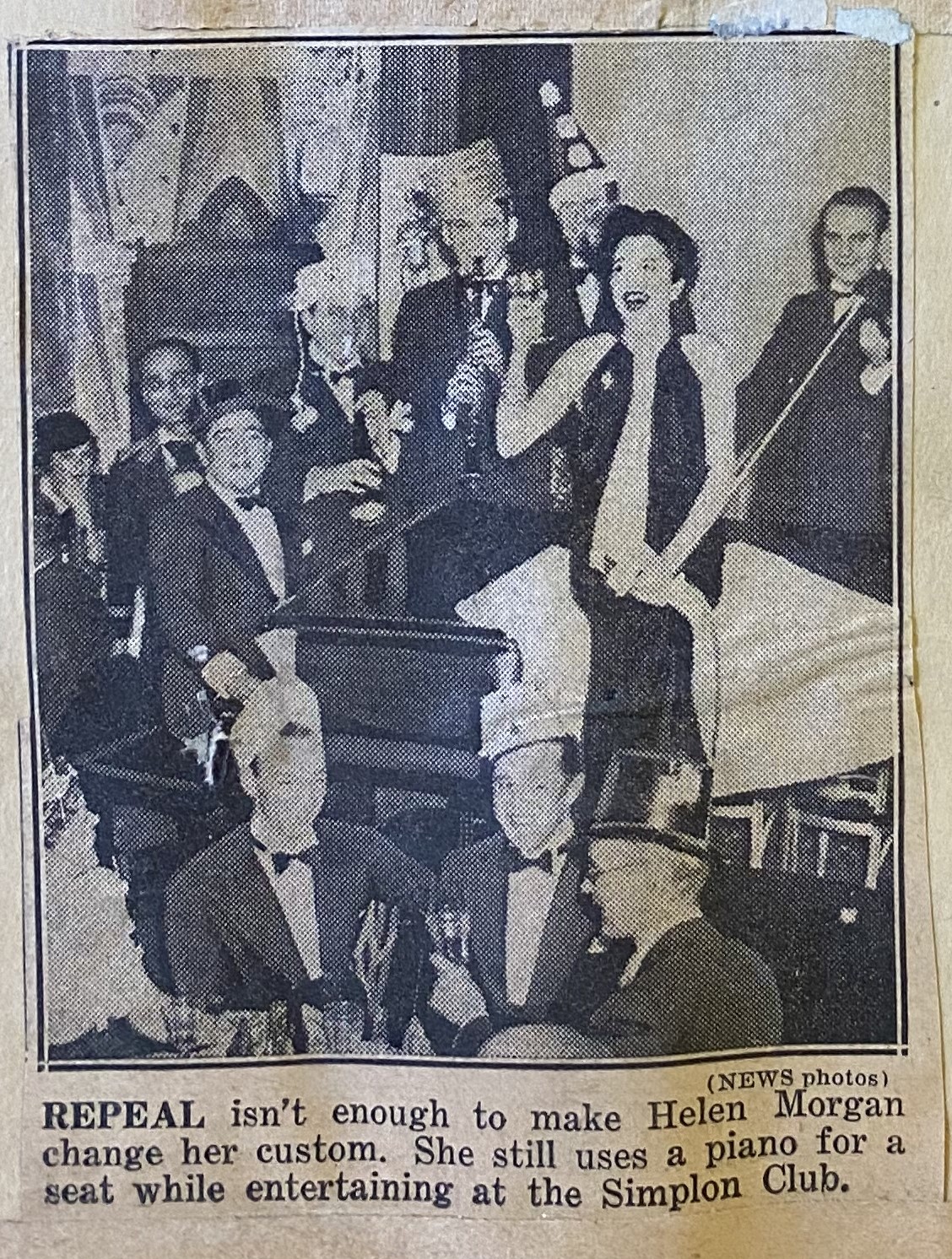
Ninety-one years ago today, Utah (yes, Utah) became the thirty-sixth state to ratify the 21st Amendment to the U. S. Constitution, thereby repealing the 18th Amendment, a.k.a., Prohibition.
And Utah did so unanimously.
For the record, the 18th Amendment, ratified on January 16, 1919 and which went into effect January 17, 1920 stated:
After one year from the ratification of this article the manufacture, sale, or transportation of intoxicating liquors within, the importation thereof into, or the exportation thereof from the United States and all territory subject to the jurisdiction thereof for beverage purposes is hereby prohibited.
The 21st stated:
The eighteenth article of amendment to the Constitution of the United States is hereby repealed.
However, the amendment added:
This article shall be inoperative unless it shall have been ratified as an amendment to the Constitution by conventions in the several States, as provided in the Constitution, within seven years from the date of the submission hereof to the States by the Congress.
Repeal did not take seven years to ratify. It took just over seven months.
On February 20, 1933, Congress passed the Blaine Act. The order of ratification at the state level is as follows:
On the 5th of December, at exactly 5:33 in the afternoon, Joe Weber of Weber and Fields downed a glass of champagne in the Hunting Room of the Hotel Astor and New York went wet, but not wild.[i] Most nightclubs limited themselves to beer, wine, and champagne, lest some last-minute snag cause a legal hangover. Cocktails would wait a bit.
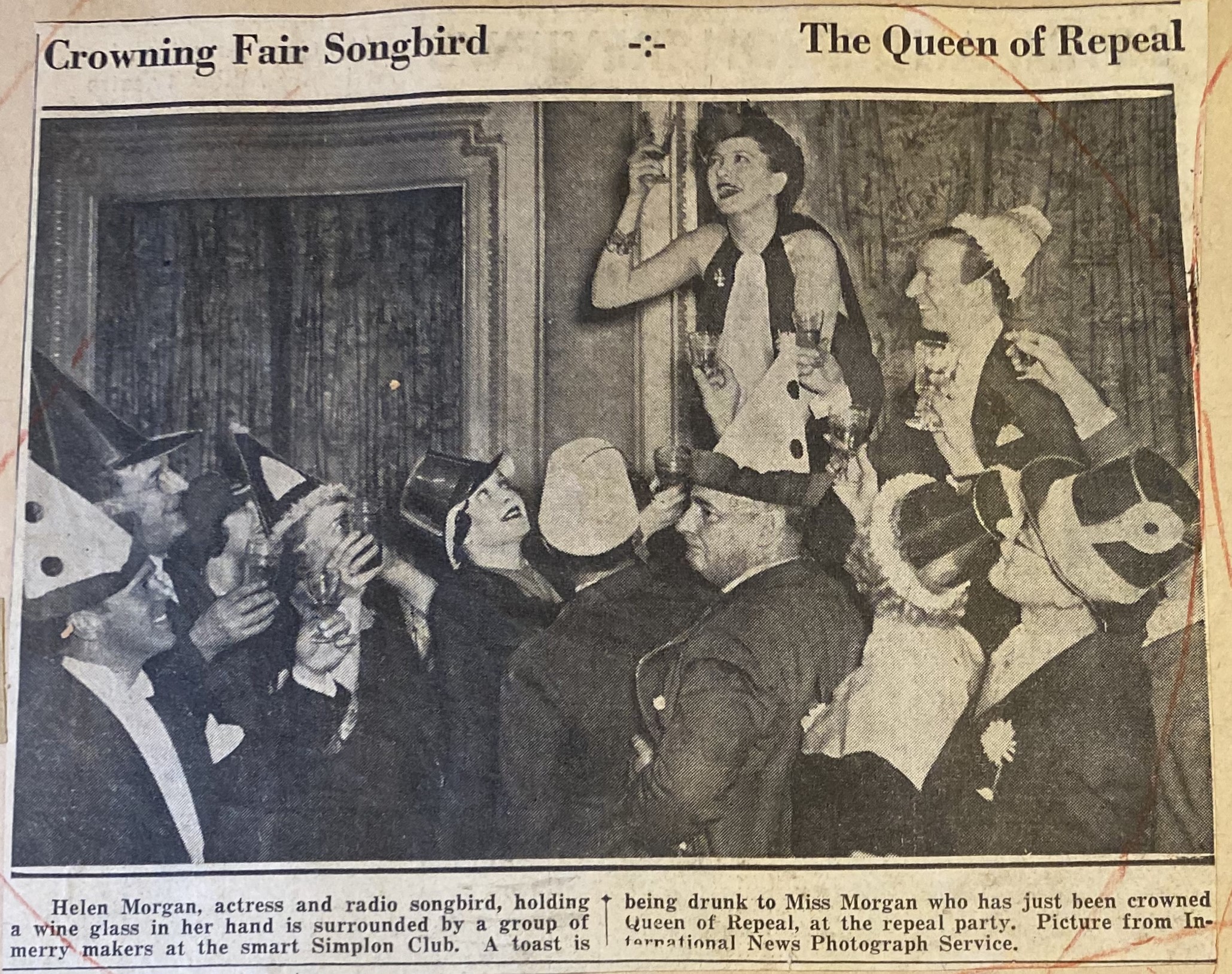
At the Simplon, also in New York, Helen was crowned ‘Queen of Repeal.’
Don Dean, the Oklahoma-born South American big band leader, in Los Angeles at the time, flew to New York and the Simplon just for the occasion.
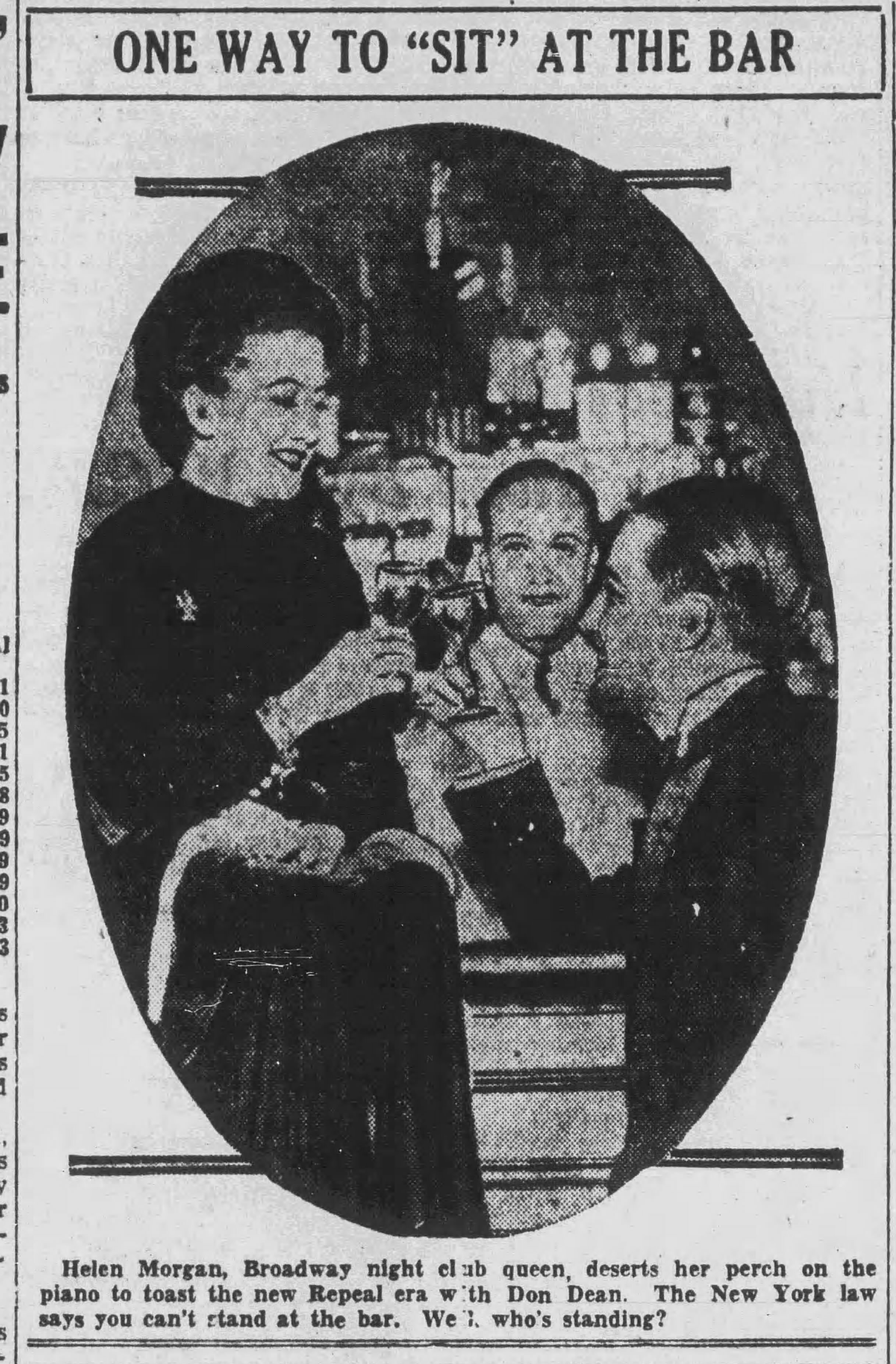
On today’s anniversary, follow Helen’s lead – responsibly – and lift a glass to Repeal!
This site serves as a companion to Helen Morgan: The Original Torch Singer and Ziegfeld’s Last Star, which was published on September 3, 2024.
[i] Lewis, Emory, “A Toast to Repeal”, Cue, December 1953.
Posted in Uncategorized | Tags: 18th Amendment, 21st Amendment, american-history, blaine act, Don Dean, history, Hotel Astor, humor, joe weber, prohibition, repeal, Simplon, weber and fields
 The Helen Morgan Page