… from helen-morgan.net.

… from helen-morgan.net.
Posted in Uncategorized | Tags: Christmas, Helen morgan, Season's greetings, vintage christmas card, Xmas
… 1931, “Ode to a Porcelain Cat” became Helen Morgan’s first poem to be published. Apropos of nothing, November 21, 1931 also marked the closing day of Ziegfeld Follies of 1931 (Morgan left the production two weeks prior to closing night). Anyway, here’s the poem:
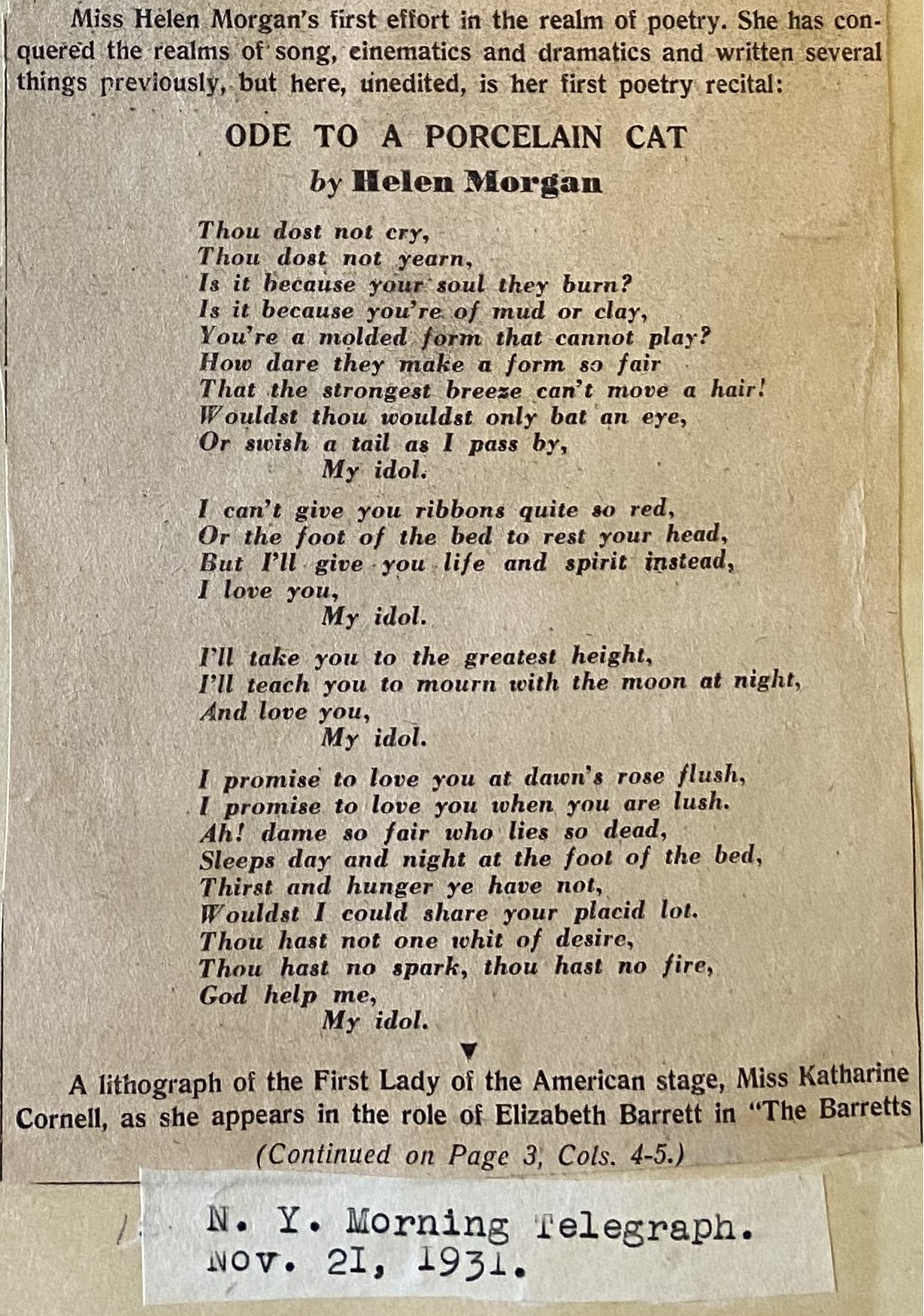
The New York American praised the more ambitious “Mother and Child,” although it escaped publication, as did her subsequent work, “Ode to a Duck” and “Conversation Between Two Cats.”[i]
She sold two poems to College Humor.[ii]A year passed before the magazine published her, a bit of whimsy called “Lover Camels.”
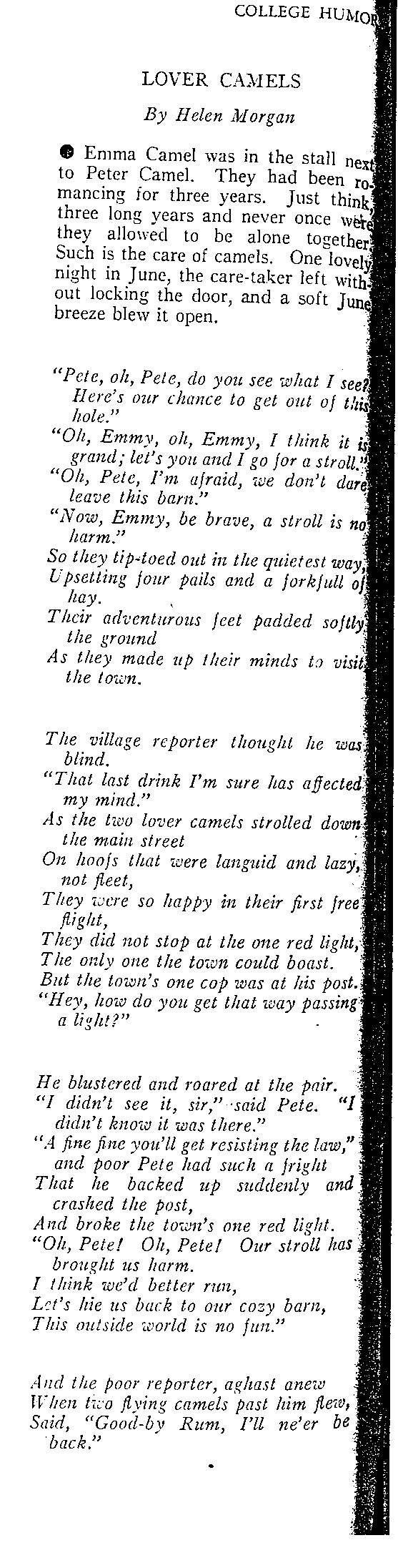
The magazine ultimately passed on the other, a piece of stray verse “about a China doll on the mantelpiece and a snooping bronze cat on the hearthstone.”[iii]
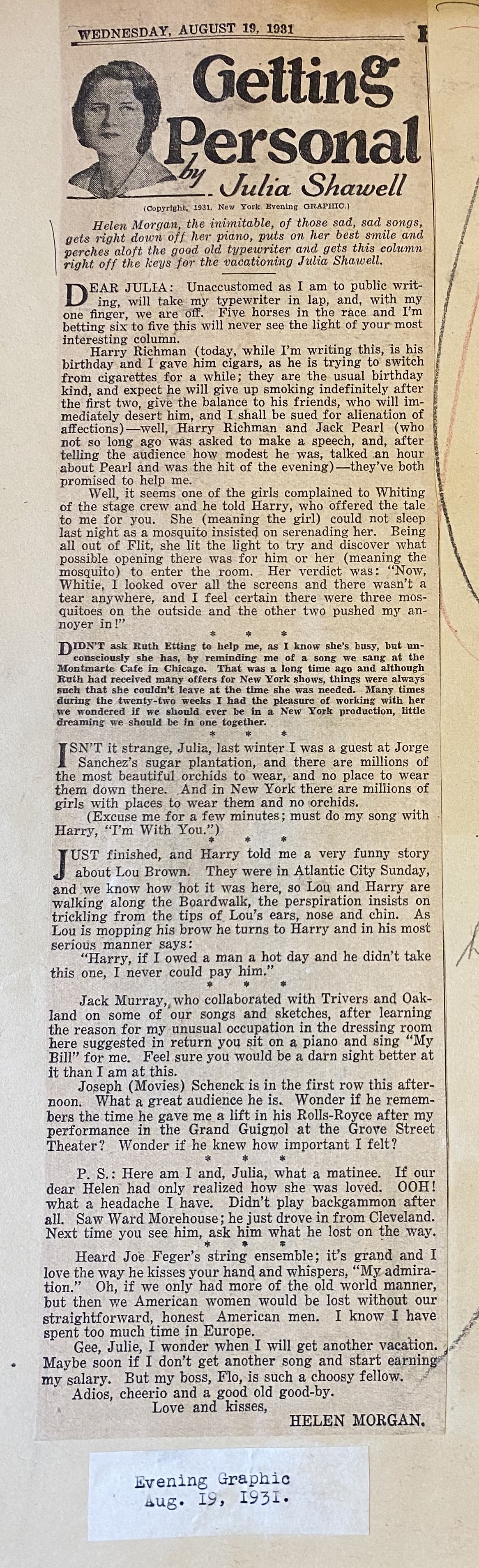
While “Ode to a Porcelain Cat” was Morgan’s first poem to be published, it was not her first time in print. The previous August, she subbed for Julia Shawell’s Evening Graphic column. While it’s nice to get a bit of backstage babble during the run of Ziegfeld Follies of 1931, it’s clear that Morgan, with her overgenerous heart, did not have the makings of a gossip columnist.
[i] New York American, November 7, 1931 and Schurrer, Juanita, “Helen Morgan Enthusiastic about ‘Show Boat’; Began Singing at Six,” unidentified Highland Park, Michigan newspaper, May 1936
[ii] McIntyre, O. O., “New York Day By Day.” Reno Evening Gazette, October 1, 1931
[iii] “… cat on the hearthstone.” – Sobel, Bernard. Broadway Heartbeat: Memoirs of a Press Agent, p. 127
… 1929, Helen Morgan recorded two songs from the Kern-Hammerstein stage musical, Sweet Adeline.
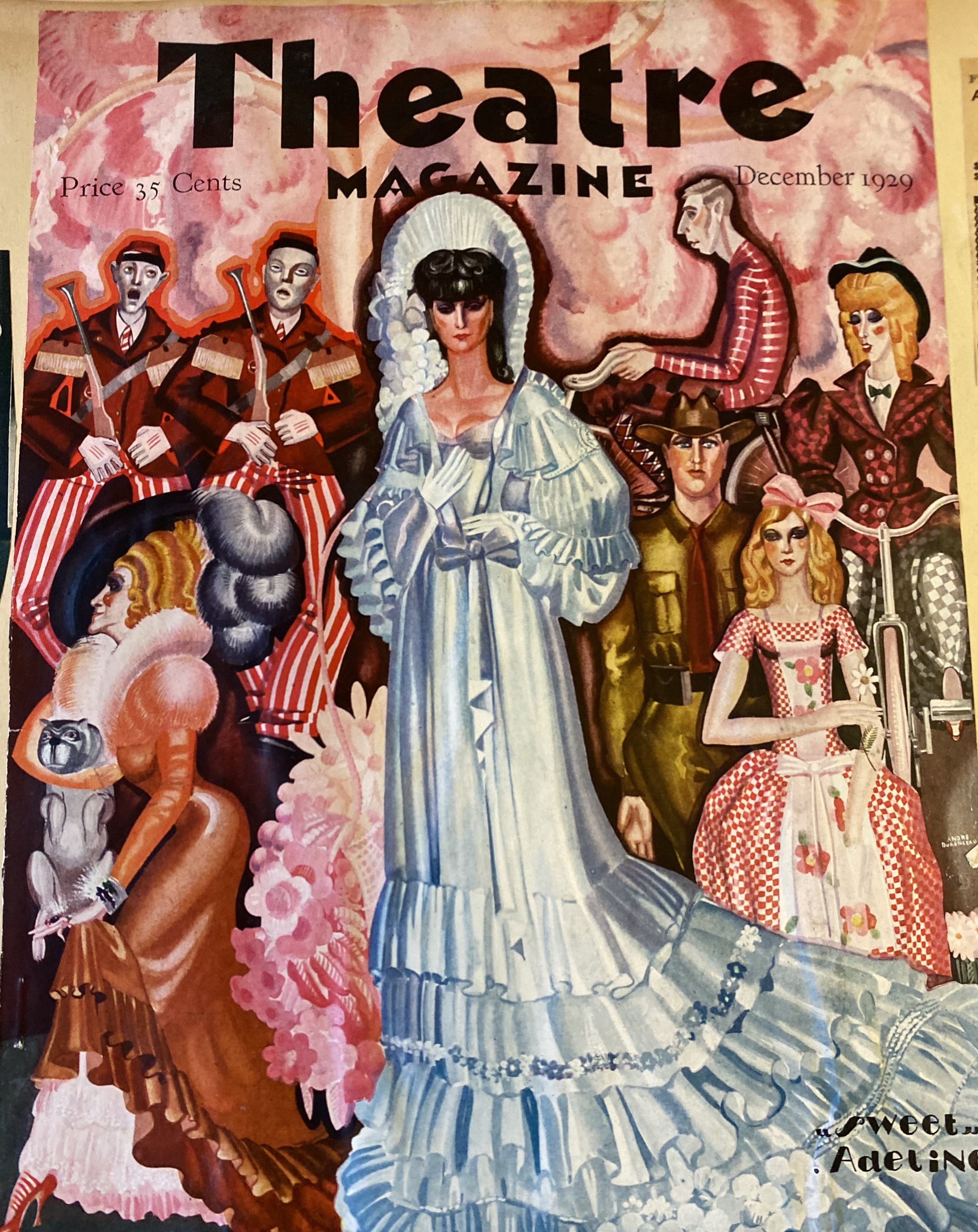
Curiously, she did not record all of her numbers from Sweet Adeline, as she did with Show Boat in 1928.
Thanks to her efforts, the two sings she recorded on this day, “Don’t Ever Leave Me!” …
… and “Why Was I Born?” …
… became standards.
And while we should remain grateful Victor Records gave us what they did, it raises the question, why didn’t they record her other three songs from Sweet Adeline?
Good question.
A mere eight days before, Morgan recorded “What Wouldn’t I Do for That Man” from her films Applause and Glorifying the American Girl, with a song (“More Than You Know”) from the soon-to-open stage musical Great Day.
Clearly, the issue wasn’t a fear of oversaturation. In October 1929, Victor was quite bullish on Helen Morgan.
Nor was it a lack of enthusiasm for Morgan’s other material in the show: they recorded two of her other numbers, “Here Am I” and “‘Twas Not So Long Ago” … with other artists.
What’s particularly odd is that, in the stage musical, “Here Am I” and “‘Twas Not So Long Ago” were Morgan solos. “Don’t Ever Leave Me!” was introduced as a duet, and a triumphant, full-throated duet at that. Only later in the show did Helen reprise it as a torchy solo.
Odder still is that critical reaction in 1929 more often praised Morgan’s other numbers over “Don’t Ever Leave Me!” That’s not to say that critics and the public did not care for “Don’t Ever Leave Me!” – they did, but not with the same level of enthusiasm shown to her other songs in the show, as displayed by Brooks Atkinson’s review in The New York Times:
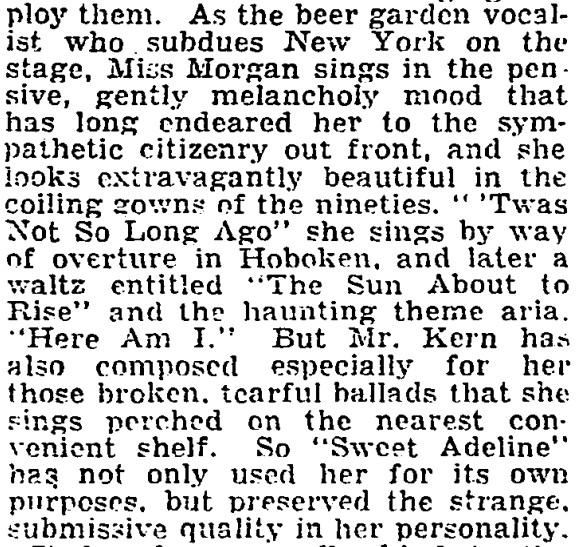
That fifth Sweet Adeline number, “The Sun About to Rise” was another duet (with chorus) she sang in the show with Robert Chisholm. The baritone cut only a couple of commercial tracks … and for Brunswick, not Victor. Still, the thought of a Morgan-Chisholm disc of “The Sun About to Rise” coupled with “Don’t Ever Leave Me!” – alongside a Morgan solo disc of her other numbers, is the stuff dreams are made of.
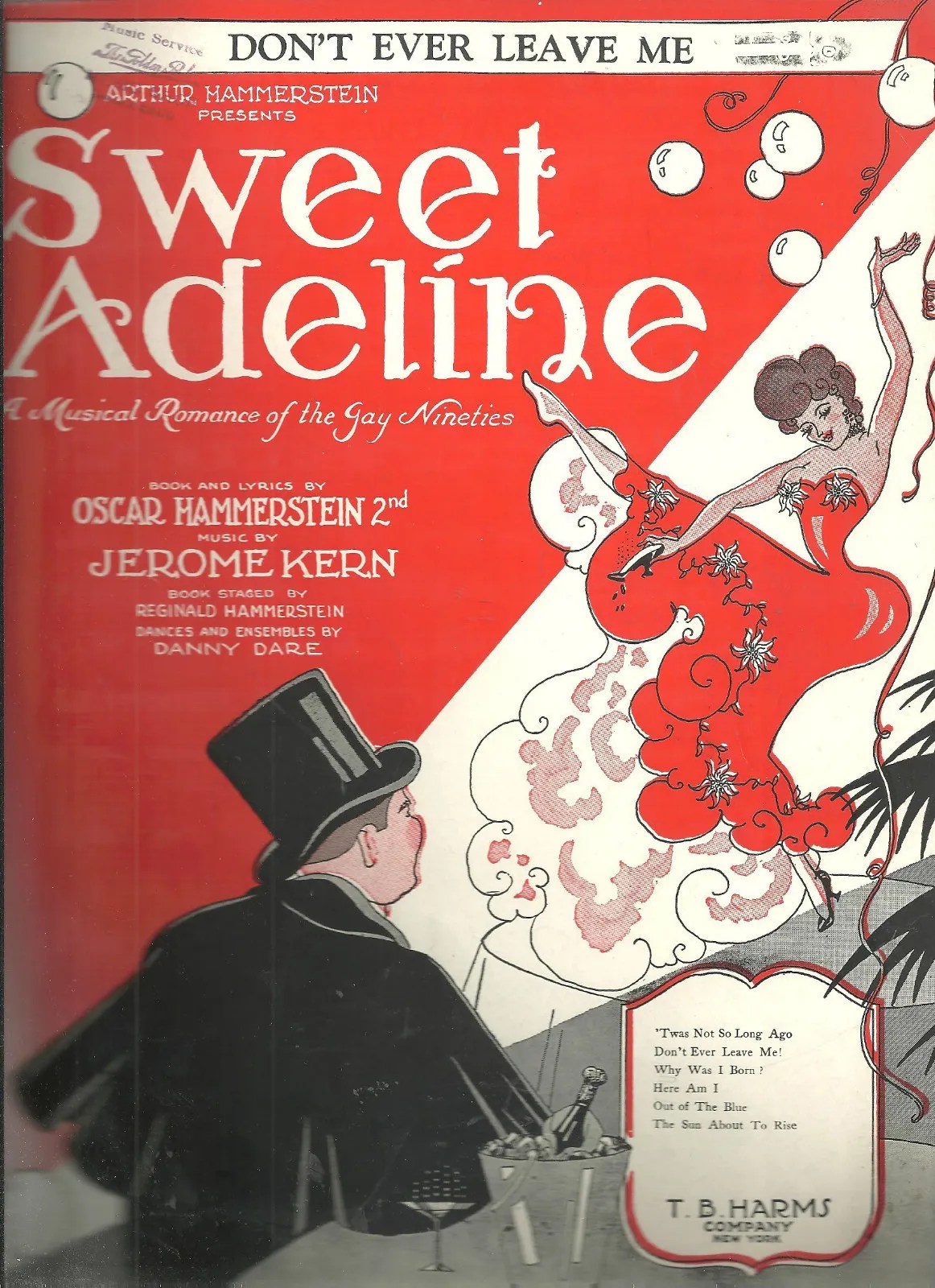
But, at the end of the day, Victor had its chance to record all five Morgan numbers from Sweet Adeline and chose only two. Within a few months, the Depression cast its pall over everything. Morgan would wax only two more discs for Victor – one in 1930 and one in 1934 – before cancelling her contract.
Morgan continued to sing her other Sweet Adeline songs in concert and on the radio, as the roster from a September 1929 appearance on The Majestic Theatre on the Air so tantalizingly indicates:
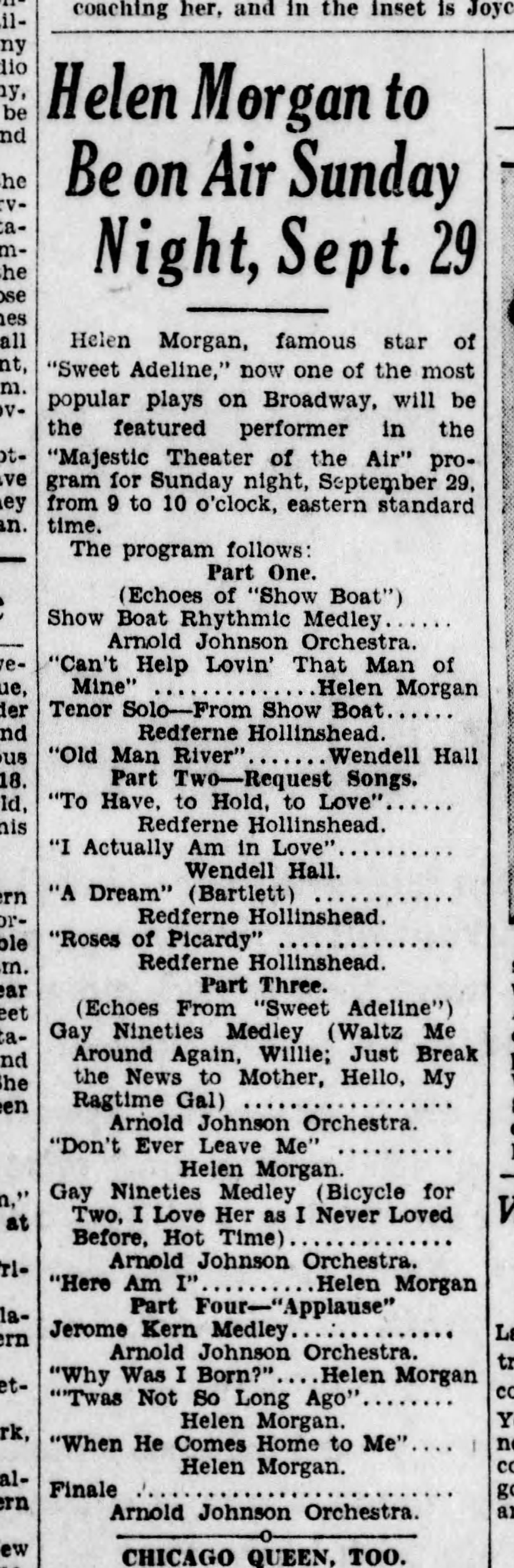
If only someone had recorded that performance!
For more on Sweet Adeline, there’s this.
This site serves as a companion to the book Helen Morgan: The Original Torch Singer and Ziegfeld’s Last Star.
Helen Morgan once appeared in a horror/slasher film.
But not during her lifetime.
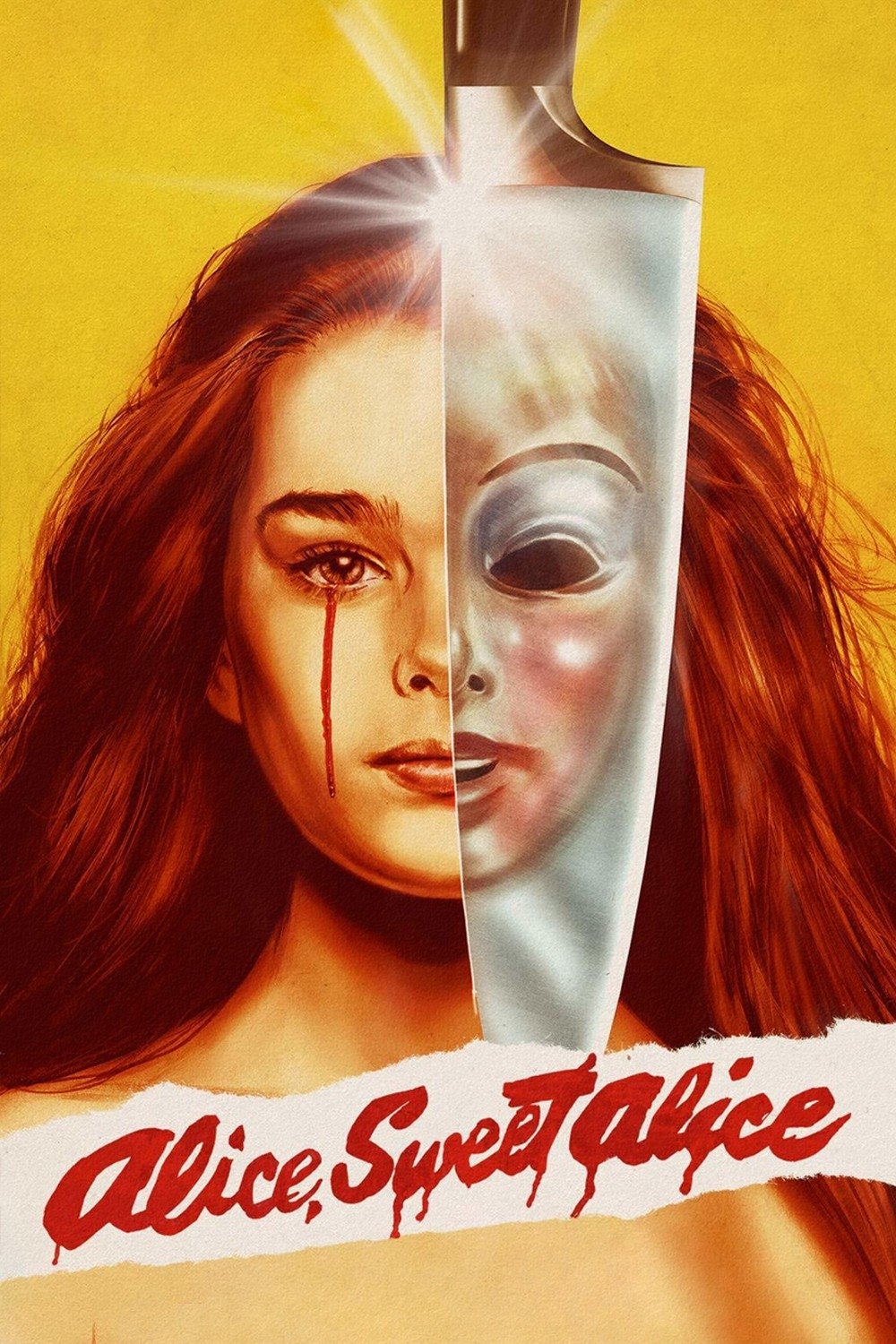
Primarily remembered today as the film debut of Brooke Shields, Alfred Sole’s 1976 Hitchcockian thriller Alice, Sweet Alice1 might better be described as the link between the demonic/religious-themed horror films of the late 1960s and early 1970s (Rosemary’s Baby, The Exorcist, The Omen) and the slasher films (Halloween, Friday the 13th) of the late 1970s and 1980s.
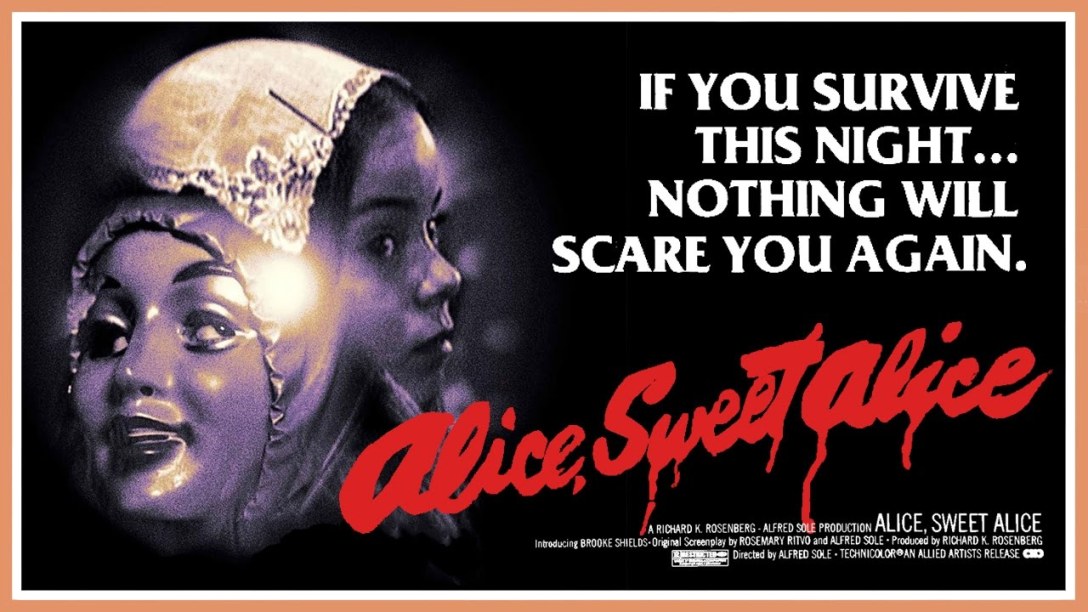
The story concerns troubled adolescent, Alice Spages, played by 19-year-old Paula Sheppard. Why is she troubled? Because it’s 1961 and she is growing up in very (pre-Vatican two) Catholic Patterson, New Jersey … and her parents have recently divorced, at a time when Catholics did not do such a thing. And then people start getting stabbed.
Of interest here is Alice’s downstairs neighbor, Mr. Alphonso (Alphonso DeNoble). He is morbidly obese … and a cat person … and a pedophile.
But he has good taste in music. When he’s not listening to opera, he’s listening to Helen Morgan records.
Perhaps a word is in order.
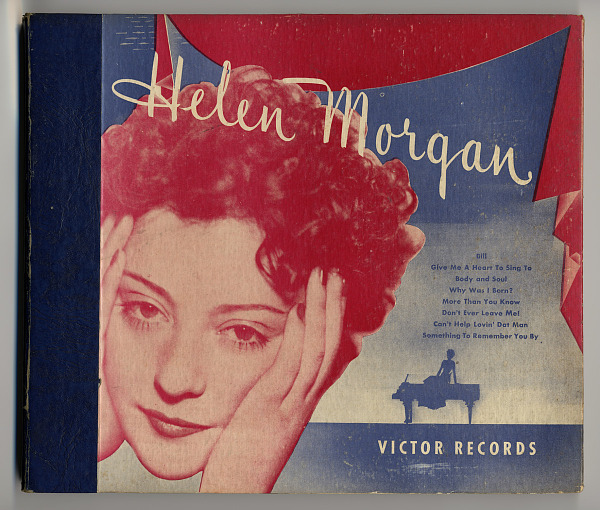
When Helen Morgan died on October 8, 1941, Victor records responded by going into its vaults and packaged eight of the twelve sides Morgan recorded for them as a Morgan souvenir album. It hit the shelves in time for the 1941 Christmas shopping season.
In 1969, Victor took advantage of the success of the film version of Funny Girl, and the nostalgia craze of the late 1960s and early 1970s, by re-releasing eight more sides, including two “new” titles on the B-side of an LP. The A-side was taken by the original Funny Girl, Fanny Brice.
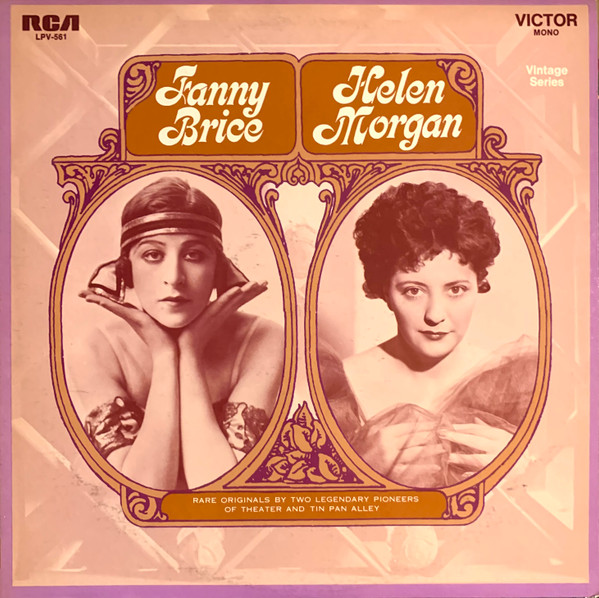
The point?
That is not a Victor 78-rpm disc playing on Mr. Alphonso’s wind-up phonograph. Sole likely chose vintage music for these scenes to show Mr. Alphonso’s isolation and, well, oddness.
Sole was able to find suitable music thanks to the many re-issues of vintage music during the nostalgia craze.
Why Helen Morgan in particular? Likely to supply this joke during one of the film’s most notable – and violent – scenes.
Unpleasant dreams … and happy Halloween from helen-morgan.net!
This site serves as a companion to the book Helen Morgan: The Original Torch Singer and Ziegfeld’s Last Star.
Posted in Uncategorized | Tags: alfred sole, Alice, Brook Shields, Brooke Shields, Fannie Brice, fanny brice, slasher, Sweet Alice, The Mask Murders
… 1929, Helen Morgan’s busy schedule was busier than usual.
In the evening, Paramount celebrated the world premiere of Rouben Mamoulian’s directorial film debut, Applause.
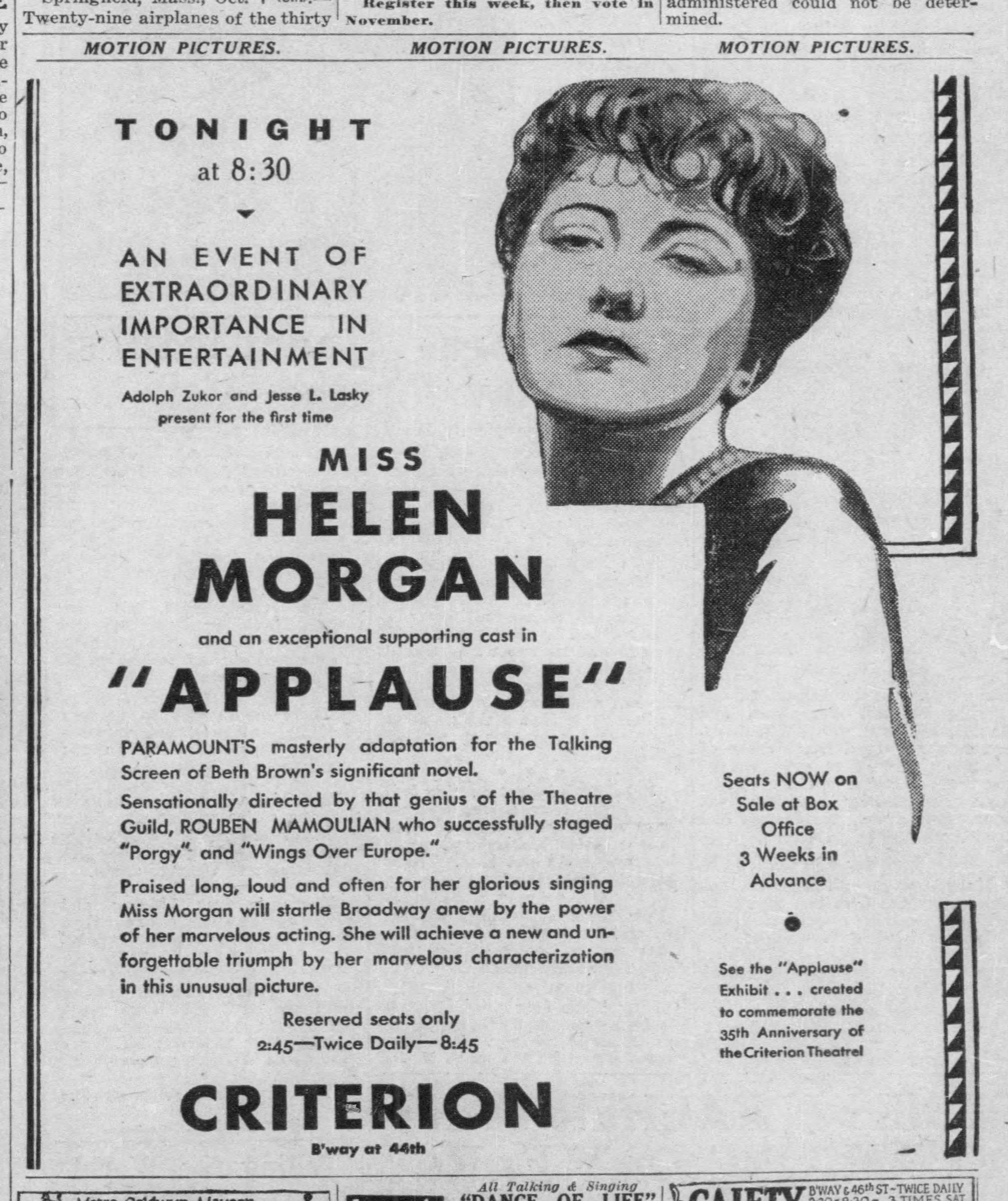
Helen was unable to attend the film premiere as she was starring on Broadway in the stage musical Sweet Adeline (she would attend a special midnight screening later that week).
Earlier in the day, she waxed the Jay Gorney/E. Y. Harburg song “What Wouldn’t I Do For That Man.”
Note that the song was studio property and was not written specifically for Applause … or for Glorifying the American Girl, in which Morgan also sang it.
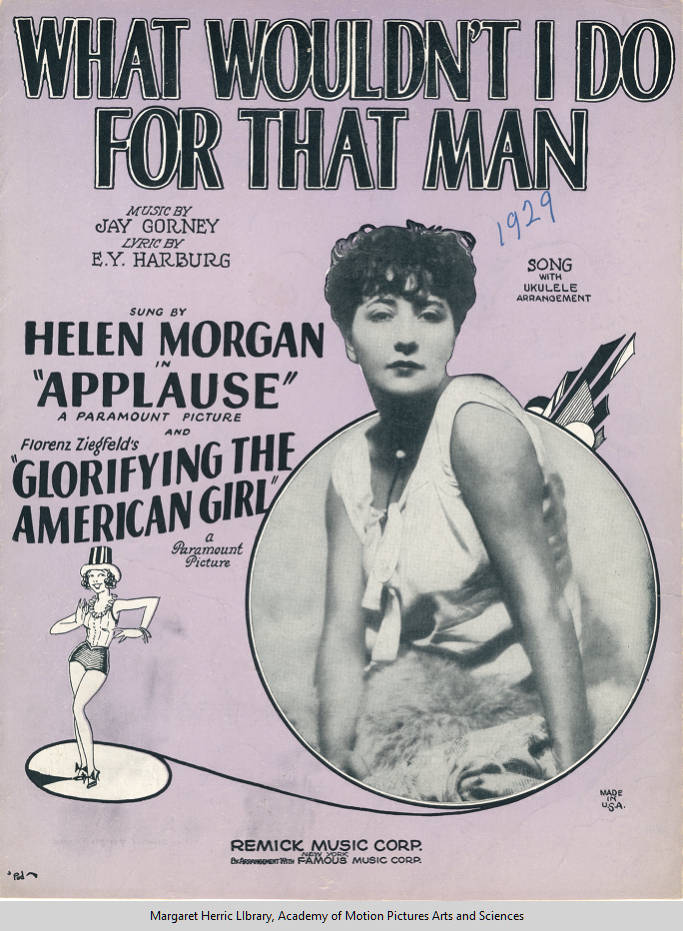
Paramount recycled the tune again in the 1930 Lee Morse short A Million Me’s. The song even got the follow-the-bouncing-ball treatment when Harriet Lee led the singing in the 1931 animated short Any Little Girl That’s a Nice Little Girl. The studio even took Morgan’s footage of “What Wouldn’t I Do For That Man” from Glorifying the American Girl and released it as its own short subject.
The second track Helen Morgan laid down on October 8, 1929 was “More Than You Know,” from the Vincent Youmans/Billy Rose/Edward Eliscu/William Carey Duncan/John Wells stage show Great Day, which was still trying out across the river in Newark, NJ.
In addition to being suitable vocal material for Morgan, Great Day was a multi-racial, southern-themed extravaganza, which was right up Helen’s alley.
Mayo Methot, the once and future Mrs. Humphrey Bogart, introduced “More Than You Know” (and “Happy Because I’m in Love”) on stage.
Ms. Methot never commercially recorded her Great Day numbers – or any of her vocals, for that matter. Others, including Libby Holman, rescued Youman’s songs from obscurity.
As did Helen Morgan. Here is her take on “More Than You Know.”
An infamously troubled production, Great Day ran only four weeks on Broadway and proved an early casualty of the Stock Market crash.
Regardless, MGM purchased the rights to Great Day. Once again, the timing could not have been worse: Joan Crawford (!) went before the cameras in August 1930, just as Hollywood began a moratorium on film musicals. The combination of the deepening Depression and an oversaturated market killed the musical genre. MGM saved face by shutting down Great Day after a few weeks, or even days, for “story revision.”
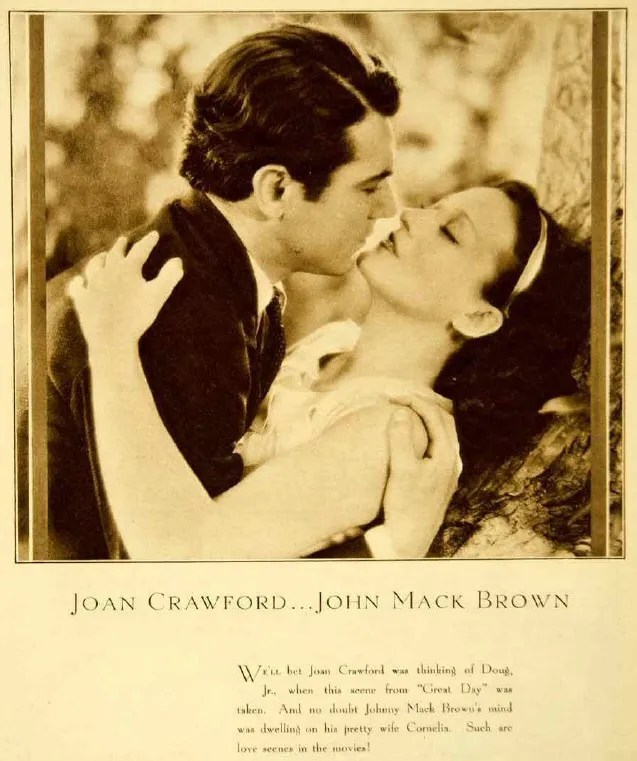
La Craw would wait until 1933, after the great success of 42nd Street to try another musical, Dancing Lady.
Posted in Uncategorized | Tags: E Y Harburg, film, great-day, Jay Gorney, joan-crawford, movies, music, musical, reviews, Rouben Mamoulian, Vincent Youmans, vincent-youmans, Yip Harburg
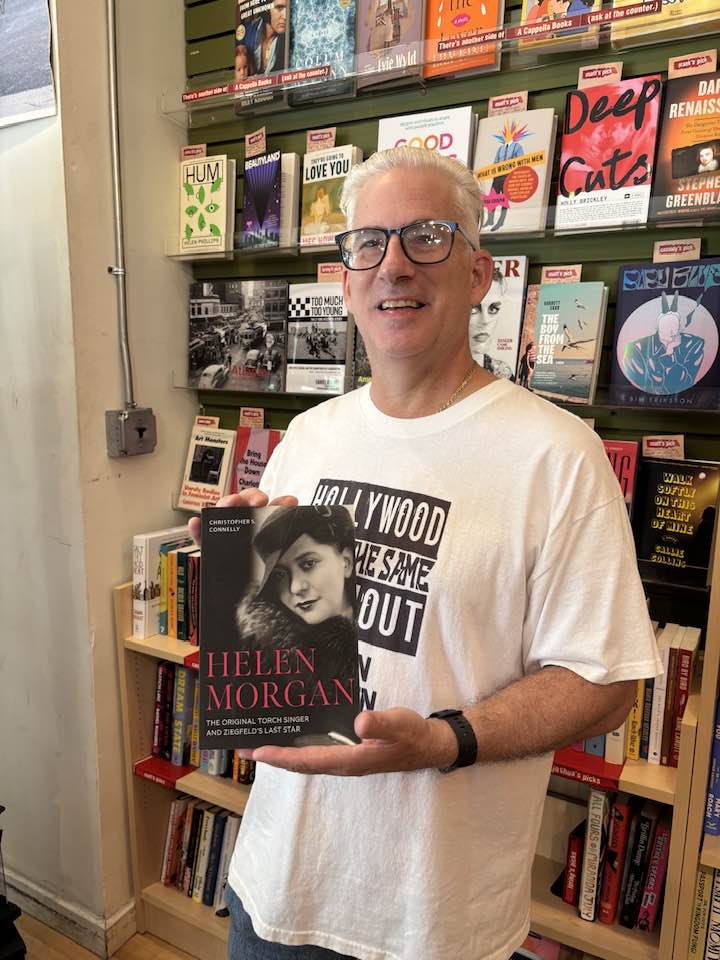
Helen Morgan: The Original Torch Singer and Ziegfeld’s Last Star is available wherever fine books are sold. If your bookstore of choice doesn’t stock it, ask for it by name. They will!
If you’re in Atlanta, stop by A Cappella Books. You can even order it from their website.
Posted in Uncategorized | Tags: A Cappella Books, Independent book store
… 1939, Helen Morgan opened, out of town in A Night At the Moulin Rouge.
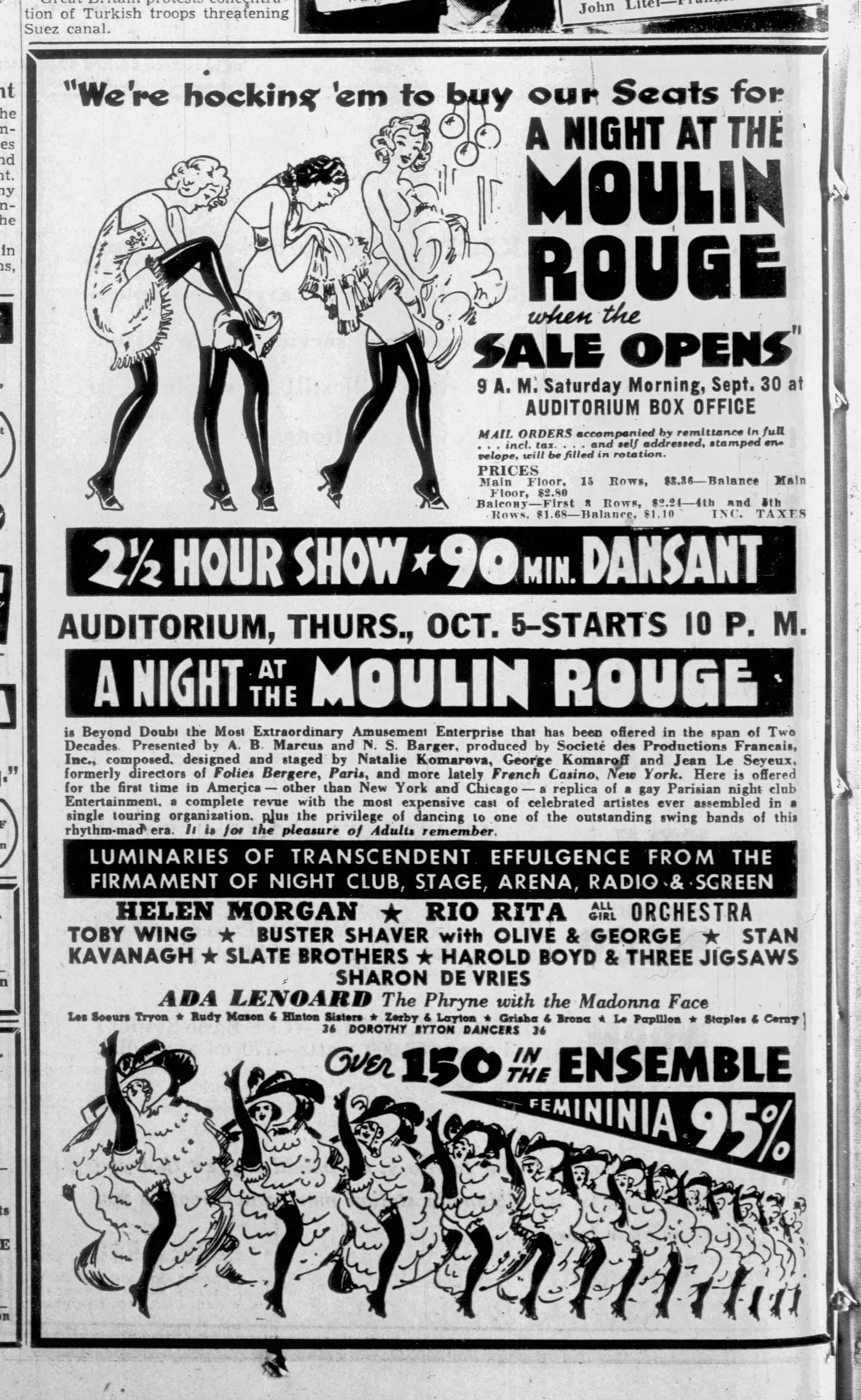
Helen began the 1939-40 season with high hopes as she seized an opportunity to bypass the clubs in order to make her living.
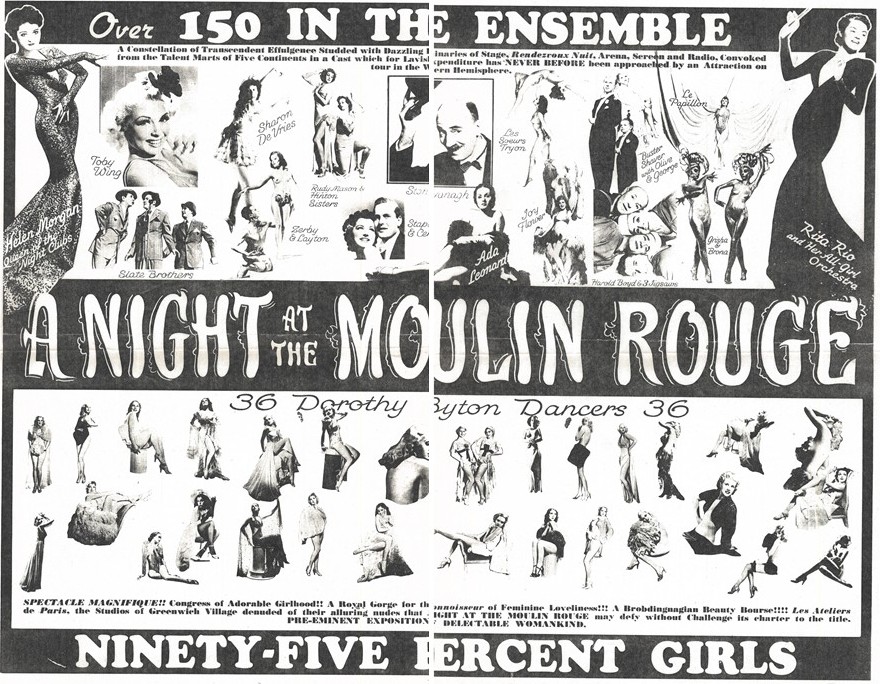
N. S. (Jack) Barger and A. B. Marcus’ A Night in the Moulin Rouge was a revue of elephantine proportions. With a cast of 150[i], even Helen, with the star billing as “Queen of the Nightclubs,” only received about eight minutes of stage time in a single appearance just before the first act finale (later moved to the second act). Singing four Show Boat numbers, Helen was on board solely for marquee value, but she did get the glamorous Spider Woman treatment in the show’s advertising.
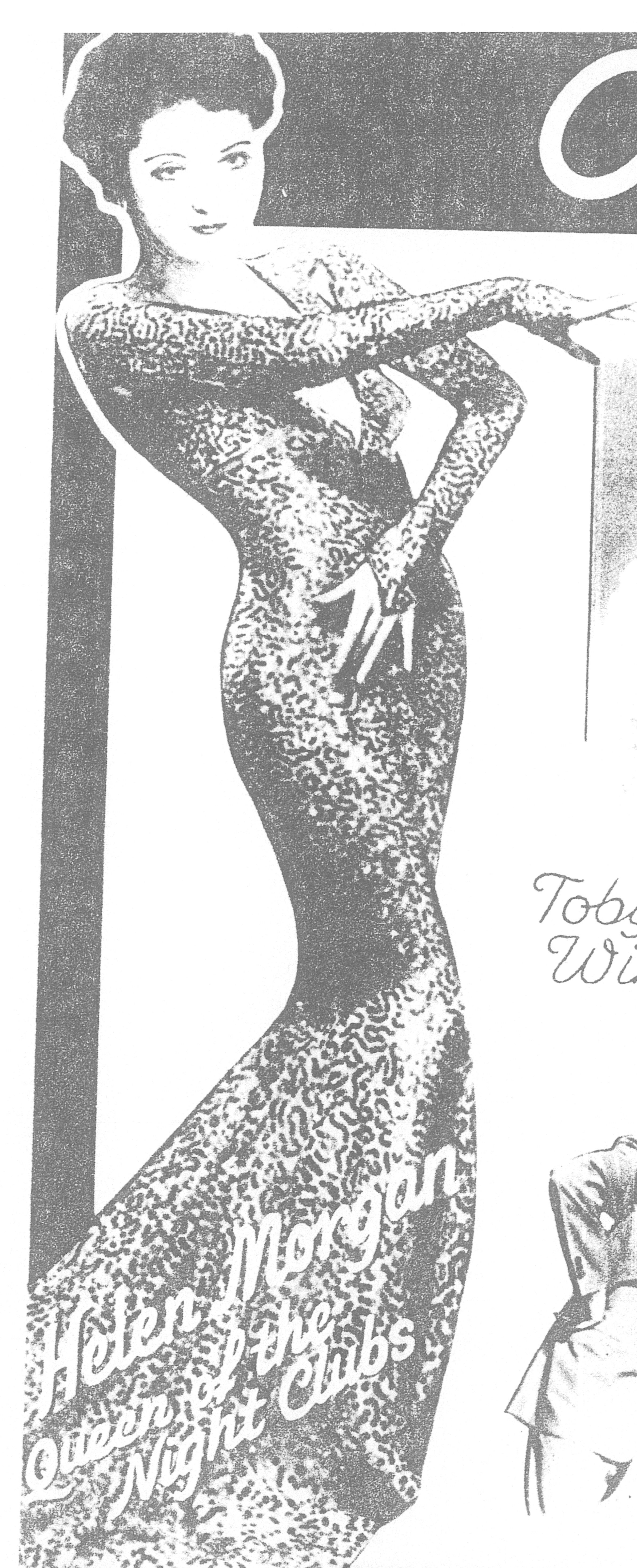
While she added nothing to the shape of the show,[ii] this was no cheaply assembled tab revue. Bankrolled at a reported $150,000, with over half of that allotted to 730 costumes that ran the gamut of stunning to camp, this was a big production. Originally in two acts and 23 scenes (later reduced to 18), Jean Le Seyeux, the composer of many of Maurice Chevalier’s French numbers and graduate of the Folies Begeres, conceived, designed, staged the production and supplied the Parisian pedigree. Natalie Komarova staged the dances, and George Komaroff conducted and supplied the nominal score. No one took credit for the book.
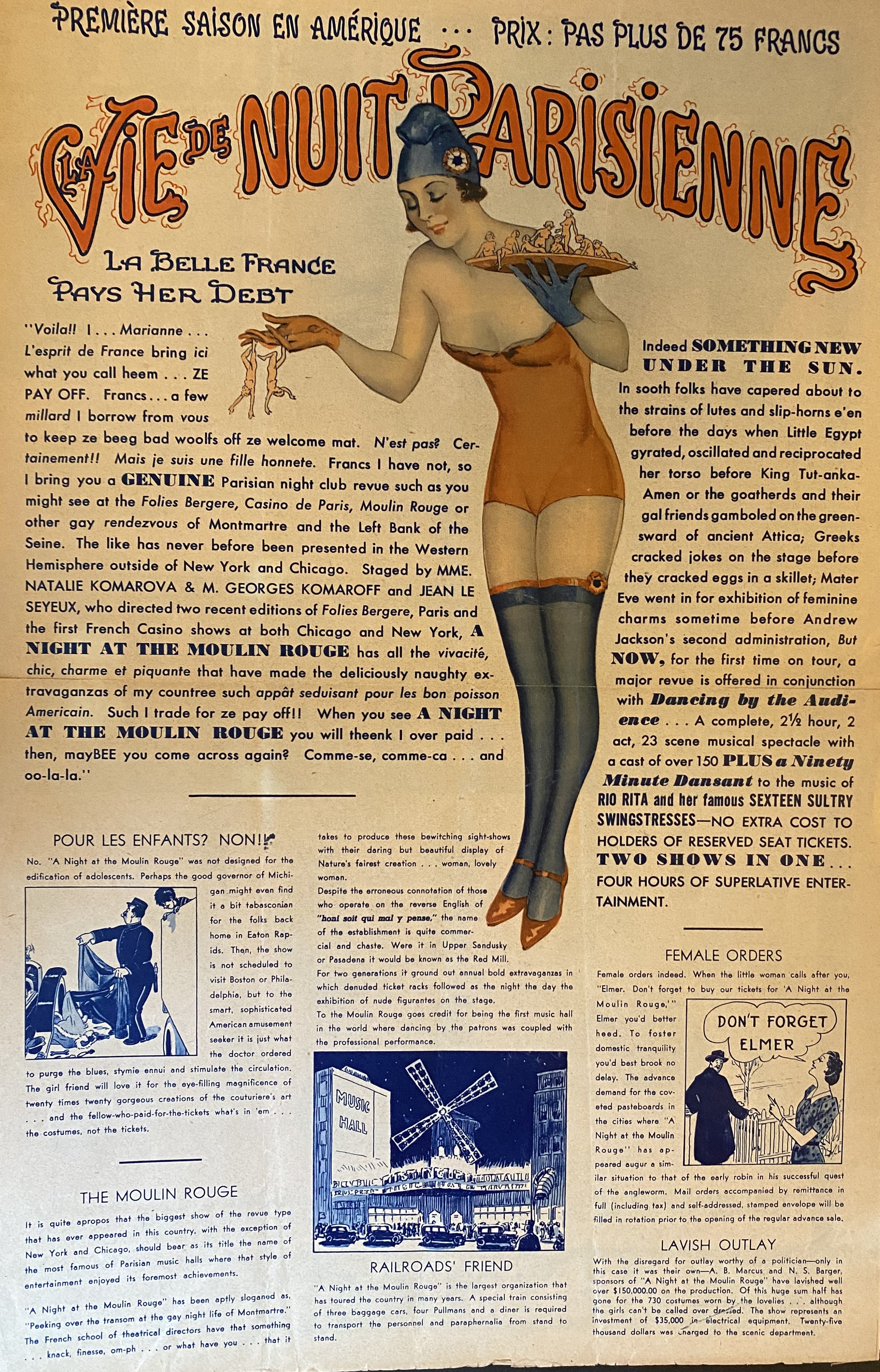
Early press releases hinted at a Broadway run, but luckily, the producers decided to wait. As it turned out, the New York’s World’s Fair overshadowed, instead of helped, and sent many quality productions from the 1939-40 Broadway season, including Bill ‘Bojangles’ Robinson in The Hot Mikado[iii] and George White’s final Broadway edition of his Scandals[iv] to early graves. Moulin Rouge opted for an extensive tour from stand to stand throughout the show-hungry mid-west, northwest and southwest.[v] Self-described as the largest touring production in years, the production would only rest for one two-week stand, in San Francisco during its Fair,[vi] to help iron out any kinks in the production prior to a New York bow, whenever that might be.
The hope of an eventual Broadway run induced the likes of Helen, Fifi D’Orsay, Toby Wing and juggler Stan Kavanaugh to sign.
Sweetening the deal was the fact that D’Orsay and Helen were old friends. Contrary to her stage persona, D’Orsay was not Parisian but was born and raised in Montreal. Helen befriended Fifi while the two began their careers in Quebec. A few years later when Helen was established in the nightclubs, Fifi moved to New York where she leaned on Helen for emotional and, one assumes, financial support. The opportunity to troupe together must have pleased Helen, but this was not to be. By the time the show finally went up, Fifi D’Orsay was not in the company.
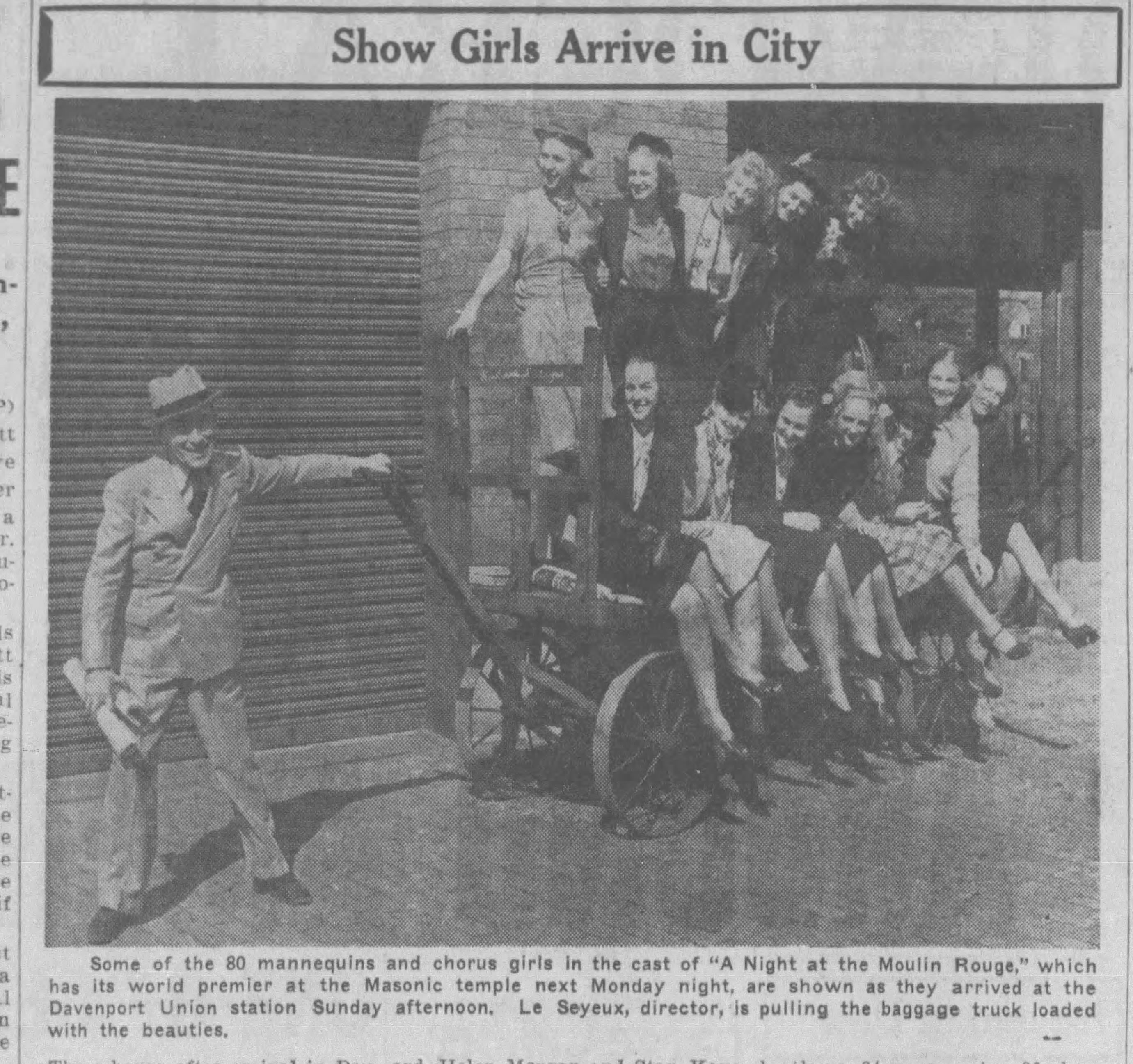
With no more than a week of rehearsal, the production got off to a shaky start and never righted itself. With a complete lack of comprehension of life in the American Plains, the original plan was to adhere to a Parisienne schedule and open the doors at ten in the evening, start at 10:30, and continue the show until 1:30 before ending with a half hour of social dancing. In Iowa. On a Thursday night.[vii]
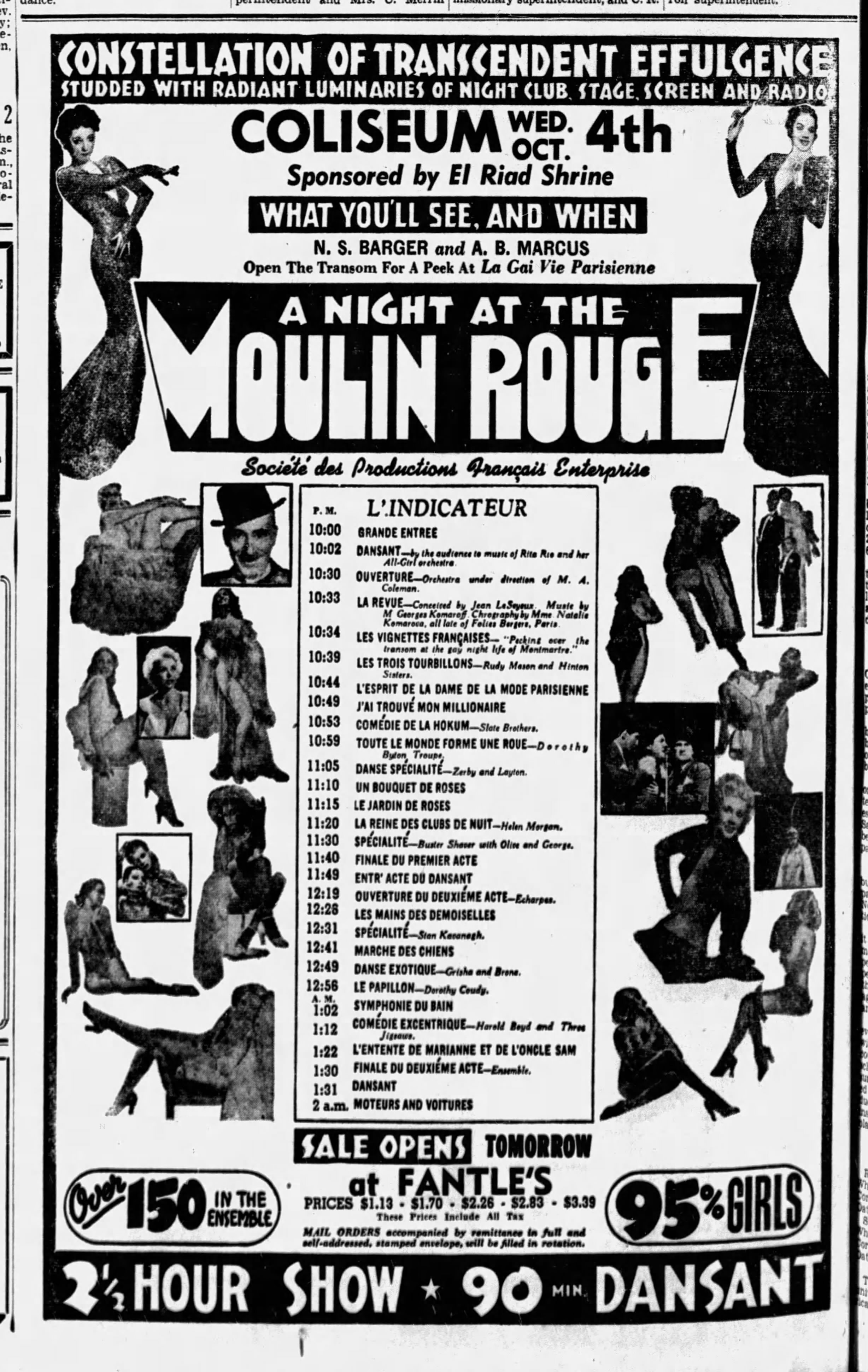
After a deluge of complaints at the box office, management announced the show would start a half-hour earlier. Instead, on the evening of October 2nd, the revue premiered in Davenport – a full hour late. It almost never opened. A month after Germany’s invasion of Poland, the cast rebelled at the notion of reviving George M. Cohan’s “Over There” for the flag-waving finale. Led by Buster Shaver and seconded by Toby Wing, the cast objected to the inference that it was only a matter of time before America was once again embroiled in Europe’s military actions. To end the standoff, Le Seyeaux agreed to let the cast sing Cohan’s final line as “We’ll stay right here ‘till it’s over, over there.”[viii]
Once the show started, rough spots were everywhere. Poor lighting undermined Helen’s single star turn. There was no sense of continuity, pacing or even structuring. Most of the acts, including Helen’s, seemed out of place or at least ill-fitted into the proceedings.
The following evening, the show bowed in Des Moines. Once again starting an hour late, the curtain did not come down until after midnight. The exhausted cast chose not to take a curtain call.[x] Although in trouble, the show was not hopeless. The costuming, particularly in the rose garden scene, was particularly effective. It needed focus and tightening.
First to go was the continental schedule. Curtain time was changed first to 9, then to the more American-friendly 8pm.
Rita Rio[xi] and her All-Girl Orchestra also failed to entice the audience up to dance. As originally planned, the Orchestra supplied dance music before and after the show and during intermission, in the manner of the old-time Montmartre nightclubs. In effect, Marcus and Barger attempted to provide two shows and four hours of entertainment for a single admission price. This might have worked in a large hall had the show resembled a huge floorshow, but in a legitimate theater setting, even in the barn-like civic auditoriums of the mid-west, coercing paying customers to break through the fourth wall and dance up on the stage proved too much to ask in Davenport or Des Moines. Within ten days, the dance section was dropped from the program, as was its top price of $3.30. With an additional trim of thirty minutes from the show itself, the evening’s running time was halved from four hours to two.[xii] By the end of October, tickets were scaled to a $2.75[xiii] high and Toby Wing and Rita Rio were gone. Wing, who had worked in film previously, retired. Rita Rio, a real life Julie LaVerne, went to Hollywood and, as Dona Drake, worked on film.
As it toured the mid-west, then the northwest, the production’s luck proved to be as spotty as the show. The special seven car train (three baggage cars, four Pullmans and a dining car) used to transport the show from town to town had difficulty keeping to its daunting schedule. It arrived in Denver two hours late, placing the Friday night premiere there in peril. Stagehands were still loading in at curtain time, but the show went on.[xiv] In an attempt to titillate the tired businessmen in cities like Portland, Oregon and Seattle, the show often found itself on the outs with church groups who, sight unseen, found the show’s merits to be dubious.
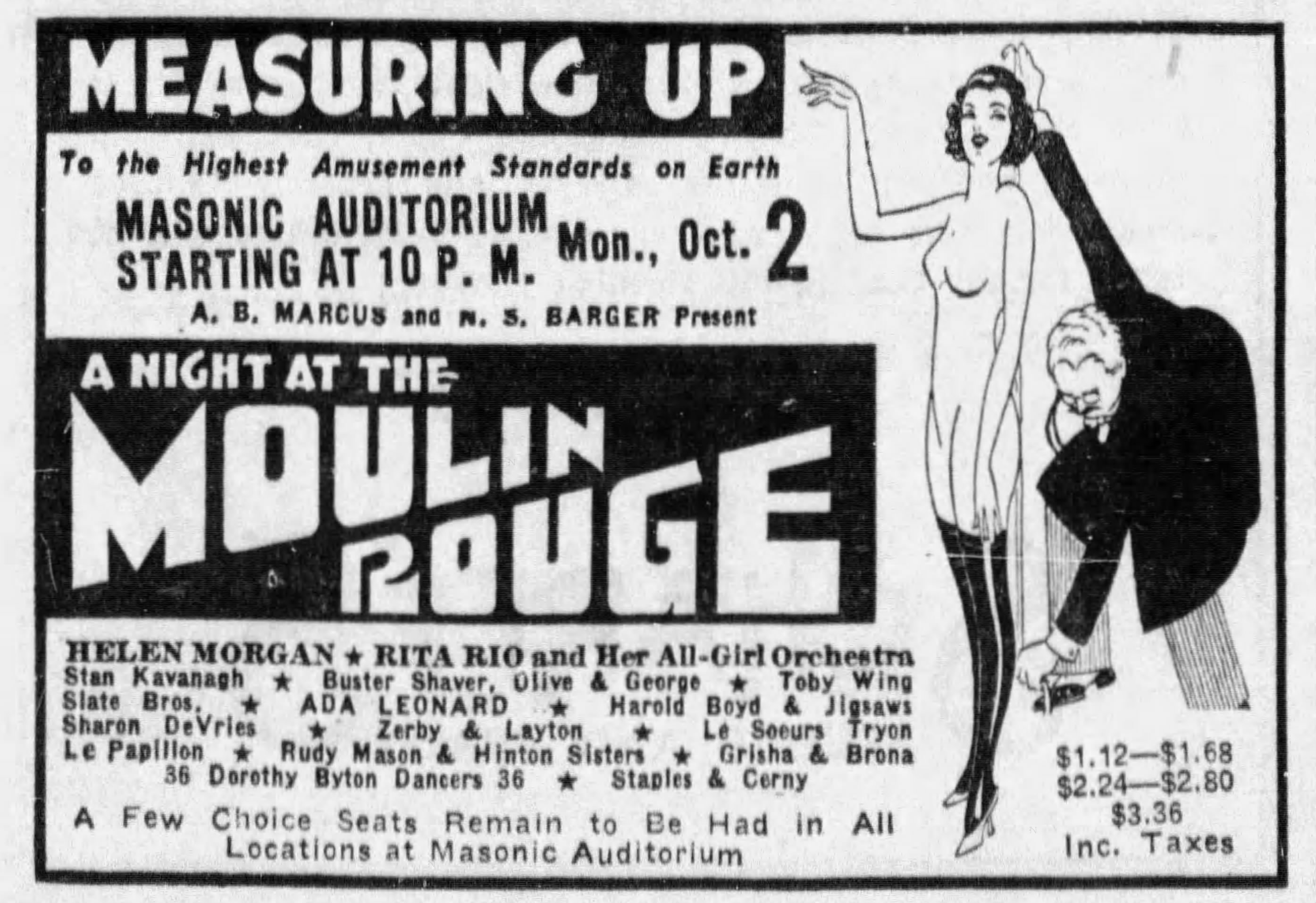
In Seattle, religious groups pressured the mayor to ban the show from the city’s Civic Auditorium. It played instead in the privately owned Music Hall Theatre.[xv] All in all, the alleged impropriety of the show usually worked against it at the box office.
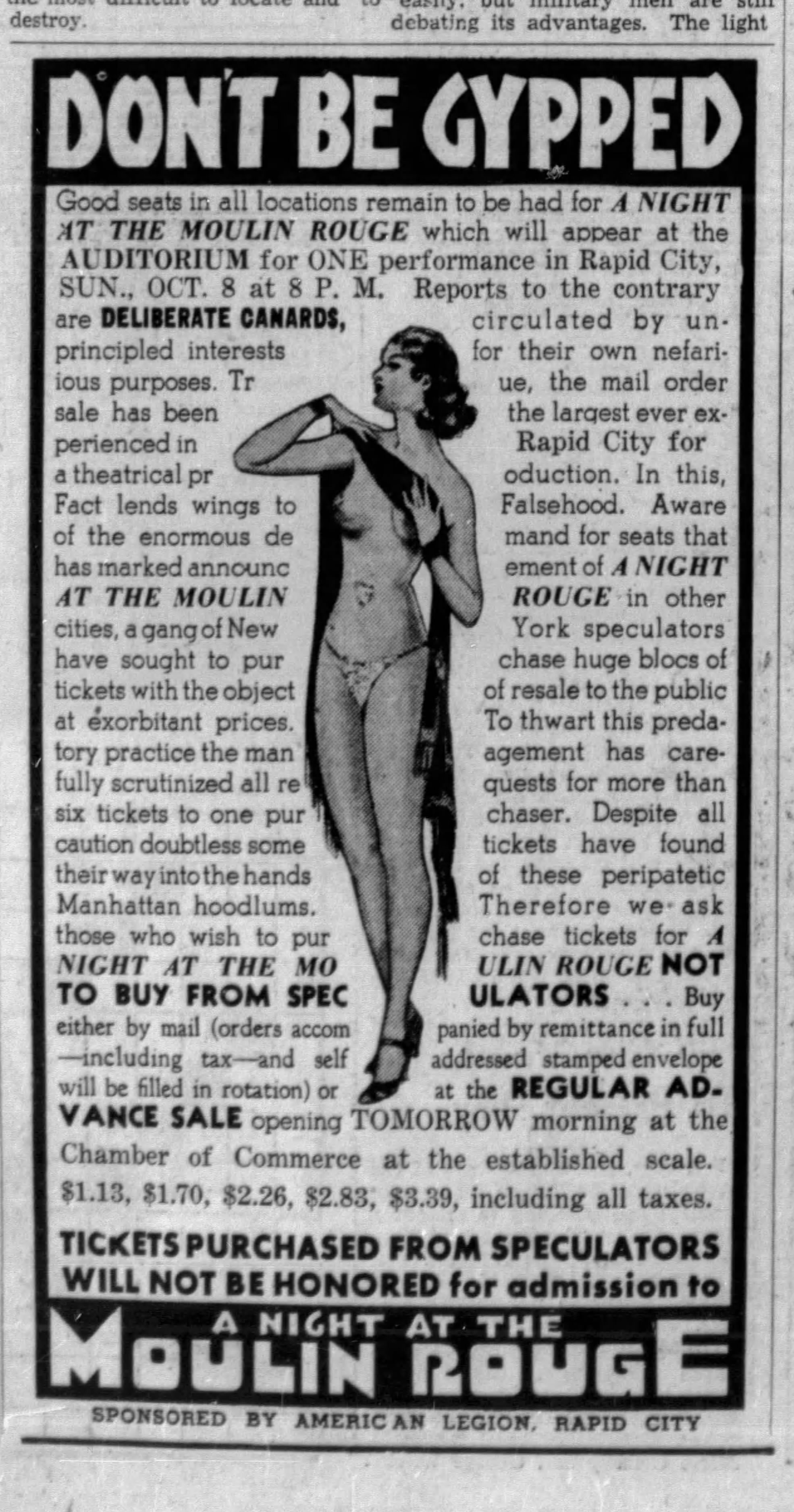
A Night in the Moulin Rouge even ran into trouble in San Francisco where, due to a serious booking error, it played opposite the Folies Bergeres which was concluding its very successful six-week run at the California Auditorium. Originally scheduled to play two full weeks, Marcus and Barger instead attempted to minimize the damage by coming in on Friday of the first week and playing for only ten days. A midnight show on the 28th for the USC and UC Football teams[xvi] may have helped, but the grosses for both shows during their competition told the story: Folies Bergeres: $34,200, A Night in the Moulin Rouge: $13,000.[xvii] When the biggest notice in a review concerns a Great Dane mistaking the painted fire hydrant on a drop for the real thing, something is wrong.[xviii]
The show endured a nine-day hiatus, during which Helen visited Los Angeles and partied at the It Café, and, presumably, with her current flame, Dr. Frank Nolan. When asked to honor the patrons with a song or two, she was happy to give the club a free concert.[xix] Helen’s public was less pleased earlier in the tour. One night, as she was in Sioux City, Morgan entered her hotel’s dining room. She was asked to honor the crowd with a song and she gamely approached the small combo and asked if they knew any of her numbers. They did, but when she asked them to play them in her keys the band announced they could not transpose on the fly. Unwilling to risk it, Helen regretfully reclined and returned to her seat.
Licking its wounds, the show limped through Texas, Oklahoma, Kansas and Missouri before enduring a disastrous Thanksgiving week at Chicago’s Grand Opera House. The paltry gross was only $8,000. Making matters worse, Helen, along with fellow cast members Ada Leonard, Stan Kavanaugh and the Slate Brothers were brought up in front of the Theater Authority for playing an unauthorized benefit while in the Windy City.[xxiii]
Management converted the production and toured as a tabloid revue.[xxiv]
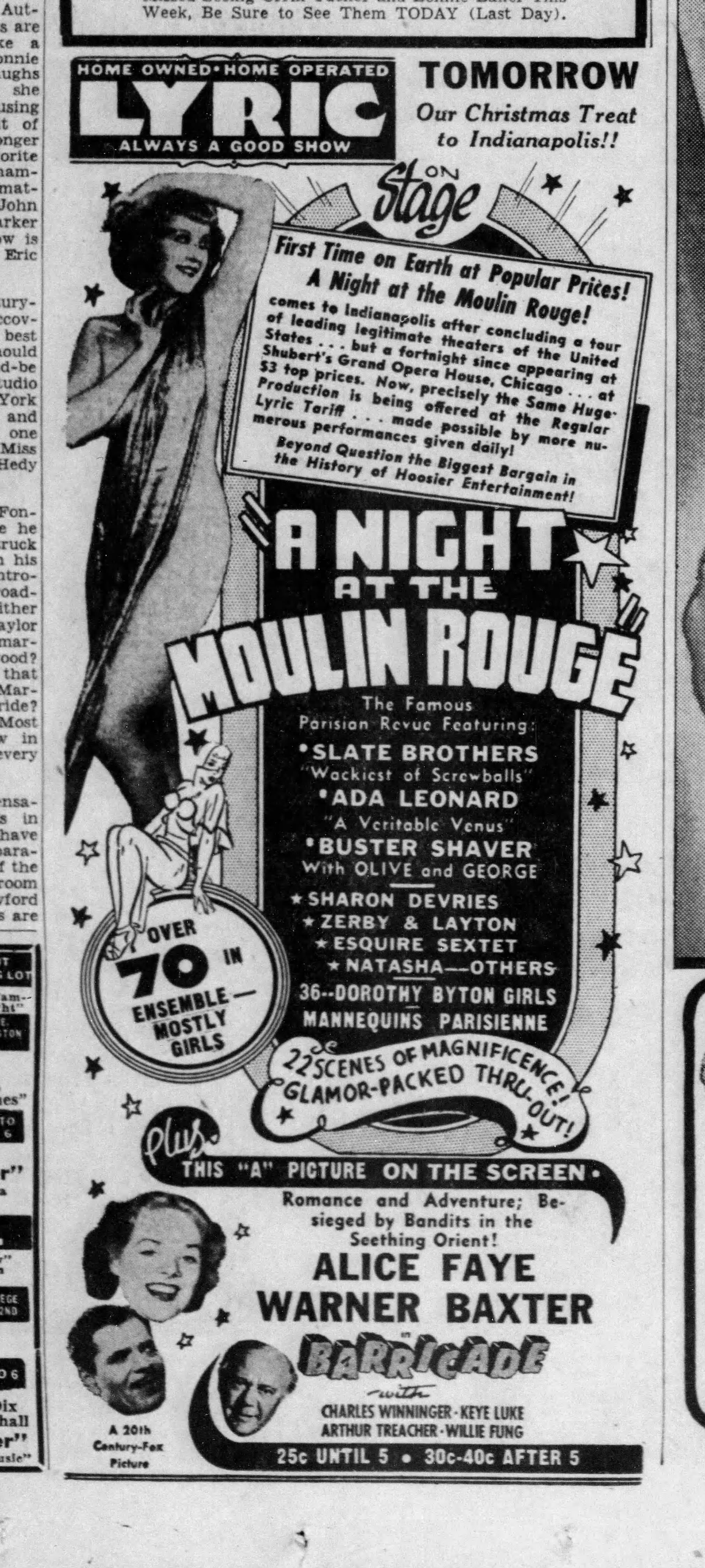
Helen was thankfully trimmed. Even scaled down, the show only limped along until the middle of March, where it went belly-up in Atlanta.[xxv] With never an unkind word to say about anyone, Helen tried to be philosophical about Moulin Rouge. “It was a good show. It had a lot of good things in it. But it started off on the wrong foot and just kept bumbling along. I just did my own stuff, sang a couple of numbers. I might have been in vaudeville as far as I was concerned.”[xxvi] Straight vaudeville, even in 1939, would have been preferable to, as Helen later described it, a “French-type concoction that didn’t jell.” That was a nice way of describing an entertainment, complete with strip numbers, that bore more resemblance to burlesque than a 30s revue (the team of Grisha and Brons danced once in cellophane and, later, as the “golden Buddahs,” in gild.)[xxvii]
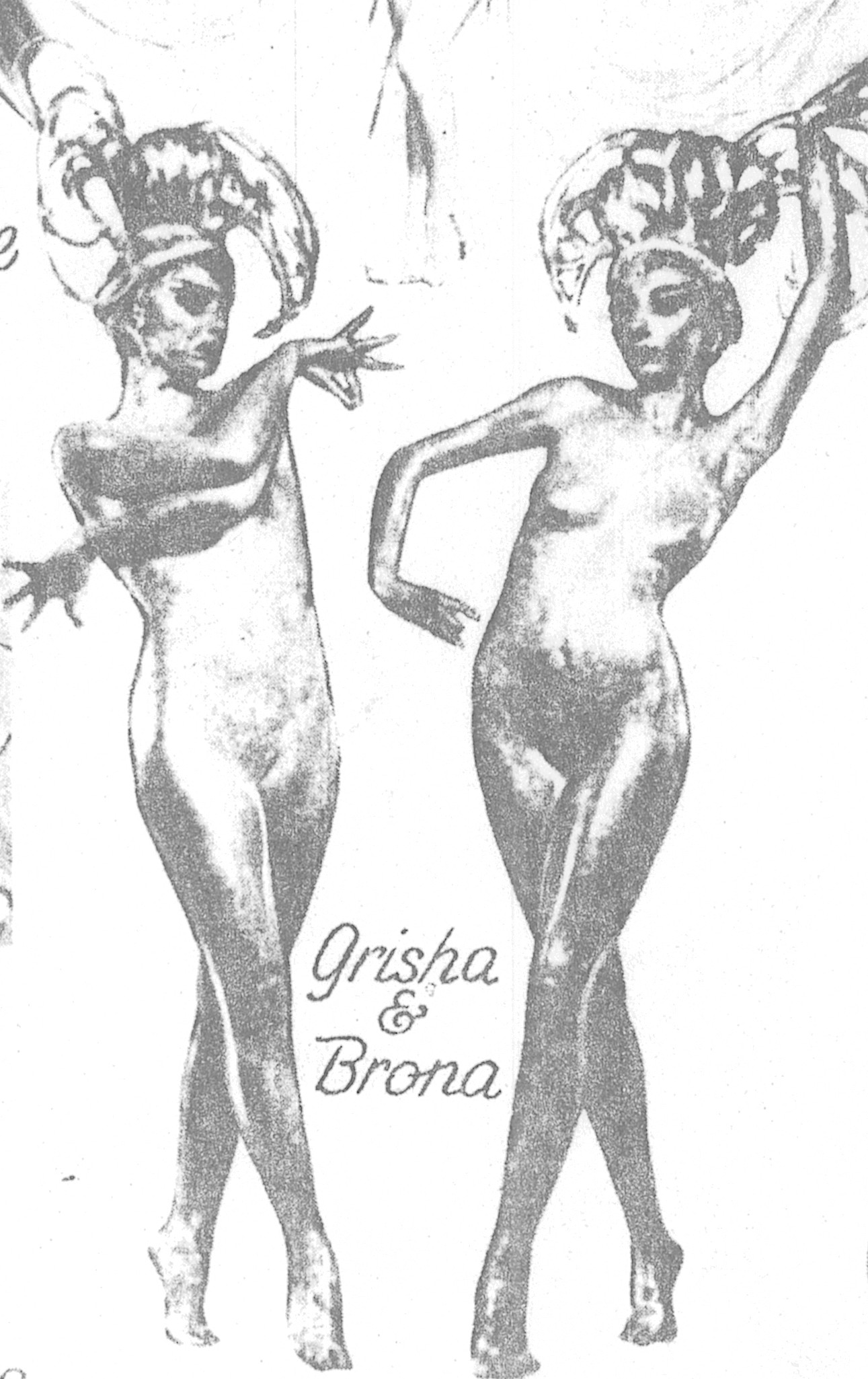
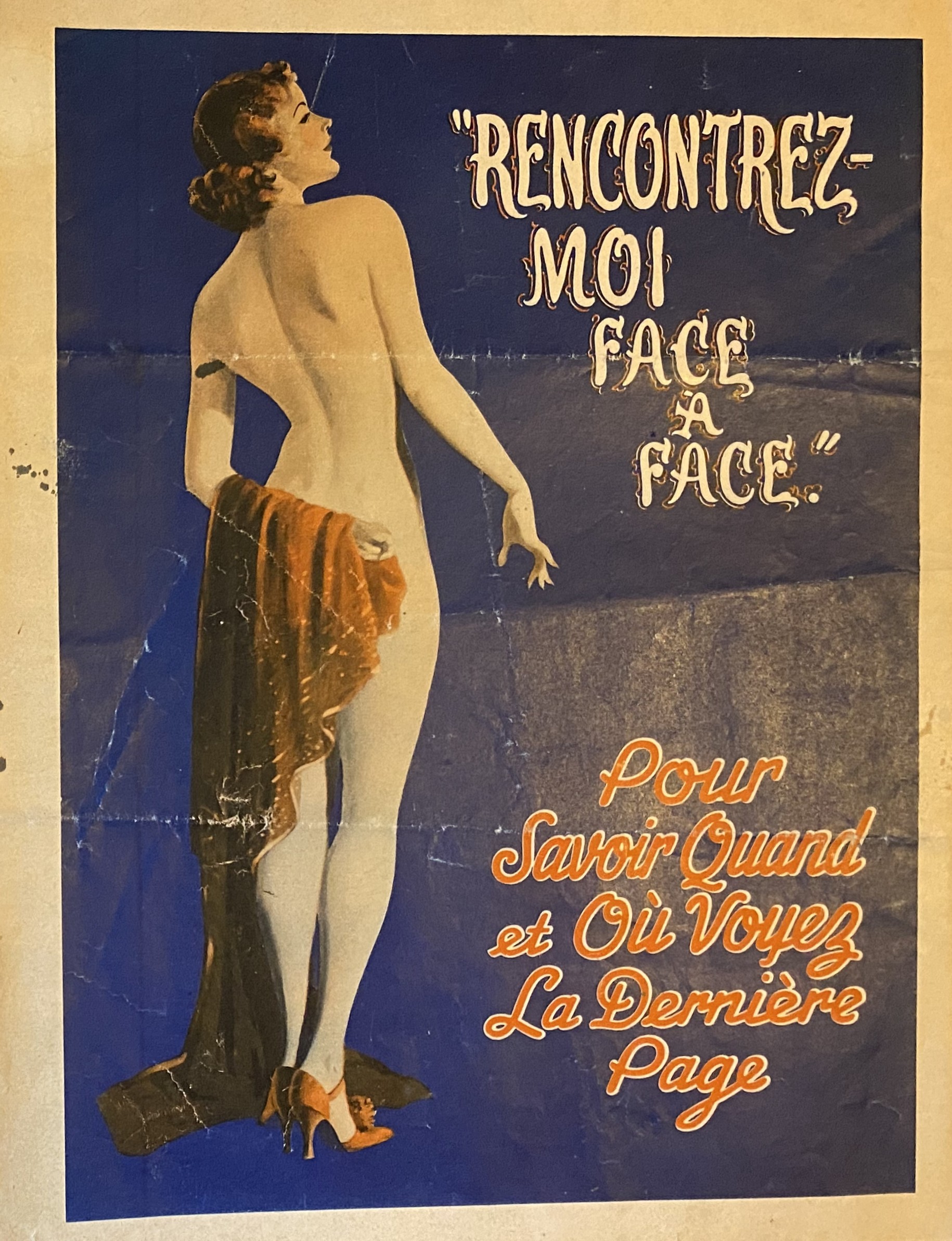
Not everything in the show was hopeless. Grisha and Brons received good notices, as did Natacha in a slave girl dance. The scenery for a Beach Symphony was well received, as was the windmill scene and the “Voices in the Dark” sequence.[xxviii] But the misses outweighed the hits in a production that relied on sex and spectacle without the class that Ziegfeld was able to bring to his Follies. In any event, the Follies had been hopelessly dated for the better part of a decade. Successful revues of the 30s were sophisticated and satirical. A Night in the Moulin Rouge was neither. But it did offer diverting advertisements.
This site serves as a companion to the book Helen Morgan: The Original Torch Singer and Ziegfeld’s Last Star.
[i] Variety, October 21, 1939
[ii] Tulsa Daily World, November 25, 1939, p. 5.
[iii] The Hot Mikado (3-23-1939, Broadhurst)
[iv] George White’s Scandals of 1939 (8-28-1939, Alvin)
[v] Unidentified flyer for A Night in the Moulin Rouge.
[vi] Variety, July 19, 1939, p. 41.
[vii] Daily Argus-Leader, Sioux Falls, SD, September 28, 1939, p. 18.
[viii] Des Moines Register, October 3, 1939, p. 15.
[ix] Weber, The Billboard, October 14, 1939, p. 5 & 60.
[x] Hoschar, Allen, “Ragged Night at Moulin Rouge,” Des Moines Register, October 4, 1939, p. 1-A.
[xi] Born Rita Novella, Rita moved into films following An Evening in the Moulin Rouge. As Dona Drake she appeared in The Road to Morocco, Louisiana Purchase, Let’s Face It and others.
[xii] Montana Standard, Butte Montana, October 11, 1939, p. 4.
[xiii] Variety, October 25, 1939, p. 49.
[xiv] Denver Post, October 7, 1939, p. 9.
[xv] The Spokesman-Review, Spokane Washington, October 10, 1039, p. 5.
[xvi] Oakland Tribune, October 20, 1939, p. 26.
[xvii] The Billboard, November 18, 1939, p. 20.
[xviii] Oakland Tribune, October 24, 1939, p. 13.
[xix] The Hayward Daily Review, November 1, 1939.
[xx] San Antonio Express, November 5, 1939.
[xxi] Variety, July 19(?) 1939.
[xxii] Variety, review by Andy, November 15(?) 1939.
[xxiii] Chicago Daily Tribune, December 14, 1939, p. 18.
[xxiv] Variety, December 2, 1939.
[xxv] The Billboard, March 2, 1940, p. 23 and March 23, 1940, p. 17.
[xxvi] Arnold, Elliott, New York Telegram, March 9, 1940.
[xxvii] Hoschar, Allen, “Ragged Night at Moulin Rouge,” Des Moines Register, October 4, 1939, p. 1-A.
[xxviii] Wichita Eagle, November 22, 1939, p. 6.
Posted in Uncategorized | Tags: A B Marcus, A Night at the Moulin Rouge, Ada leonard, Buster Shaver, Dona Drake, Dr. Frank Nolan, Fifi D'Orsay, George Komaroff, Grisha & Brons, Grisha and Brons, Jean Le Seyeux, Montmartre, moulin-rouge, N S Barger, Natalie Komarova, Rita Rio, Sharon DeVries, Slate Brothers, Stan Kavanaugh, Toby Wing, Zerby & Layton, Zerby and Layton
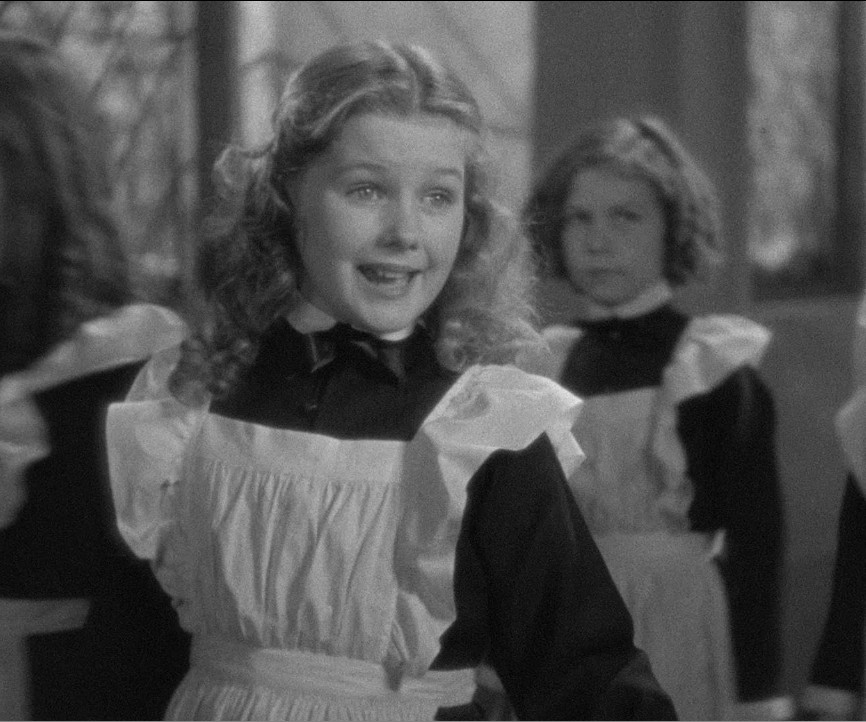
Sadly, the interwebs today are abuzz with the passing of Marilyn Knowlden, the free-lancing child actor of many Hollywood films of the 1930s. She was 99.
She may be best remembered as playing Kim in the Convent Scene in the 1936 film version of Show Boat.
While she did not work directly with Helen Morgan in the making of that film, she graciously granted me an interview some years back, and for that I am grateful.
Her passing today, I believe, marks the end of an era. Not only was she the last surviving principal in the 1936 Show Boat, but she was also, likely, the last surviving actor to have been directed by James Whale and the last to have worked at Universal during the Laemmle years.
Rest in power, Marilyn Knowlden.
This site serves as a companion to the book Helen Morgan: The Original Torch Singer and Ziegfeld’s Last Star.
Posted in Uncategorized | Tags: James Whale, Marilyn Knowlden, Show Boat, Showboat
… 1930, Helen Morgan recorded “Body and Soul” and “Something to Remember You By,” the two big numbers from the stage revue Three’s a Crowd.
She didn’t introduce the numbers … exactly … nor is it entirely correct to call these waxing merely covers of popular sings.
Johnny Green, Robert Sour, Edward Heyman and Frank Eyton originally wrote “Body and Soul” in 1929 as material for Gertude Lawrence, but the number failed to click. Regardless, Lawrence liked the number and took it back to England with her, where Jack Hylton’s jazz band played it well enough that it became popular in the UK.
While abroad in the summer of 1930, Morgan heard the song, liked it, and brought it back home with her, and put it into her act.
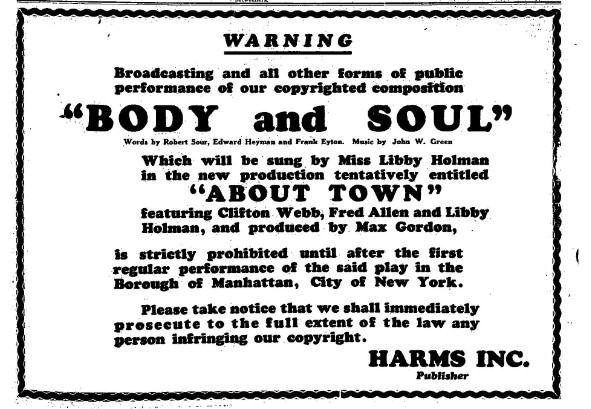
One problem: Producer Max Gordon also liked the song and acquired it as supplemental material for the new Dietz and Schwartz stage revue, About Town – later retitled Three’s a Crowd.

Gordon knew the song would be popular, especially when sung by his torcher, Libby Holman. He, and Harms (the music publisher) went so far as to run an advert (really, a warning) in the August 6, 1930 issue of Variety.
Evidently, Helen never got the memo. She sang the song without incident over the airwaves on September 5 and laid down three versions of the track the following day at the Victor studio. The label rejected her efforts, as well as the three takes she made of “Something to Remember You By.” Victor printed the waxings she made the following week.
Libby Holman made good with both of her Three’s a Crowd numbers, both on stage and on record, but Morgan’s version, if not definitive, remains her best vocal performance on record. It rose to number 16 on the charts.
Morgan’s performance of “Body and Soul” so impressed Max Gordon that he fancied taking Morgan along to lead a proposed London company of Three’s a Crowd. Sadly, the production never came about, perhaps because Morgan continued to sing the song while not under contract to Gordon. When she played the Palace in early 1931, she got around Gordon’s decree that the song could not be sung on any other Broadway stage while Three’s a Crowd played the Selwyn. She simply sat on the steps of Palace heading into the audience and crooned her tune.
It is unclear whether she included the gong heard in her Victor recording.
As for “Something to Remember You By,” Morgan’s recording remained popular, but always took a back seat to “Body and Soul.”
Her waxing of “Something to Remember You By” would not raise eyebrows until after her death … but more on that next month.
This site serves as a companion to the book Helen Morgan: The Original Torch Singer and Ziegfeld’s Last Star.
… 1932, Helen Morgan recorded her Show Boat numbers for the second time. This time on the Brunswick label.
On the surface, Morgan had returned to square one, playing Julie in the first Broadway revival of the seminal musical, a mere three years after the original mounting closed.
But much had changed.
The most lasting change was the death of producer (and Morgan’s father figure) Florenz Ziegfeld Jr. two and a half weeks before she entered the recording studio.
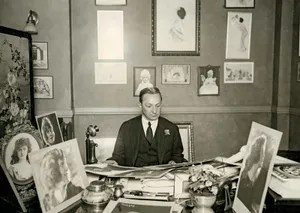
It was a loss from which Helen would never recover, neither emotionally nor professionally, and her grief is all too apparent in the tracks she laid down that day.
Also apparent is the passage of time. As she matured, her voice dropped, which added to the somber tone of the recordings. The change is most apparent during the start of “Can’t Help Lovin’ Dat Man” when she offers (again) a brief quote of the cut “Mis’ry’s Comin’ Aroun'”.
Assisting Morgan is Louis Alter, who added his own rococo piano flourishes when accompanying her. Alter was a songsmith as well as an accompanist, and Morgan remained loyal to him for years. She included many of his songs – notably “What a Life (Trying to Live Without You)” – in her act. Later on, she commercially recorded Alter’s “(I’ve Got) Sand in My Shoes” and “I Was Taken By Storm.”
Here are both sides of her Show Boat disc:
Helen did not record her numbers alone.
Brunswick also brought in Paul Robeson to record his peerless version of “Ol’ Man River” – and then did something extraordinary: the label packaged the four discs they recorded into a single album:
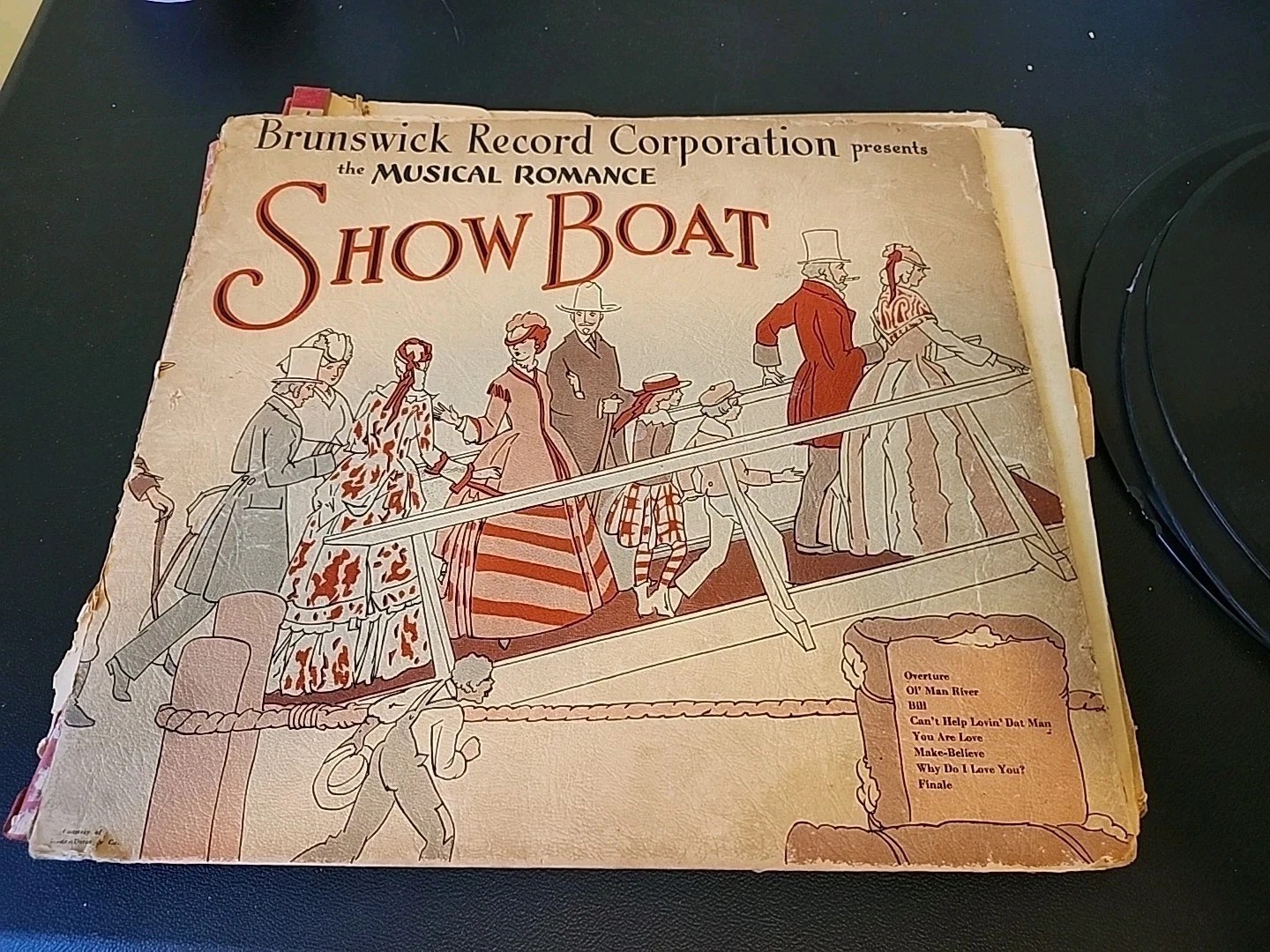
The package marked the first ever Broadway cast album.1
There are some caveats to the above statement that should be mentioned.
Morgan and Robeson were the only members of the 1932 revival cast featured, and they only took three of the eight sides.
Rounding out the “cast” were popular radio and recording artists. Frank Munn and Countess Olga Albani duet on “Why Do I Love You” and James Melton handles “Make Believe” and “You Are Love” as solos.
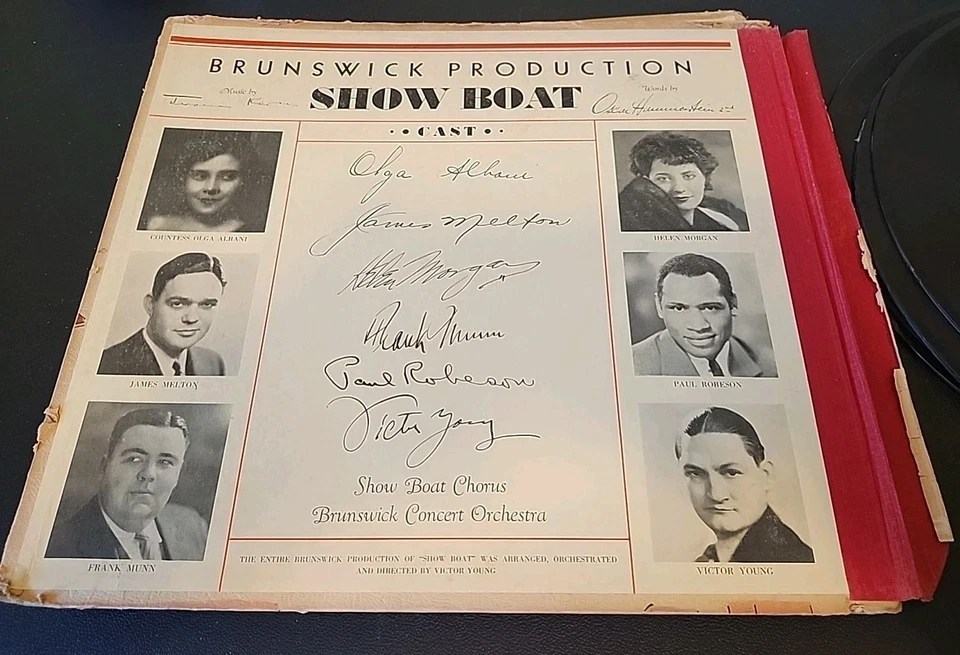
Another caveat is that no one sings to Robert Russell Bennett’s original stage orchestrations. Instead, composer and conductor Victor Young provided his own, bookending the set with an original Overture and Finale culled from melodies from Jerome Kern’s epic score.
James Melton – 2/A – You Are Love” …
… and 2/B – “Make Believe”
Disc #4 – “Why Do I Love You”/Finale
The history of Brunswick is convoluted, so suffice it to say that Columbia gained control of the label and its back catalog in 1939 and phased out the label in 1940.
A year later, Columbia re-released the 1932 album, with new artwork.
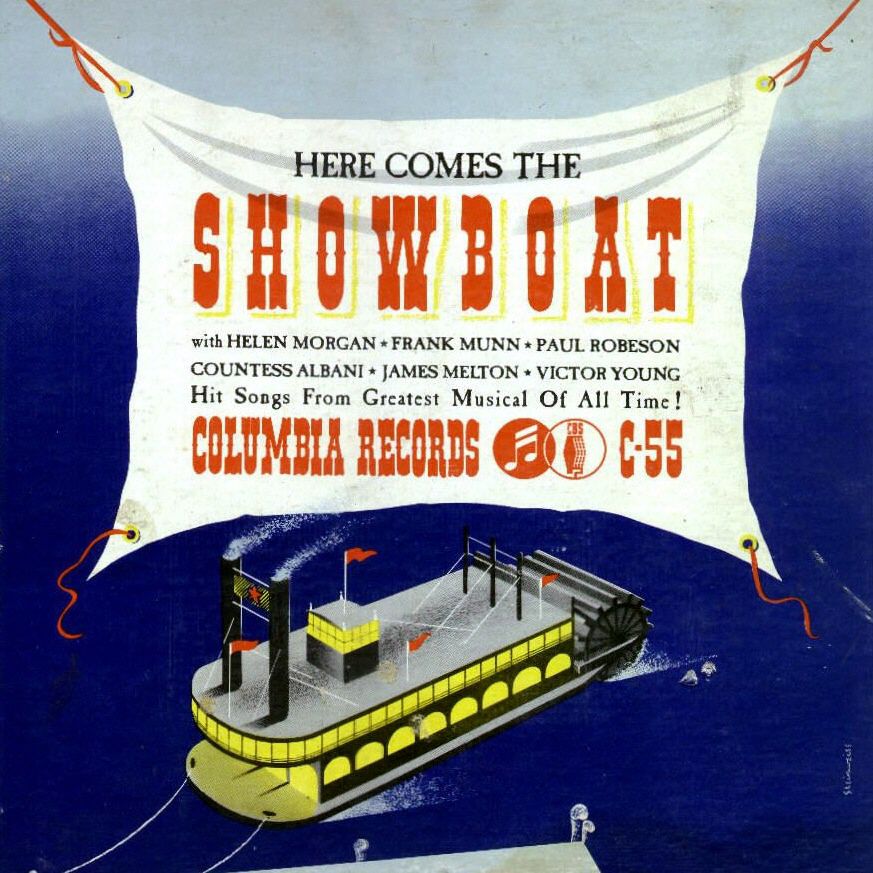
To say that the re-issue was successful would be a understatement. In 1991, the album was inducted into the GRAMMY Hall of Fame. In 2005, the collection was added to the National Registry.
Allowing for various media (78rpm, 33rpm, cassette, compact disc, iTunes, etc.), the album has rarely, if ever, gone out of print during the past 84 years. This happy occurrence proved a great boon to Helen Morgan. When Victor re-released – and re-re-released – Helen’s recordings following her death, their prior contracts did not require the payment of any royalties.
But Columbia’s (if not Brunswick’s) contract did. And while it took ten years of sales to do it, residuals from the Show Boat album paid off the debts Helen left at the time of her death in 1941 and, ultimately, settled her estate.
This site serves as a companion to the book Helen Morgan: The Original Torch Singer and Ziegfeld’s Last Star.

