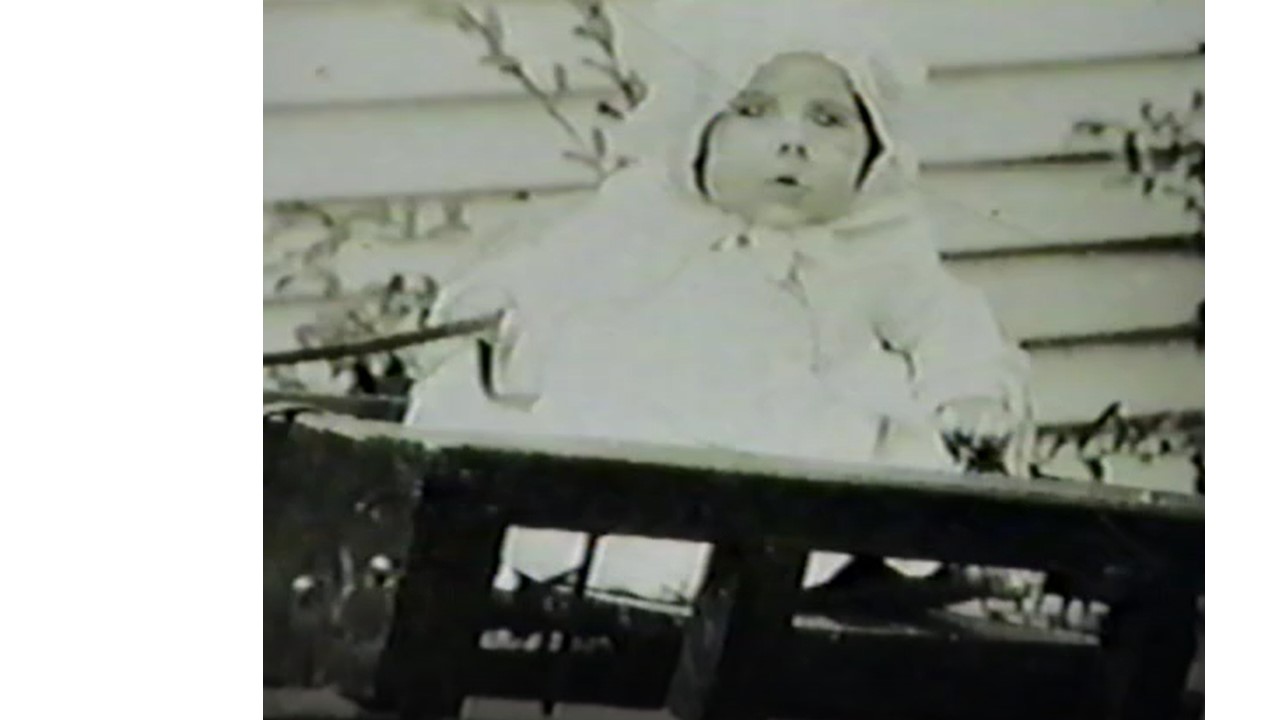
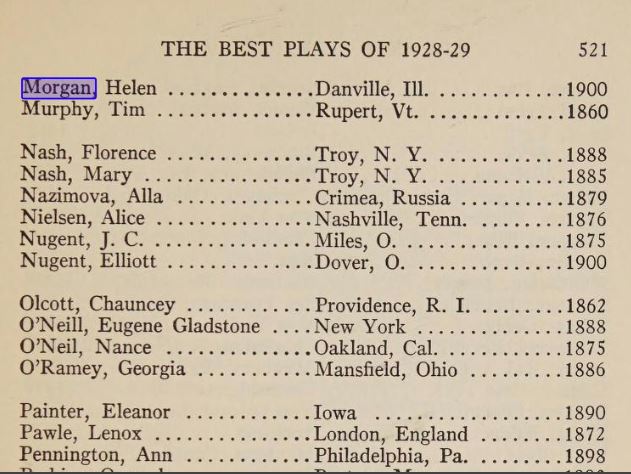
Primary source material prior to 1927 all point to Helen being born August 2, 1902. Case in point: the 1910 Federal Census.
Helen was not quite 8 years old when enumerated in April 1910. And 8-year-olds rarely lie about their age. However, her stepfather, Thomas Morgan *did* lie to state that he and Helen’s mother, Lulu, had been married for eight years, with the implied claim that Helen was Tom’s daughter, and a legitimate one.
Actually, Helen’s father was Lulu’s first husband, Frank Riggin. They separated in April 1902, four months before Helen was born. The Riggins divorced in early 1903, when Helen was still an infant.
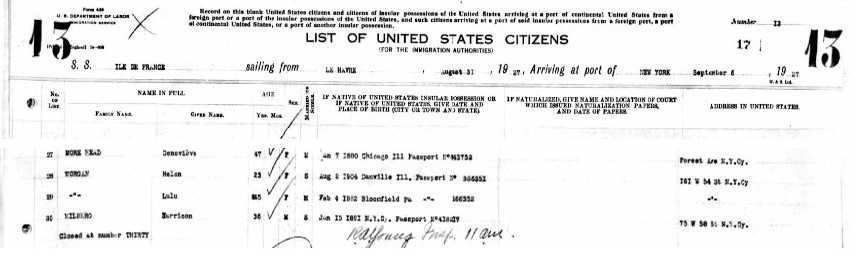
And to add to the fun, starting with her 1927 trip abroad, Helen began claiming she was born in 1904, as her arrival form states:
It’s a little fuzzy, but it states her date of birth as August 2, 1904.
At the end of the day, what matters is that Helen was born and left us her music.
… Tragedy struck the company of the Ziegfeld Follies of 1931. Immediately following the evening performance on Saturday the 25th, Harry Richman invited Gladys Glad, her husband Mark Hellinger, and showgirls Virginia Biddle and Helen Walsh for a weekend excursion around Long Island Sound on his yacht Chavalmar II.
Helen Walsh was a good Irish girl who, like Helen Morgan, started behind a department store counter. From there, Walsh joined the Ziegfeld stable as a showgirl. She played in Rosalie, then Whoopee and Simple Simon before landing in the Follies. Like Morgan, Helen Walsh also had a ‘widder’ mother at home, but here the similarities ended. Almost without fail, Walsh ran home to Riverdale every Saturday night to hand over her pay to her mother before enjoying her weekend.
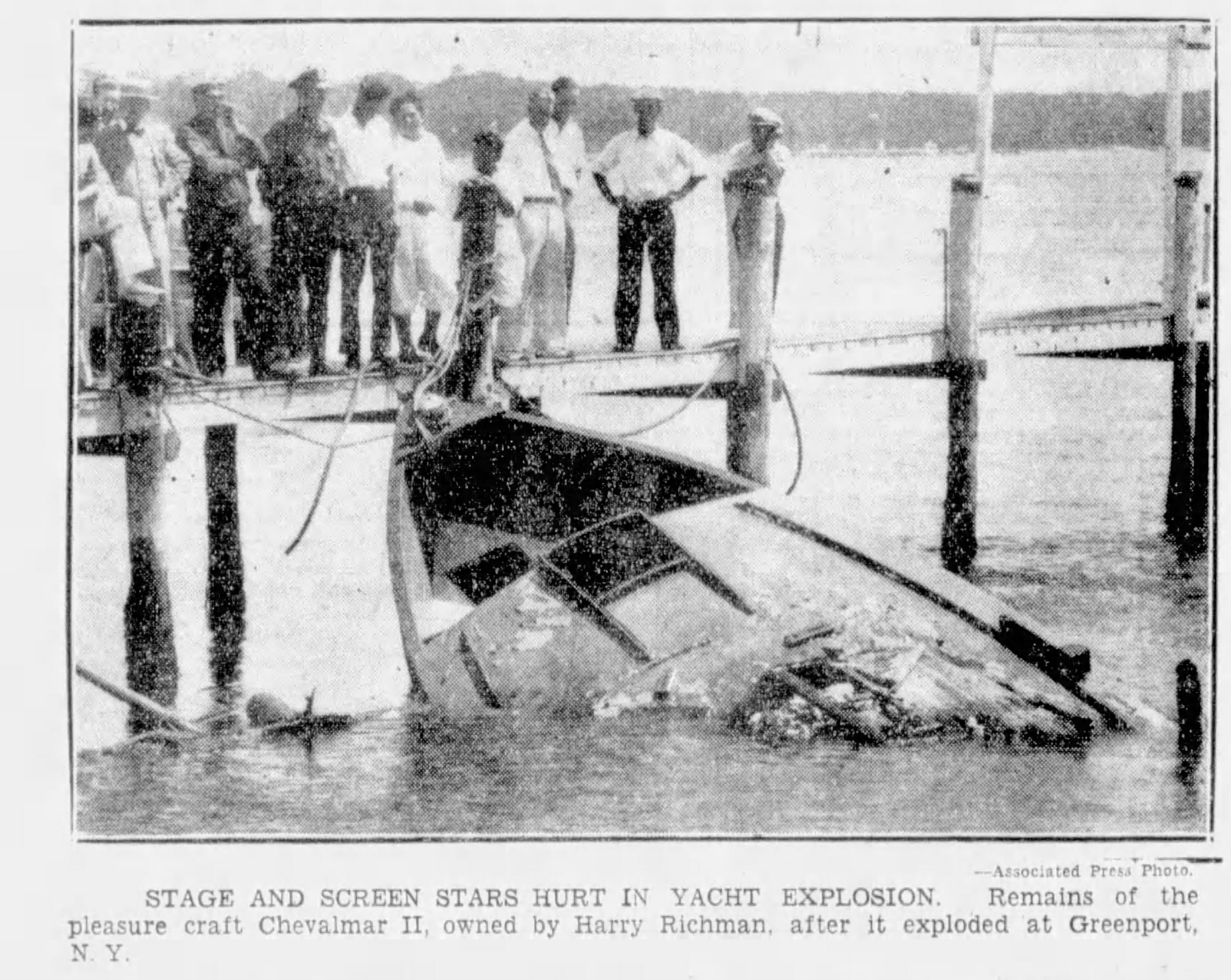
The company met at Richman’s Beechhurst home, had cocktails, and boarded the yacht and set off on their voyage to nowhere. With the dawn, the ship’s captain docked at Greenport to refuel the yacht’s 140-gallon gas tank. Richman held court with Hellinger and his chauffeur Levy on deck while the women enjoyed the warmer conditions below. Gas fumes flooded the cabin and when the Captain White started the yacht’s engine, the Chavalmar II was engulfed in a huge fireball.
With amazing presence of mind, Levy, his hair afire, ran below deck and managed to rescue Glad and Biddle. Richman also scrambled below, got Helen Walsh above deck and jumped into the flaming water with her. When Walsh came up, Richman grabbed her and following the others, paddled the two to shore. So relieved was Gladys Glad to see her friend, she grabbed her arm. Some of Helen Walsh’s skin came off at the touch.
Glad commandeered a nearby policeman to drive a “borrowed” car and got Walsh and the others to the nearest hospital. Still conscious, Walsh asked repeatedly if she was badly burned – particularly if her wage-earning face was badly burned. The doctor assured her she was not badly burned externally. However, she lost a lot of fluid, and there was a possibility her lungs had been seared. The men were treated in the emergency room for their burns and released.
Helen’s mother, her sister Marion, and Doctor Michael Tetelman were called to Walsh’s side to begin the grim waiting game. Sunday evening, a nurse fed Walsh some soup, which caused her further nausea. Gladys Glad ordered chilled champagne, poured it over ice and spoon-fed her friend. This she was able to keep down.
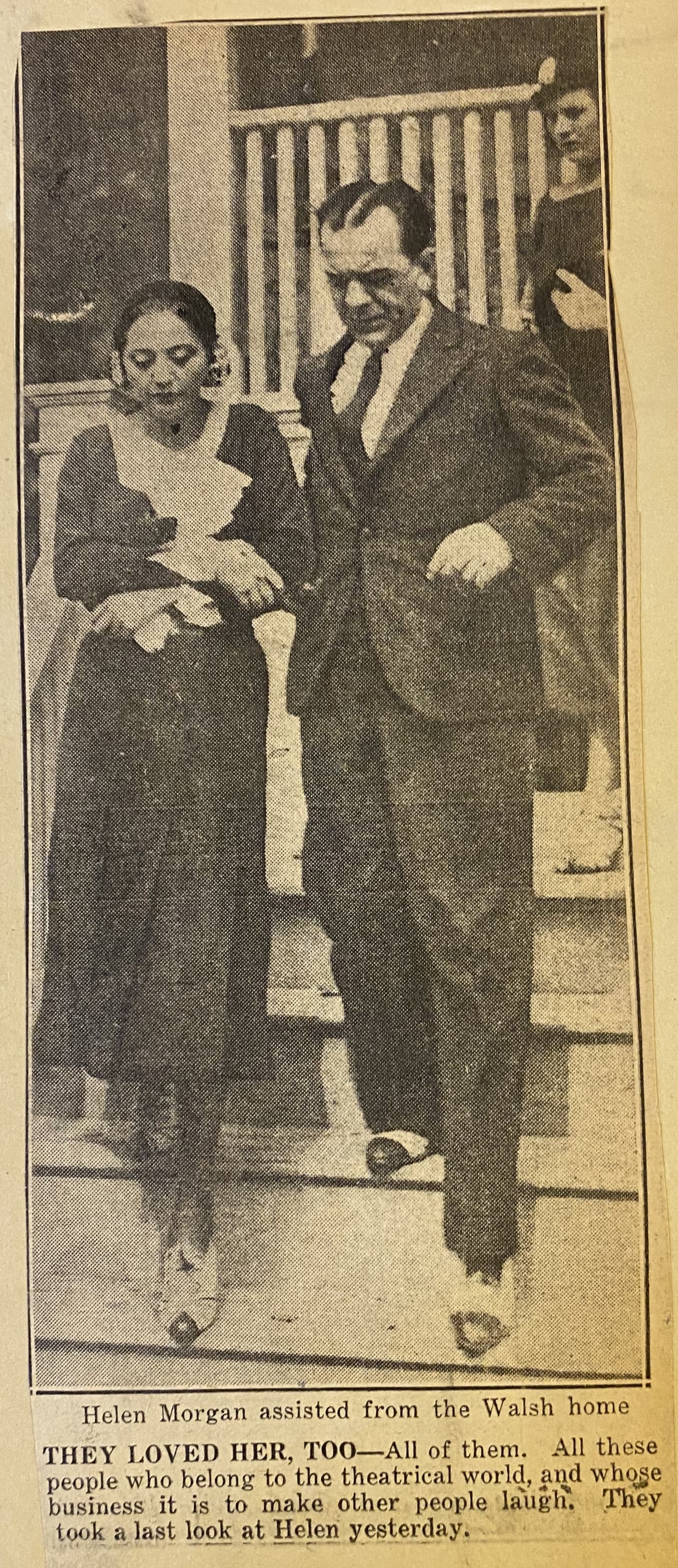
Monday morning a priest arrived, heard Helen Walsh’s confession, granted absolution, and administered Communion. She began to rally. Having been assured Walsh was recovering nicely, Richman returned to New York for the evening performance. Soon after he left, Helen Walsh quietly died of shock.
Hellinger followed Richman to New York where the press already knew of Helen’s death. He managed to keep word from Harry until after the performance, when the two cried together.
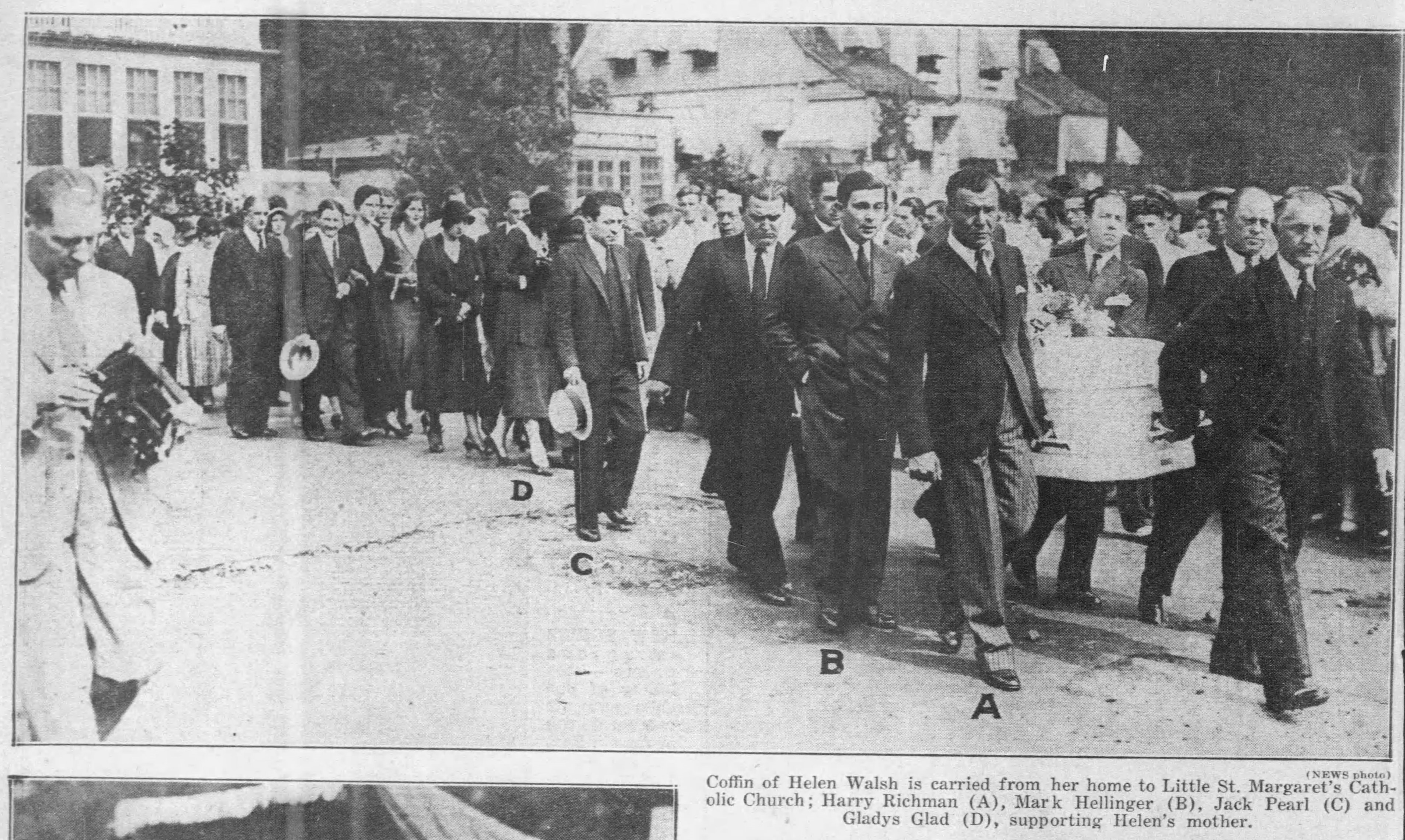
Following the funeral, Richman announced his intention to take out a $25,000 life insurance policy naming Mrs. Walsh as the beneficiary. Considering the unlikeliness of Mrs. Walsh living long enough to collect, the gesture struck many as a hollow ploy for publicity.
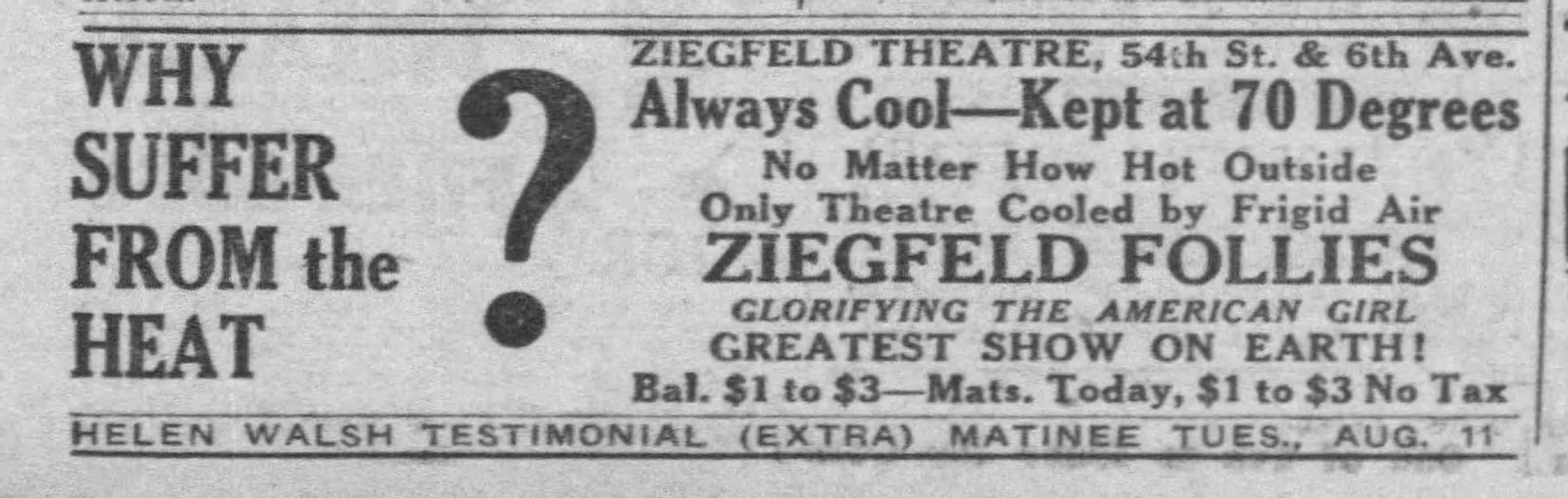
Hellinger and Richman then promised they would pay Mrs. Walsh her daughter’s salary for the remainder of her life. This offer went over better, but concerns over paying off the $7,500 mortgage on her house worried Mrs. Walsh more than a weekly income. Ziegfeld came to the rescue and added a matinee performance the following Tuesday, the 11th, as a benefit.[i] With a possible gate of $4,800, the performance brought in an astounding $18,000 (many people bought tickets only to return them to the box office for resale).
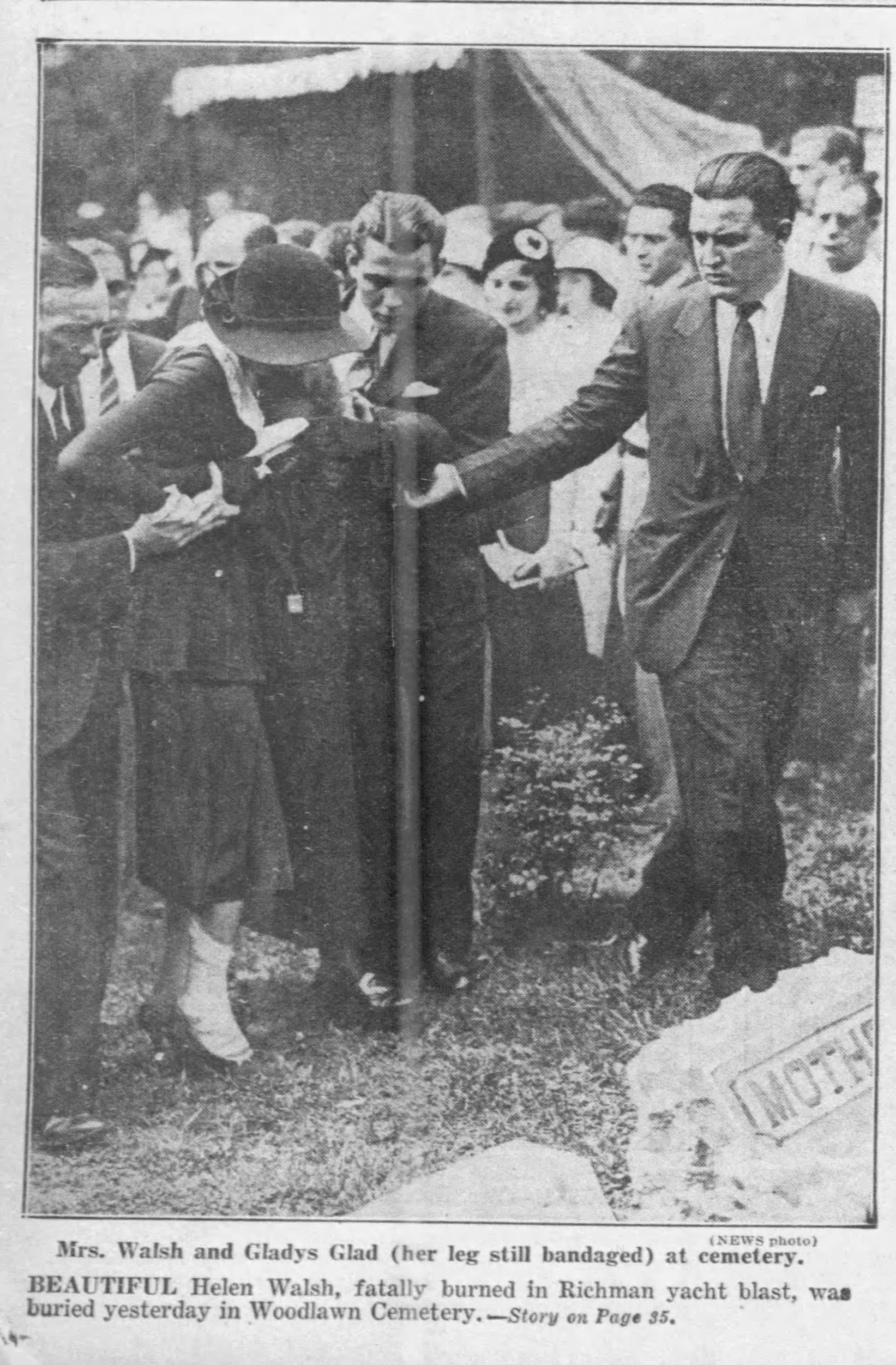
Ziegfeld’s shining moment, however, was short-lived. When he presented Mrs. Walsh with the check in front of a sea of reporters and photographers, the widow announced she didn’t want to stay in the old house any longer. With just her daughter Marion and herself needing accommodations, they decided to sell the place and take an apartment in the city.[ii]
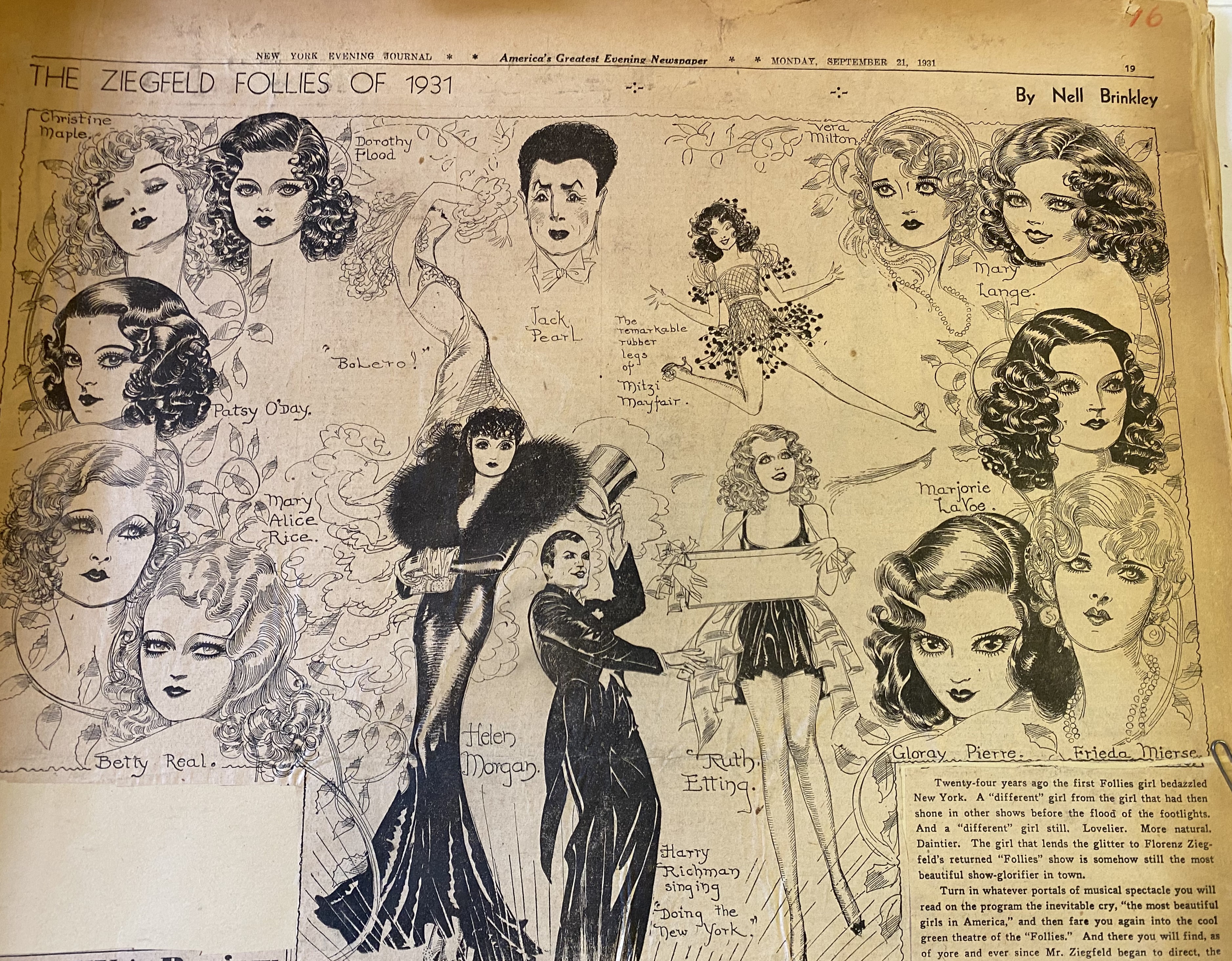
… Helen Morgan opened in the Ziegfeld Follies of 1931.
In December 1930, noticing a dearth of annual revues in the works for the coming year, Ziegfeld began to assemble a production team and cast for a late May/early June production. Early reports pointed to Will Rogers as the star and Ruth Etting as the leading chanteuse.[i] By 1931, Rogers was too busy to seriously consider a stage production, much as he may have wanted to return to Ziegfeld. An attempt to secure Maurice Chevalier withered when the French star demanded a $10,000 a week salary.[ii] At the same time, Ziegfeld approached silent clown Harry Langdon to be his star comic. While Broadway stars like Rogers and Eddie Cantor were enjoying immense popularity in talking pictures, silent holdovers like Langdon saw their stars fade. However, Rogers proved unavailable and even Langdon’s price tag of $2,500 a week proved too much for Ziegfeld.[iii] Comic Joe Laurie, Jr. was another early mentions for the revue.[iv]
Helen came aboard on April 19.[v] After the previously announced Ruth Etting, Helen was the second principal to be confirmed.[vi] Helen’s run of the play contract cited a salary of $1,500 a week with a four-week notice clause for either party. Prior to signing with Ziegfeld, Helen’s name was on the short list of potential talent for The ThirdLittle Show. It is unclear whether Helen turned down producer Dwight Dee Wiman or if he balked at hiring Morgan. In any event, Helen felt the need to make a grand and impressive entrance into the Music Box in a pink dimity gown on June 1, the opening night of The Third Little Show. The revue’s finale contained not one but four girls sitting upon pianos. Helen’s response was among the most demonstratively appreciative of those first nighters, but the stunt was far from new. John Murray Anderson had already placed multiple girls upon pianos in the Morgan manner in his Murray Anderson’sAlmanac (August 14, 1929, Erlanger).[vii]
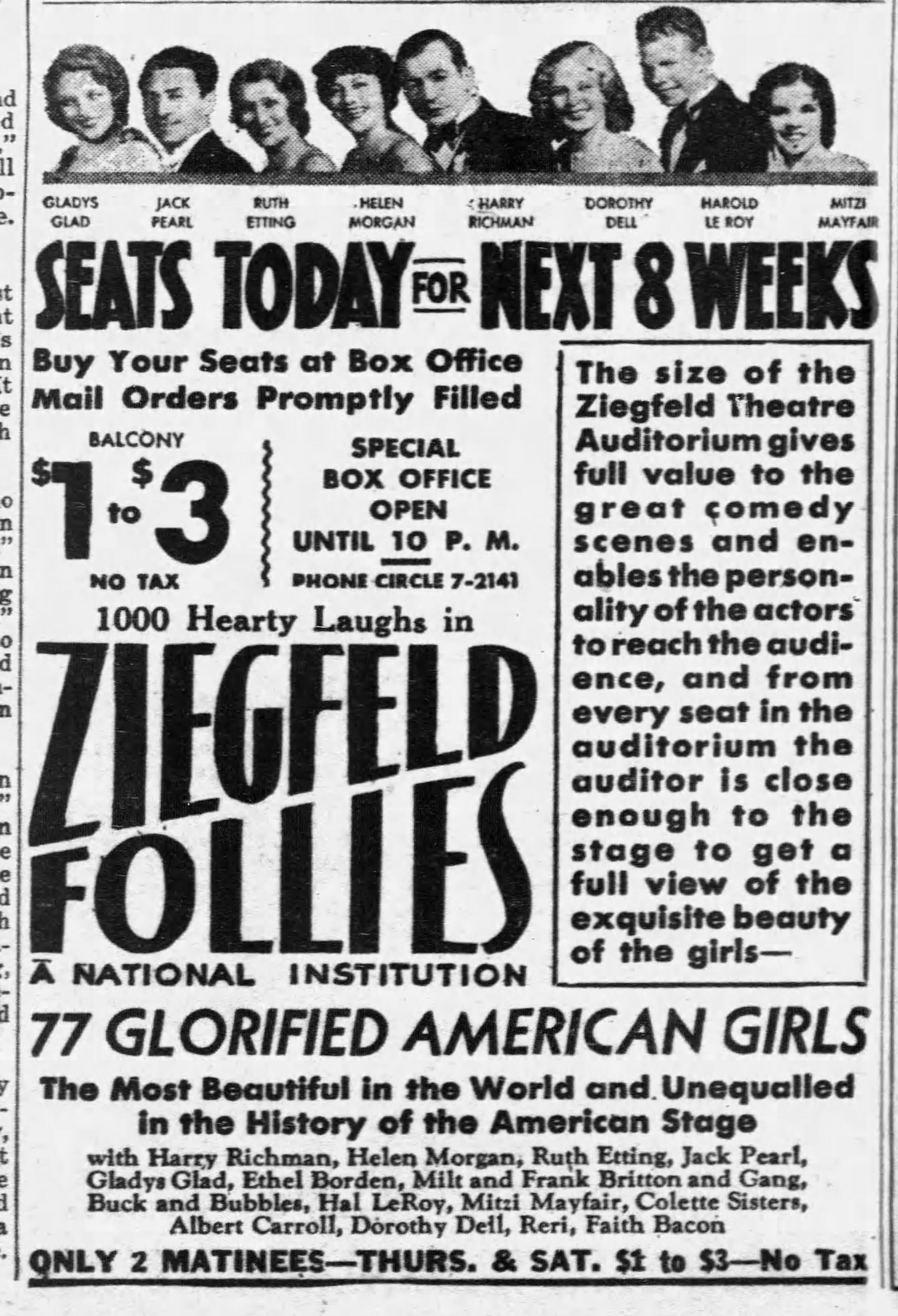
When the Follies chorus began rehearsals on May 7 and the principals some four days later, Ziegfeld still did not have a leading comedian. On the 20th, Variety announced that Jack Pearl had stepped into the troubled show.[viii] Others in the cast included Harry Richman and Faith Bacon, the latter recently arrested for overexposure in Earl Carroll’s Vanities. With a nod to changing tastes, Flo decided he wanted a Hollywood starlet to help boost box office. His initial choice was Jean Harlow, fresh from Public Enemy but not quite before the camera for her break-through role in Platinum Blonde.[ix] When Harlow failed to materialize, he went exotic, in the personage of the Polynesian dancer Reri (late of F. W. Murnau’s Tabu). Committed to making everything bigger, if not better, Ziegfeld upped the number of showgirls he employed from his customary sixty to eighty.[x] When asked why, he said he couldn’t say no to anyone in the depths of 1931 Depression America.[xi]
Ziegfeld originally chose Atlantic City as the premiere spot for his latest Follies.[xii] By the time the show went into rehearsals, it was clear the Apollo would not be able to handle the scenic demands of the show in its larval stage. The opening was moved to Boston, the site of many Follies premieres. On June 1, with the opening only two weeks away, Ziegfeld balked. The Boston controversy centered on the city’s Musicians’ Protective Association. Years before, the Association had passed a 60-40 rule that, in essence, required half again as many musicians be hired for any show as the score required. The rule, presumably, was used to provide the musician-equivalent of understudies. This edition of the Follies called for twenty musicians in the pit, and Ziegfeld was willing to hire thirty men at $72 a week. However, he refused to be responsible for their traveling expenses. Thomas B. Lothian and George Munroe, who represented the Erlanger and Shubert organizations, attempted to arbitrate between the two opposing sides, but when the Association refused to back down, Ziegfeld pulled the show from Boston.[xiii]
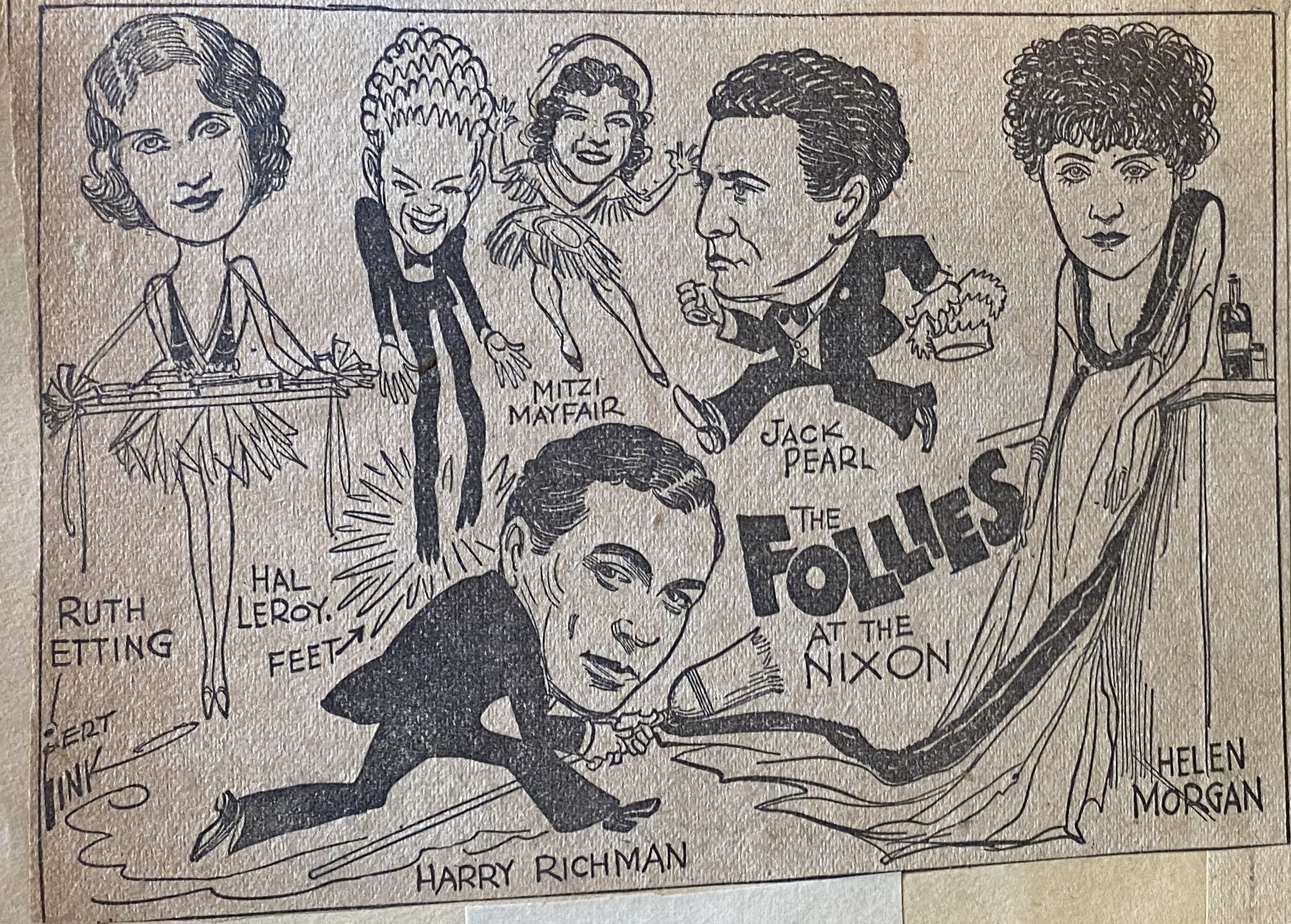
Cynical wags suspected Ziegfeld’s change in venue was more basic than that: he was broke and needed a theatre-crazy town close to New York where Ziegfeld was virtually guaranteed a sell-out in Depression-weary 1931.[xiv] Boston no longer fit the bill. Several eastern cities were considered, including Baltimore, Stanford, and Pittsburgh. Ziegfeld chose Pittsburgh, swayed by the Nixon’s healthy box-office returns on his previous productions there.[xv] The Nixon was also the birthplace of Whoopee, his last hit. Although the residents of Beantown were disappointed, the Three River City was delighted. Originally set to open on Thursday, June 11, for a nine-day run, the show was just not ready in time and was forced to postpone until the following Monday.[xvi]
While the $8,800 task of organizing a twelve railroad car caravan carrying sets, costumes and 202 people from New York to Pittsburgh was daunting enough, the cast unknowingly arrived in Pittsburgh during a taxi strike.[xvii] Even Ziegfeld found his trip from the rail station to the William Penn Hotel a challenge.[xviii]
Changes came fast and furious for everyone in Pittsburgh. With Richman and Jack Pearl hardly a match for previous Follies luminaries like Eddie Cantor, Will Rogers, Fannie Brice or Bert Williams, it came as no surprise that this edition was found lacking in comedy. The shakedown on sketches began with “Sophistication,” by Hellinger and Gene Buck. Another quick casualty was a prohibition screed called “Hic Hic Hooray.” Hellinger’s shockingly incorrect “The Africans Had a Word for It” was cut early on in Pittsburgh, only to be reinstated in time for the Broadway opening to have something bordering on the comic in the show. Dance, the show’s strongest suit, was beefed up when the Albertina Rasch Dancers received the second act ballet “Illusion in White” and Mitzi Mayfair was given another dance solo in the first act.
Quickly cut were Pearl Osgood’s two numbers, “Rhumba Baby” and her duet with Hal LeRoy, “Knock Knees.” With the cuts went Miss Osgood, who did not join the company in New York. A similar fate awaited Viola Tree. When the sequences “The French Dressmaker” and “At the Grand Guignol” were axed, so was Viola. Even her Dowager bit in the modern section of the “Broadway Reverie” playlet went away, with no one back-filling the role.[xix] Other musical changes included Earl Oxford’s trading in his “Waitin’ By the River” for “Sunny Southern Smile.” Harry Richman lost “Mailu,” which he sang with a group of sailors in the South Seas sequence which began the second act. He also lost “From Cradle to the Grave” and “Here We Are In Love,” his duet with Ruth Etting. Hal LeRoy and Mitzi Mayfair lost their young love duet, “Let’s Put Our Laundry in One Bag.”
For Helen, her two skits, “Victim of the Talkies” and the Grand Hotel parody were among the biggest hits in this Follies. Musically, the situation was far direr. Throughout the Pittsburgh and subsequent Broadway run, Helen and Flo shuffled in a dozen or more songs in search a hit number that forever proved elusive. One Morgan song, a duet with Harry Richman called “I’m With You” stayed in the production for the entire Broadway engagement. It was even recorded – but not by Helen Morgan.
Among the other songs to last through the Broadway run were Harry Richman’s opening number, “Help Yourself to Happiness” …
… and Dorothy Dell’s delightful celebration of a maid’s loss of virginity, “Was I?”
The only original cast member to preserve a vocal from this edition of the Follies was Ruth Etting. In the two-scene “Broadway Reverie” playlet, she appeared first, as Nora Bayes, circa 1915, singing “Shine on Harvest Moon.” This revival was the sole hit song from the 1931 Follies.
In the second scene, set in 1931, Etting followed “Was I?” with “Cigarettes, Cigars,” a retread of her previous hit, Rodgers and Hart’s “Ten Cents a Dance.”
Frustrated, Helen left the Follies on November 7, 1931, two weeks before it closed in New York. Ruth Etting did as well. Wini Shaw handled their material for the subsequent tour.
Ziegfeld entered talks to bring the 1931 Follies out west and film it. Nothing came of the idea. After the Follies tour ended in March 1932, he hired Bobby Connolly to reduce it to a tab unit: Ziegfeld’s Vaudeville Revue. Newly hired by RKO to shore up the dying Orpheum vaudeville circuit, Connolly prepped a company in the (currently dark) Broadway Theatre in New York, with the goal of slicing the production into three or four touring units. B.S. Moss expressed interest, as did Arthur Klein and Martin Beck, who wanted their own tab unit for their New York Palace stage. It is unclear whether Connolly, RKO, Moss, Klein, Beck, and Ziegfeld failed to come to terms, or if Flo himself pulled the plug on Ziegfeld’s Vaudeville Revue after the success of his 1932 radio program. In any event, he announced two live one-night stands of his own Follies of Long Ago, one on May 23 in Providence and the other on the following evening at the Boston Garden. No such events ever took place, let alone a tour.[xx]
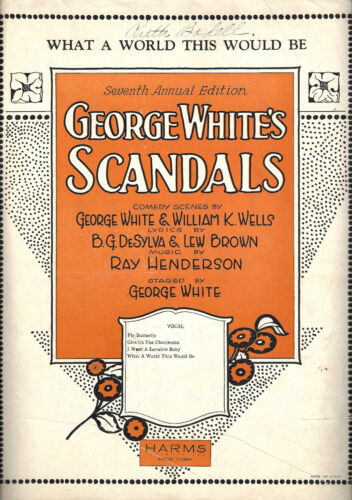
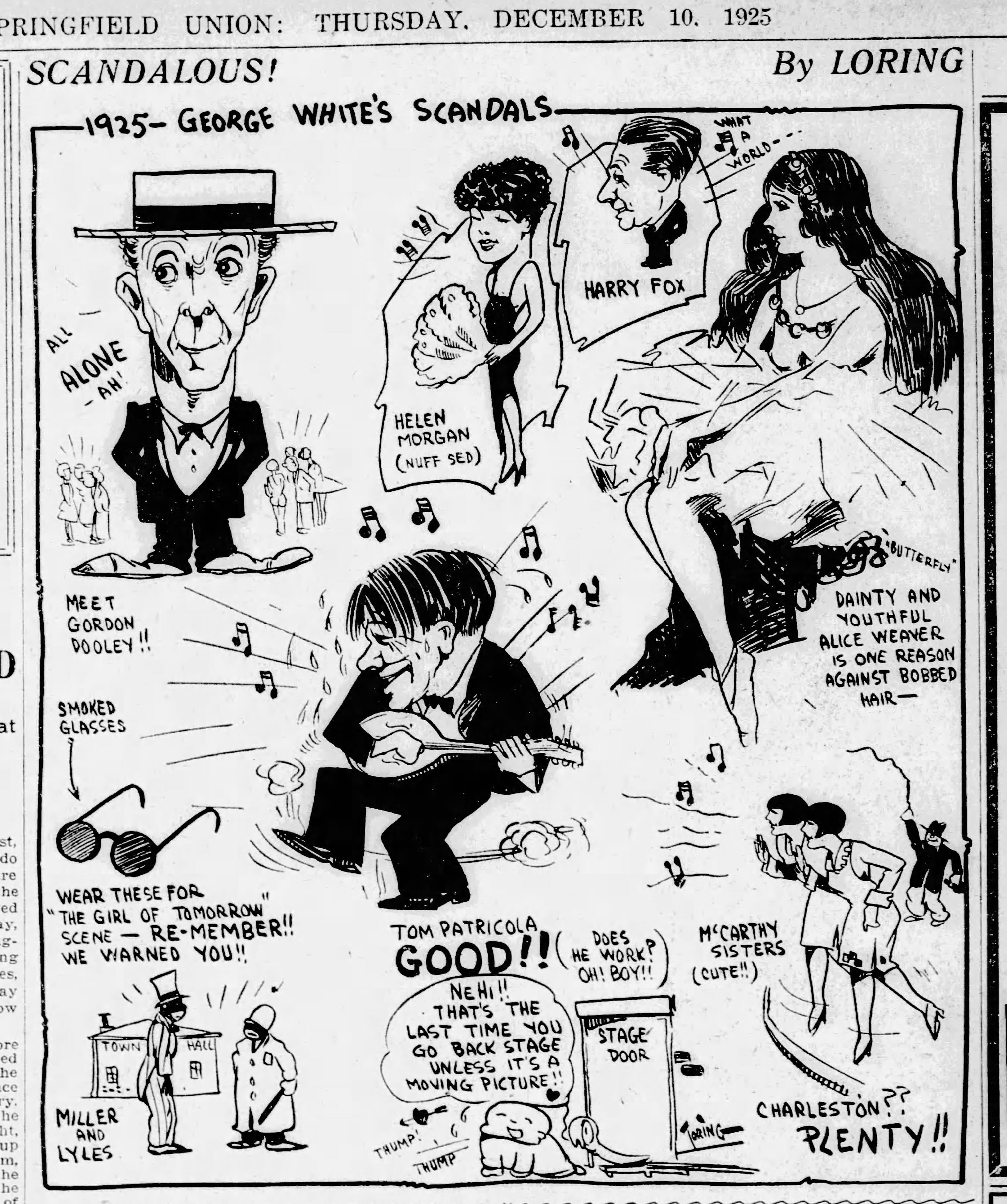
Ninety-nine years ago, tonight, Helen Morgan made her Broadway debut in the seventh edition of George White’s Scandals.
As was often the case in a George White production, there was more drama backstage than on.
On Broadway in the mid-1920s, multiple annual revues played simultaneously. Competition was fierce and original staging ideas increasingly rare. The 1925 Scandals beat Artists and Models to the punch by only three days with identical staging effects: a wisteria arbor, a rose ladder and a fan with changing lights (for Helen Hudson’s first act curtain “Beware of the Girl with a Fan.”) The fan and arbor effects were imported from Paris, the ladder a nod to the old Hippodrome shows. Although scheduled to open at the Winter Garden the Saturday before the Scandals, the Shuberts hastily cut and restaged their show and delayed its opening until the following Wednesday. Ziegfeld also planned to use the Parisian effects for the summer edition of his 1925 Follies on July 6. Following the brouhaha between White and the Shuberts, Flo cancelled his plans and successfully trashed his rivals with the announcement that his revue would contain strictly American ideas.
French designer Max Weldy inadvertently contributed to this Gallic backlash with costumes Erté and he provided to both the Scandals and Artists and Models. Supposedly promised and then denied work, a disgruntled costume shop tipped off the U.S. Customs Office. The Americans alleged that Weldy shipped his French creations into the U.S. in an unfinished state in a ploy to get around paying U.S. customs. White counter-charged that his Scandals clothes came into the country through the proper channels. In fact, White claimed the government owed him a refund since the value Weldy voluntarily placed on the costumes at the time of import was higher than their eventual street value.[i]
White endangered the New York run by offering local ticket brokers only the first sixteen weeks and at a ten percent return. When the Shuberts learned of White’s offer, they withdrew their more equitable twelve week/twenty-five percent deal to handle Artists and Models and resubmitted with White’s cutthroat figures. The brokers balked and refused to handle either attraction. Within a week, the kerfuffle was resolved, at least with the Shuberts, largely in the brokers’ favor.[ii] Some brokers hammered out a compromise with White. Some continued the embargo. In response, critic Sime Silverman began his pan of the Scandals with this catty suggestion: White’s ticketing shenanigans qualified him to work as a ticket seller should his producing talents leave him. Following its tussle with White over this edition, Variety predicted an early tour less than two months into its New York run. Outraged, White forbade his artists from placing advertisements in the show business bible. Variety countered by chiding the petulant producer in print.[iii]
In spite of some negative review, White’s ruthless business moves, and an unusually hot New York summer, the show played to decent houses. Usually grossing about $25,000 a week (capacity was about $33,000), the show owed its healthy run primarily to name recognition and the legacy of the edition that preceded it.
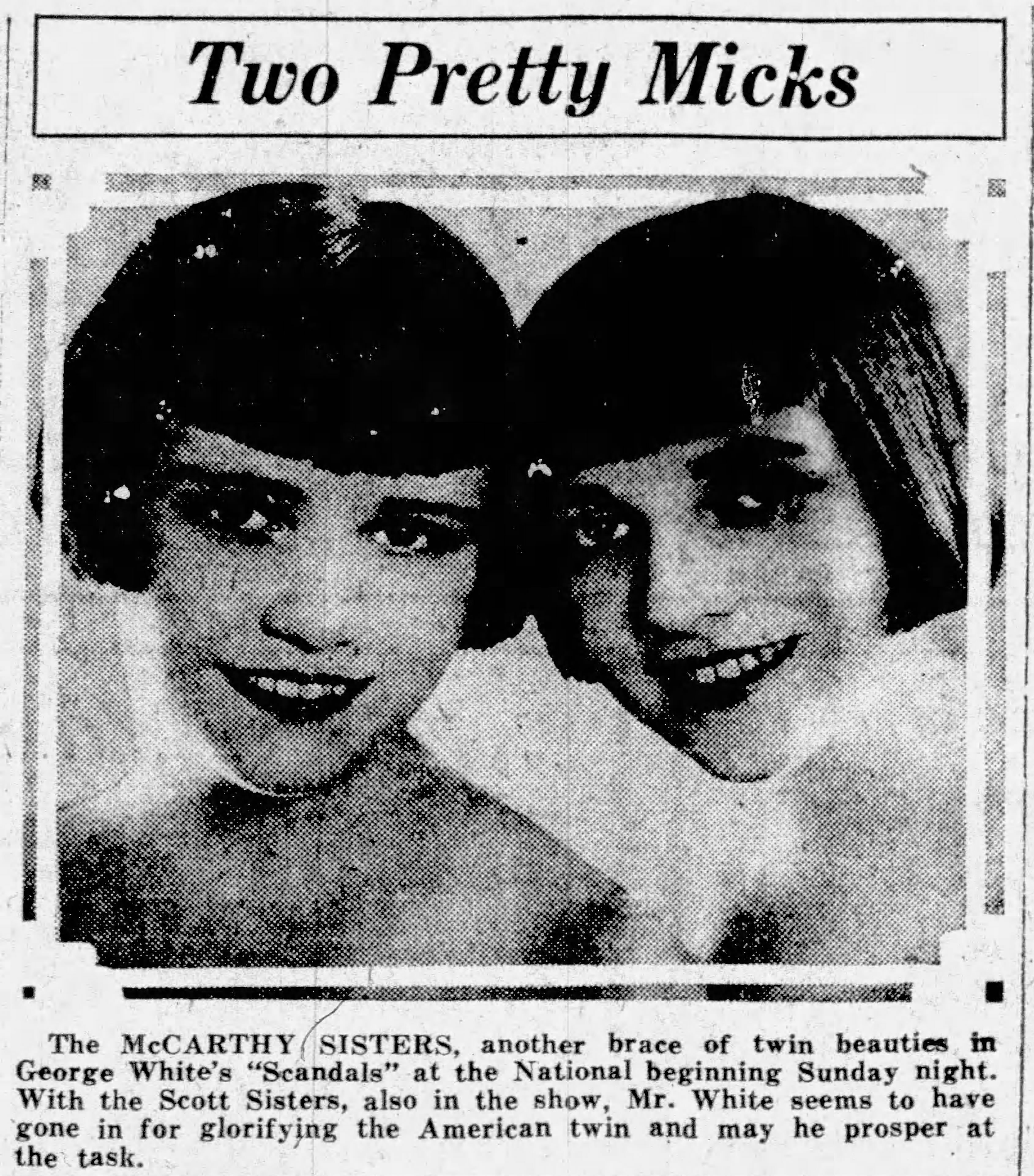
As for Helen Morgan, White hired her with the intention of molding her into a singing comic along the lines of Winnie Lightner. Helen’s work with two songs, “I Want a Lovable Baby” and “What a World This Would Be” were more than satisfactory. Her first attempts at dialogue, in the skits “Drama Mixed with Revue” and “Cheap Guy,” less so. “I wasn’t so good either, because they cut my lines after the first night,”[iv] White may have trimmed her dialogue, but she played both skits throughout the run. The cuts she suffered, actually, were musical: the McCarthy Sisters took over “I Want a Lovable Baby” six weeks into the New York run.
White did not re-assign “Lovable Baby” to punish Morgan. When the New York critics mistakenly credited some of Morgan’s work to the show’s star, Helen Hudson, White hired Morgan to understudy Hudson: if the critics confused the two Helens, the public likely would as well.
Throughout the Broadway run, White changed the running order of the skits and songs, partly to improve pacing, but also to allow Morgan to play both her material and Hudson’s should the latter not go on. The biggest benefit to White’s shuffling: moving Tom Patricola’s Act Two Charleston showstopper to the Act One finale position and repositioning Hudson’s “Beware of the Girl With a Fan” to the eleven o’clock spot in the second act.
Helen Morgan never went on for Hudson in New York, but she did play a great many performances on the post-Broadway tour. She even picked up Hudson’s second act skit, “The Joneses.”
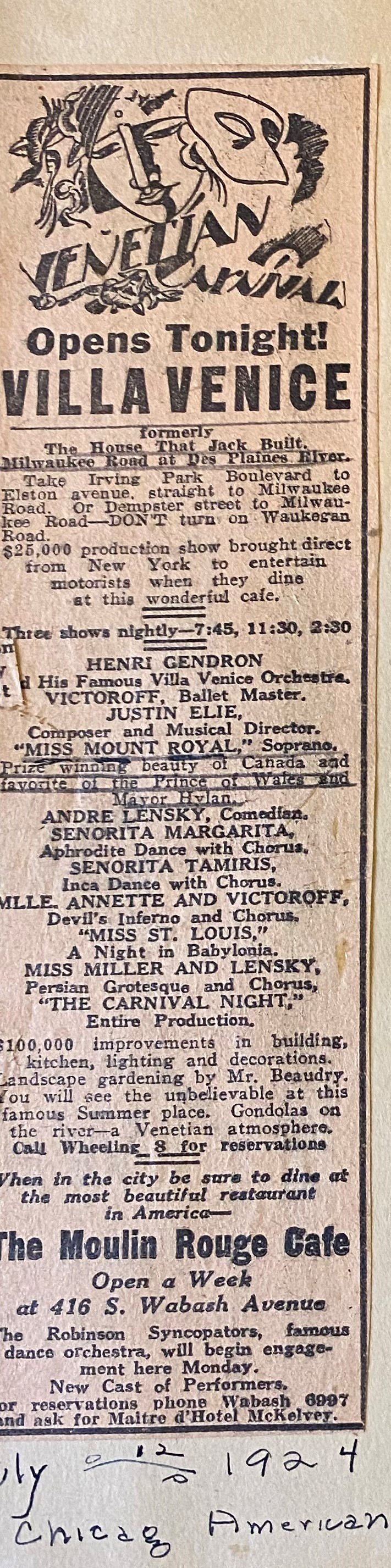
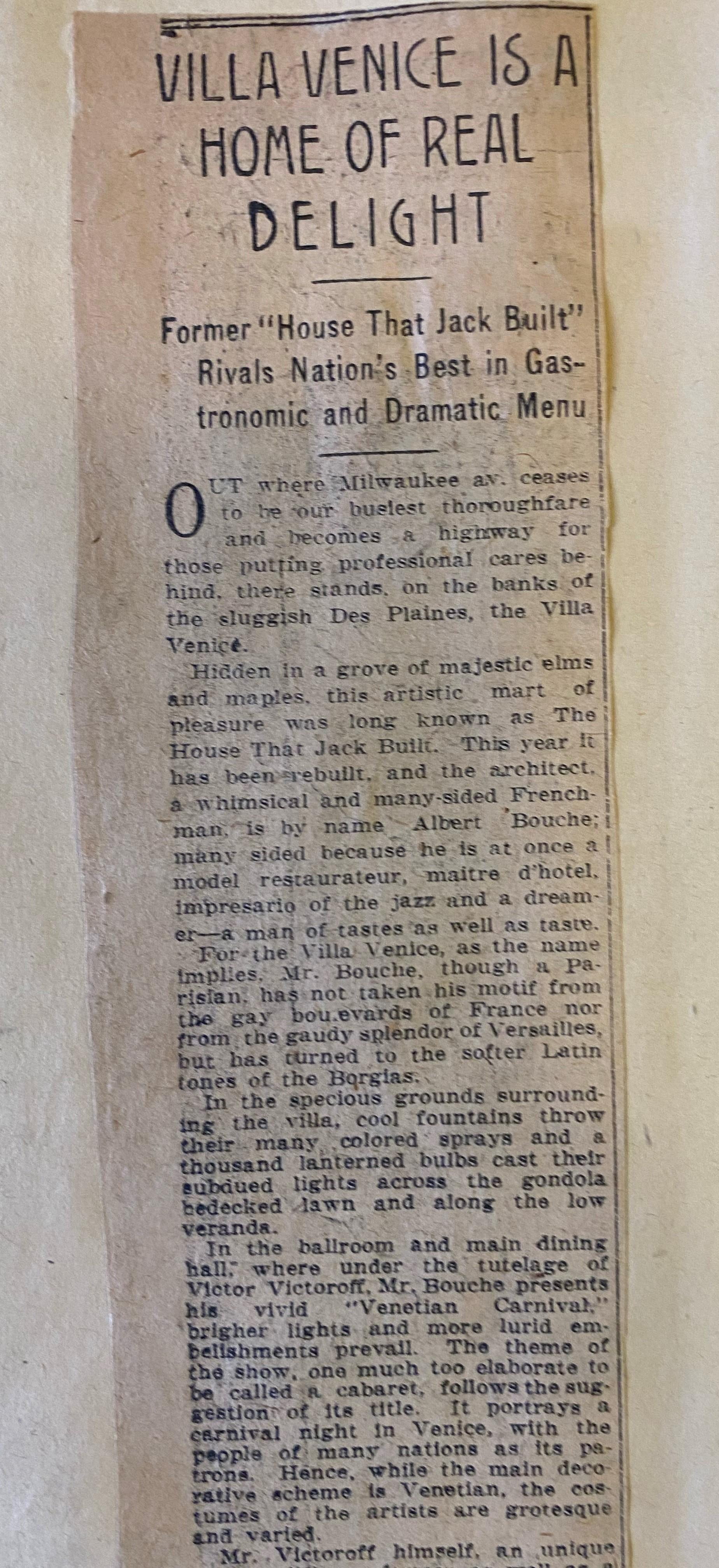
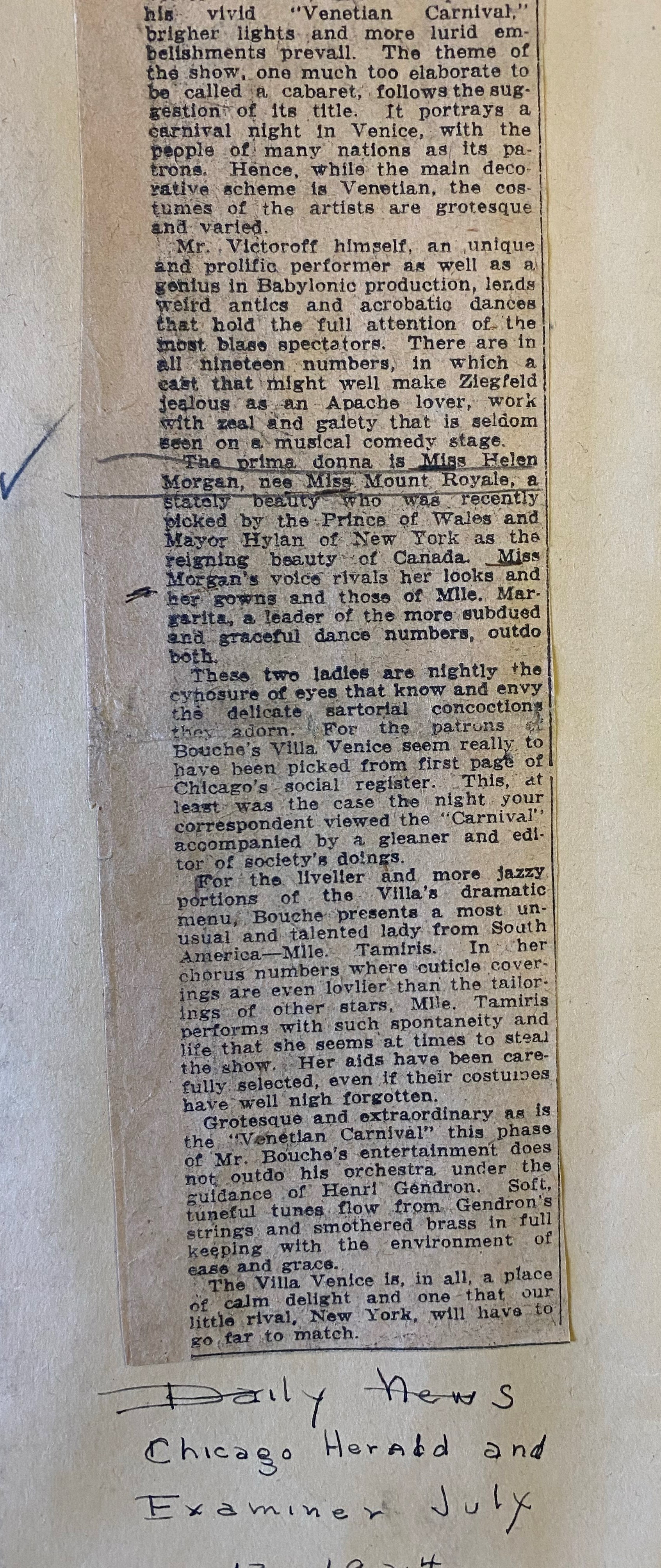
One hundred years ago today, Helen Morgan made her cabaret debut, at Chicago’s Villa Venice.
First caveat: Helen began working the cabarets in 1919, as a toe-dancer, but the Villa Venice was the first time she appeared as the leading vocalist.
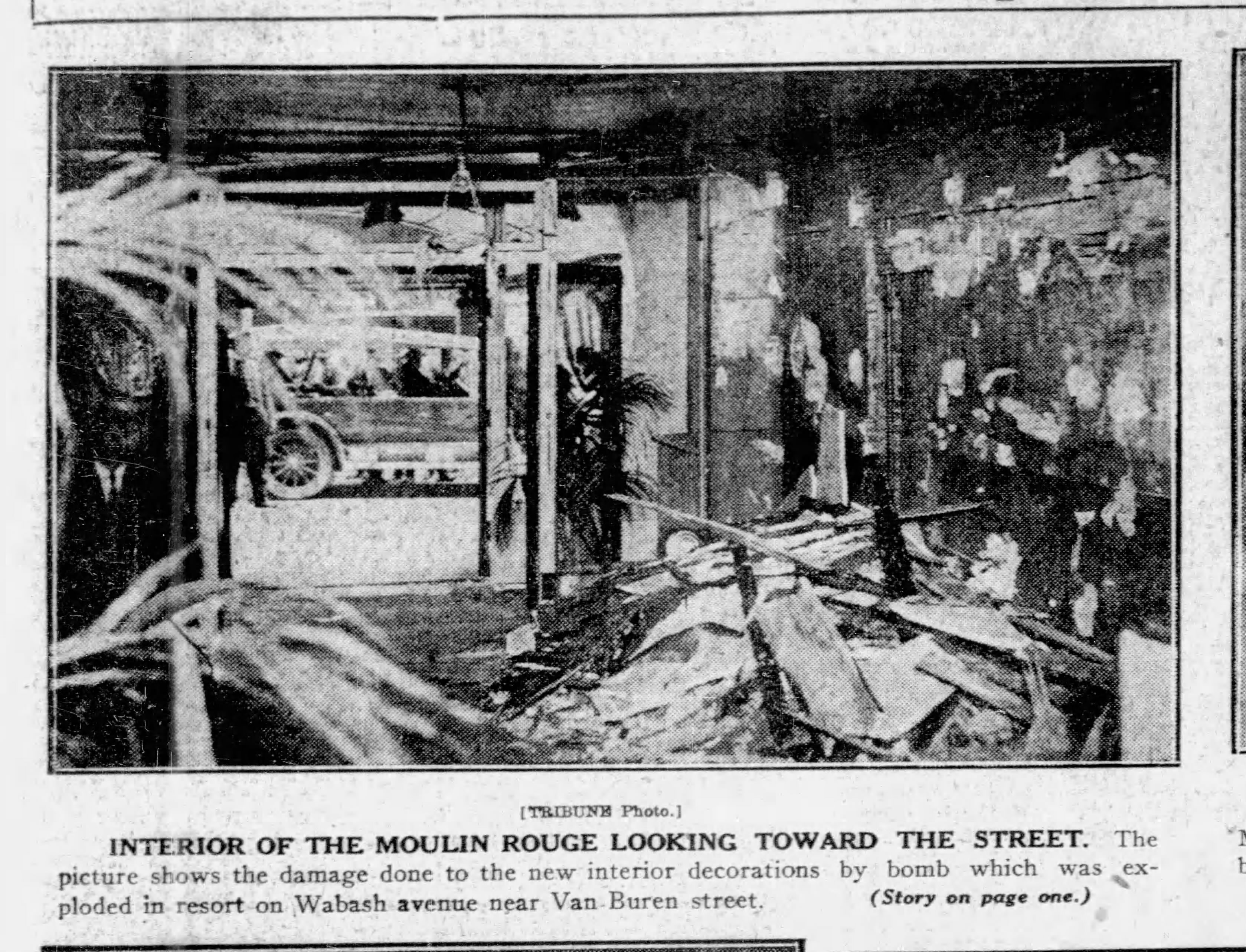
Second caveat: Due to a delay in the renovation of the former House That Jack Built into the Villa Venice, owner Albert Bouche placed Helen, and much of his floorshow, into his Loop cabaret, the Moulin Rouge, as a placeholder, on June 4.
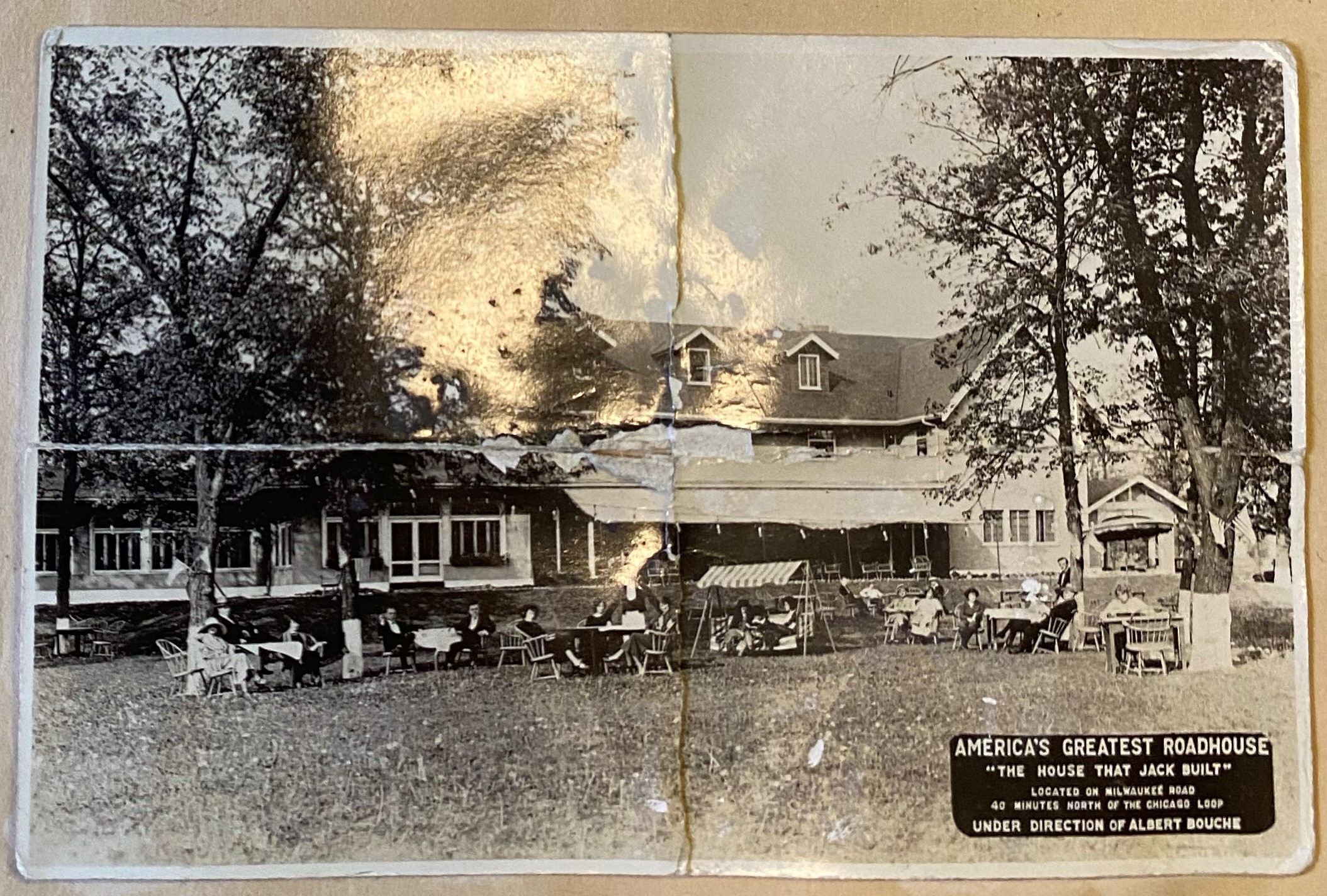
“The House That Jack Built” prior to its metamorphosis into the Villa Venice
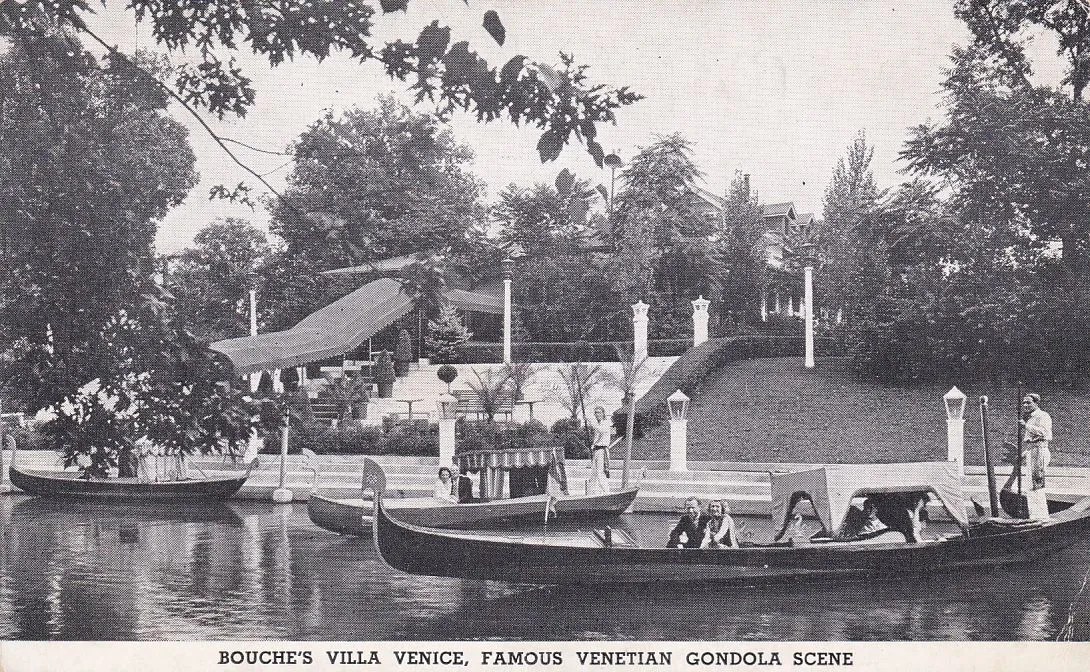
Villa Venice in its prime
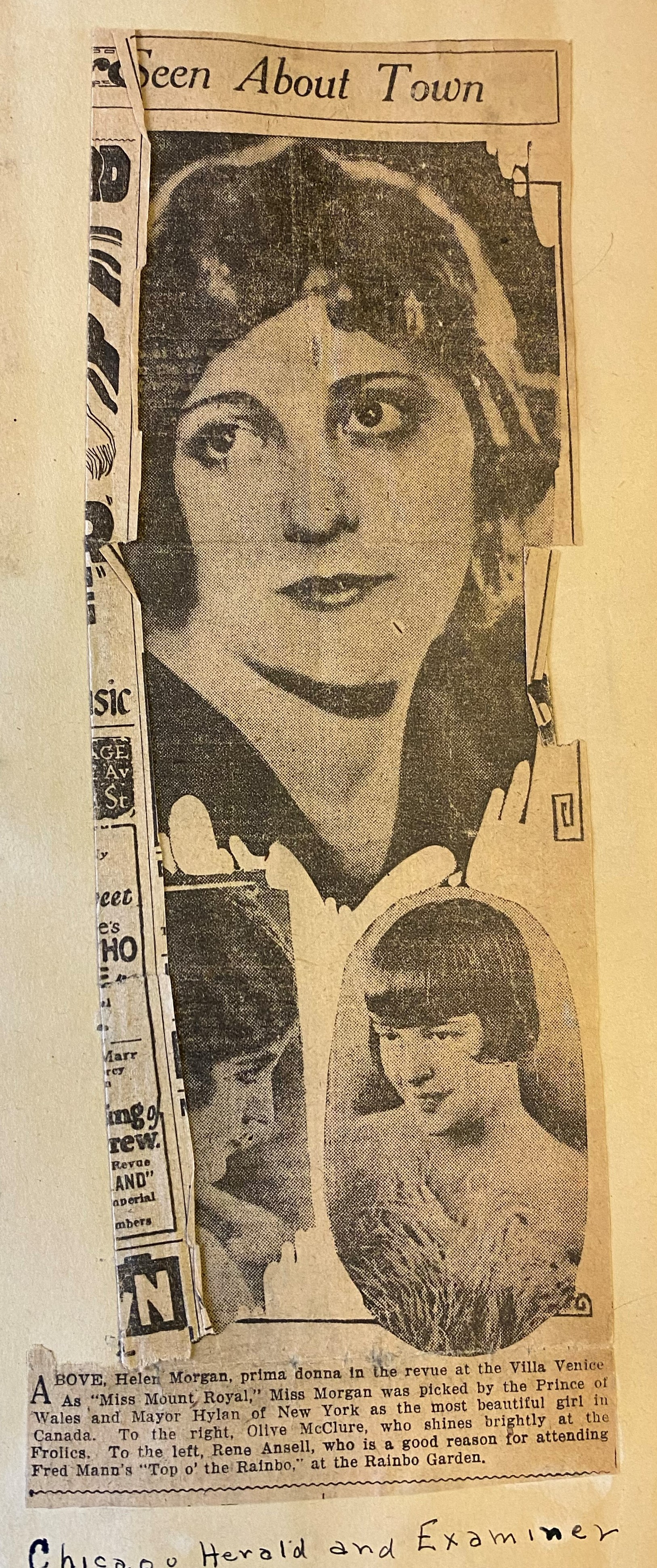
Seventeen months after her brief stint as a beauty queen, Helen still appeared as Miss Mount Royal.
Morgan scored a hit at the Villa Venice. She played the club for three months. Her beauty queen days were coming to an end.
As for the Moulin Rouge, it was a good thing for Helen that the Villa opened when it did. On June 16, while replacement acts were rehearsing, Bouche’s rivals rolled a bomb into the foyer of the Moulin Rouge. Two men, standing in the lobby at the time of the blast, were seriously injured.
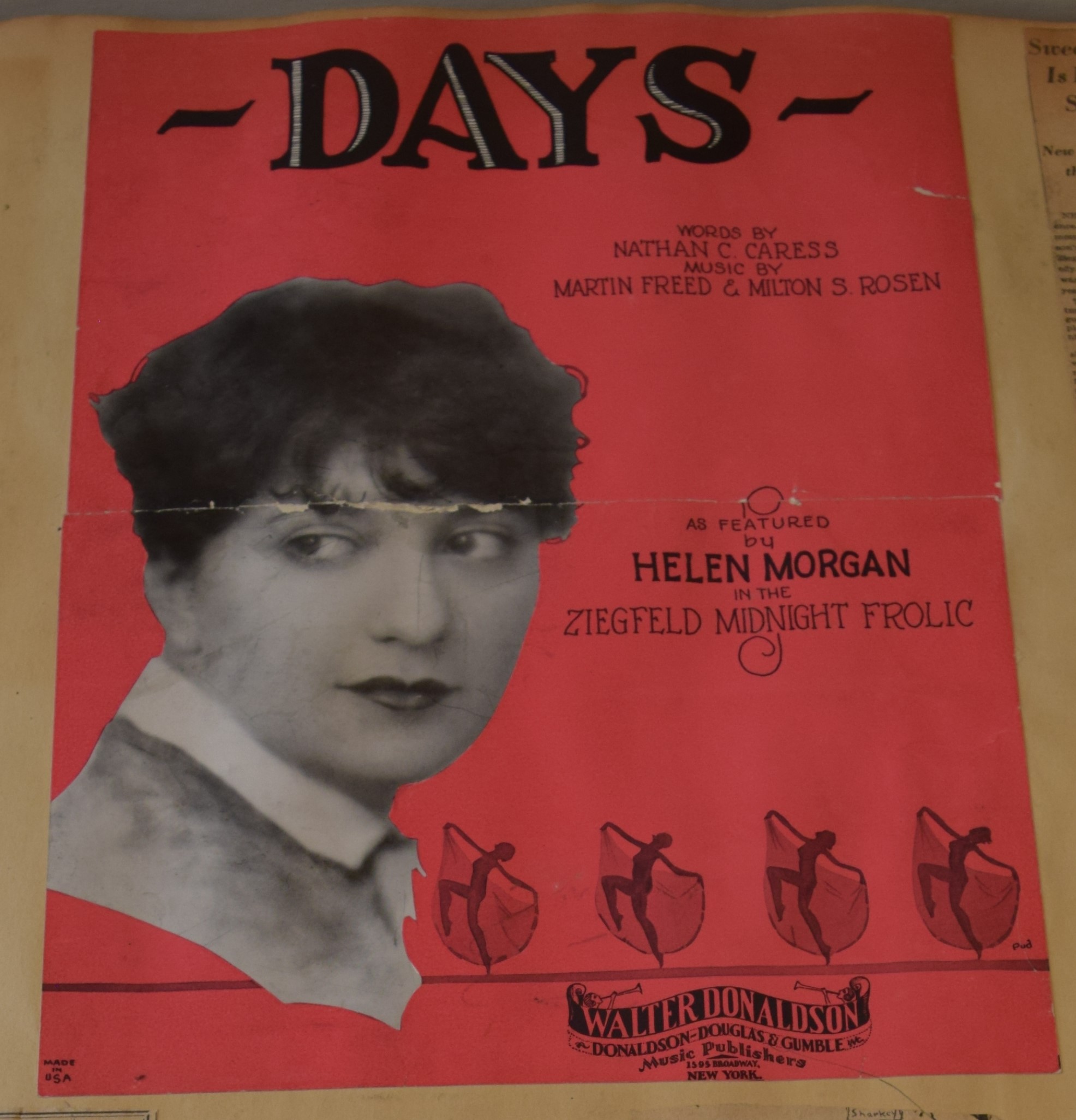
… Helen Morgan recorded “Who Cares What You Have Been”, a song she introduced in the 1928-29 edition of the Ziegfeld Midnight Frolic. (My apologies: the audio is not the best here.)
Curiously, she did not include Days, her other Martin Freed song from the Frolic as the flips-side on this disk. In fact, it appears that this song went unrecorded by anybody.
Even sadder, she never commercially recorded her other big Frolic number. As part of a retrospective of Florenz Ziegfeld’s legendary career, she sang, next to closing, “My Man.”
Instead, she recorded, also on this date, “Mean to Me.”
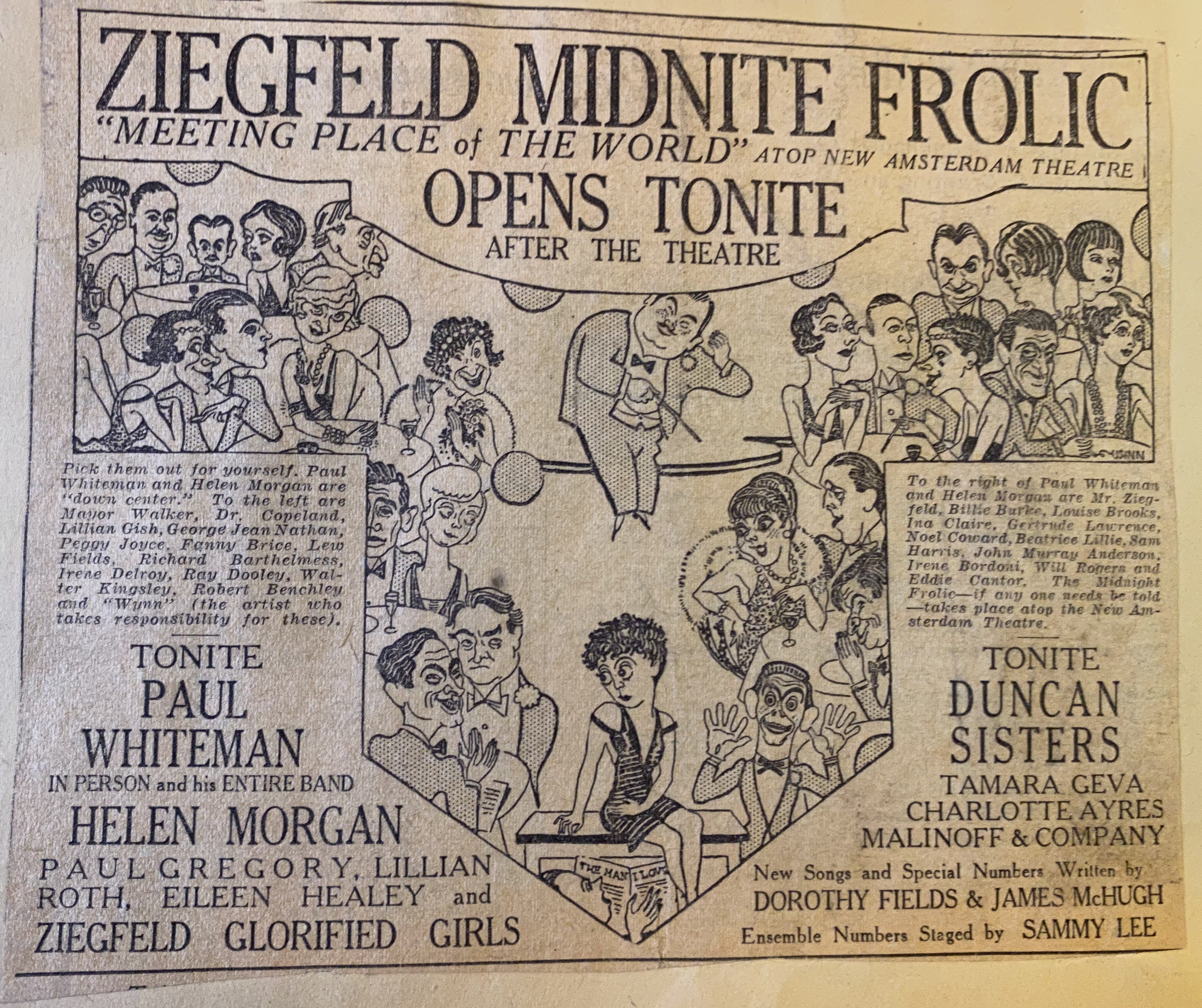
Ziegfeld opened what became the final edition of his Midnight Frolic atop the New Amsterdam Theatre.
The Midnight Frolic of 1929 v. 1.0 ran only four weeks before Ziegfeld closed it for ten days to open up the old balcony and convert the space from a simple floorshow setup back to a theatre setting.
The Midnight Frolic of 1929 v. 2.0 ran and additional eleven and a half weeks, closing on April 27, 1929.
With the exception of Paul Whiteman, who led the orchestra, Helen Morgan stayed with the production the longest, bowing out on April 13 due to her legal troubles (but more on that later …)
I have no idea who changed the spelling of midnight to midnite. This cartoon ran to promote the second opening of the Frolic, on February 6, 1929.
Perhaps the prize for the shortest tenure in the cast goes to Eddie Cantor, who came upstairs from his hit show Whoopee to emcee the during the first week or so to help launch the enterprise.
In early 1929, Cantor filmed a short wherein he performed his act (WARNING – in blackface) in a studio mockup of the Frolic floorshow configuration.
Until someone invents a time machine, this rare footage will have to serve as our opportunity to get a taste of what the Midnight Frolic was like.


 The Helen Morgan Page