Jerome Kern and Oscar Hammerstein II wrote the songs that are most affiliated with Helen Morgan, but she championed the work of other tunesmiths as well. In 1927, she brought back the Gershwins’ The Man I Love” from the UK and included it in her cabaret act … and almost single-handedly turned it into a standard. The Morgan touch worked a similar magic on “Body and Soul” (Johnny Green, Edward Heyman, Robert Sour and Frank Eyton) in 1930.
Still, after Kern and Hammerstein, she was most loyal to Louis Alter.
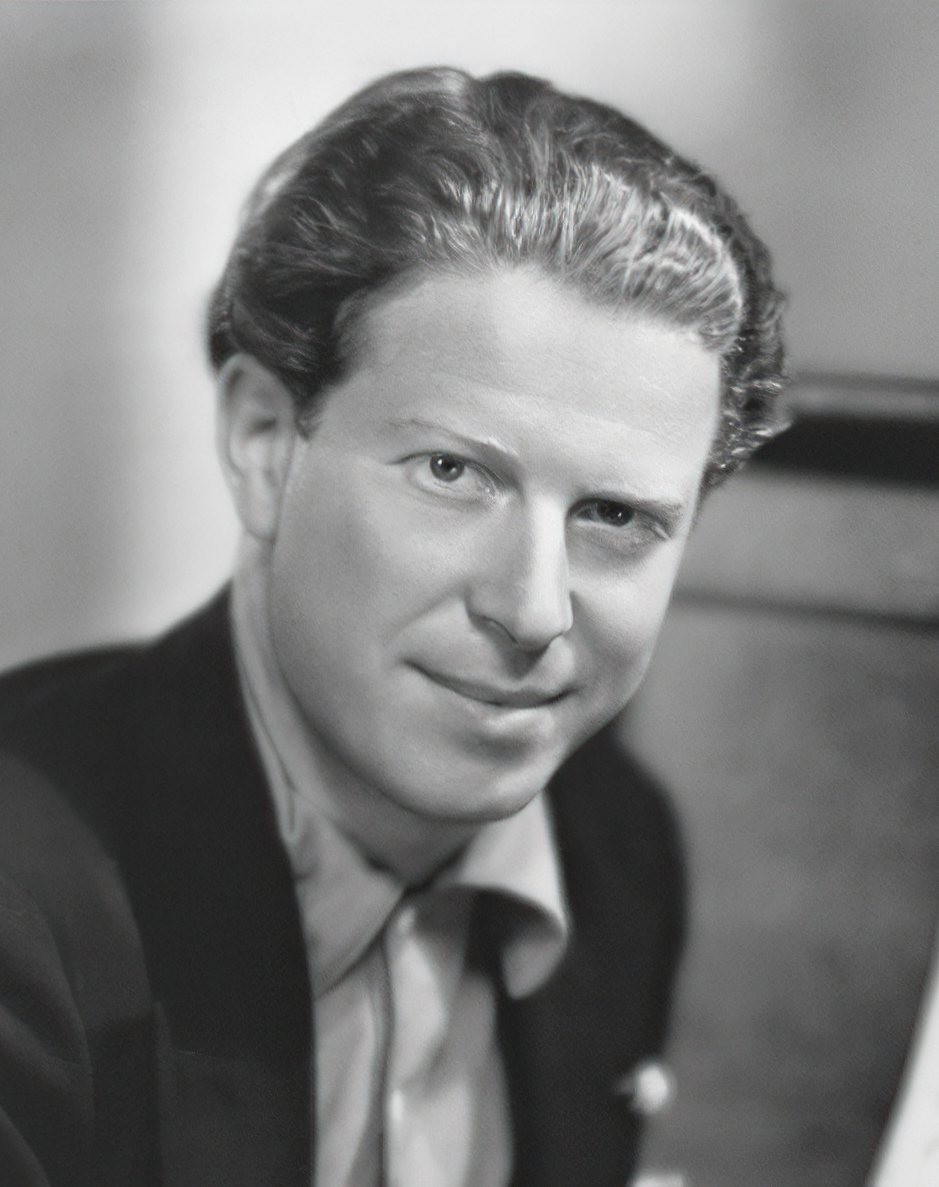
Alter was born in Haverhill, Massachusetts on June 18, 1902. During the 1920s, he toured in vaudeville as the accompanist to Nora Bayes. While working with Bayes, he began composing. After her death in 1928, Alter began writing in earnest.
His first big hit was “Manhattan Serenade,” a sort of second cousin to Gershwin’s “Rhapsody in Blue.”
He also wrote for film. One of his first film songs to get any traction was “Got a Feeling For You.” None other than Joan Crawford introduced it in the MGM revue film, The Hollywood Revue.
He earned two Academy Award nominations for Best Song:
- 1936: “A Melody from the Sky” from The Trail of the Lonesome Pine (lost to “The Way You Look Tonight” from Swing Time)
2) 1941: “Dolores” from Las Vegas Nights (lost to “The Last Time I Saw Paris” from Lady Be Good)
Alter likely entered Helen Morgan’s orbit in early 1931, when she appeared as a guest artist in Arthur Hammerstein’s Ballyhoo (Alter contributed to the score).
He supplied “The Man I Used to Love,” a proposed sequel to “The Man I Love” for Helen to sing in the 1931 edition of the Ziegfeld Follies. The song occupies a spot on the laundry list of special material for Morgan in that frustrating production. Like the others, it failed to click and was cut after only a few performances. The song appears to have evaporated as no commercial recording or sheet music was ever issued.
Nevertheless, Alter and Morgan clicked and, by the fall, Lou Alter was Helen’s go-to accompanist … and songwriter.
His best effort for Morgan was “What a Life” (“Trying to Live Without You.”) The song went over big when Helen introduced it in her act at the New Club Lido. Perhaps too big, for Warner Brothers swooped in and purchased it, likely robbing Morgan of the chance of recording it commercially.
Warners used the song in their epic The Rich are Always With Us, as well as the shorts The Audition and Artistic Temper – in the latter, sung by Ruth Etting.
Helen continued to feature the song in her act and accidentally preserved it on the radio series Ziegfeld Follies of the Air.
Alter and Morgan only cut two discs together, but they were biggies. Literally.
On August 9, 1932, Helen waxed her only 12″ records, for the Brunswick Show Boat album. Victor Young conducted, Louis Alter played the piano and provided his rococo embellishments.
Morgan continued to use Alter as an accompanist, off-and-on, through 1934, and continued to use his material in her act and on the radio.
Alter was a great fit for Morgan, not only as an accompanist, but as a vocal coach.
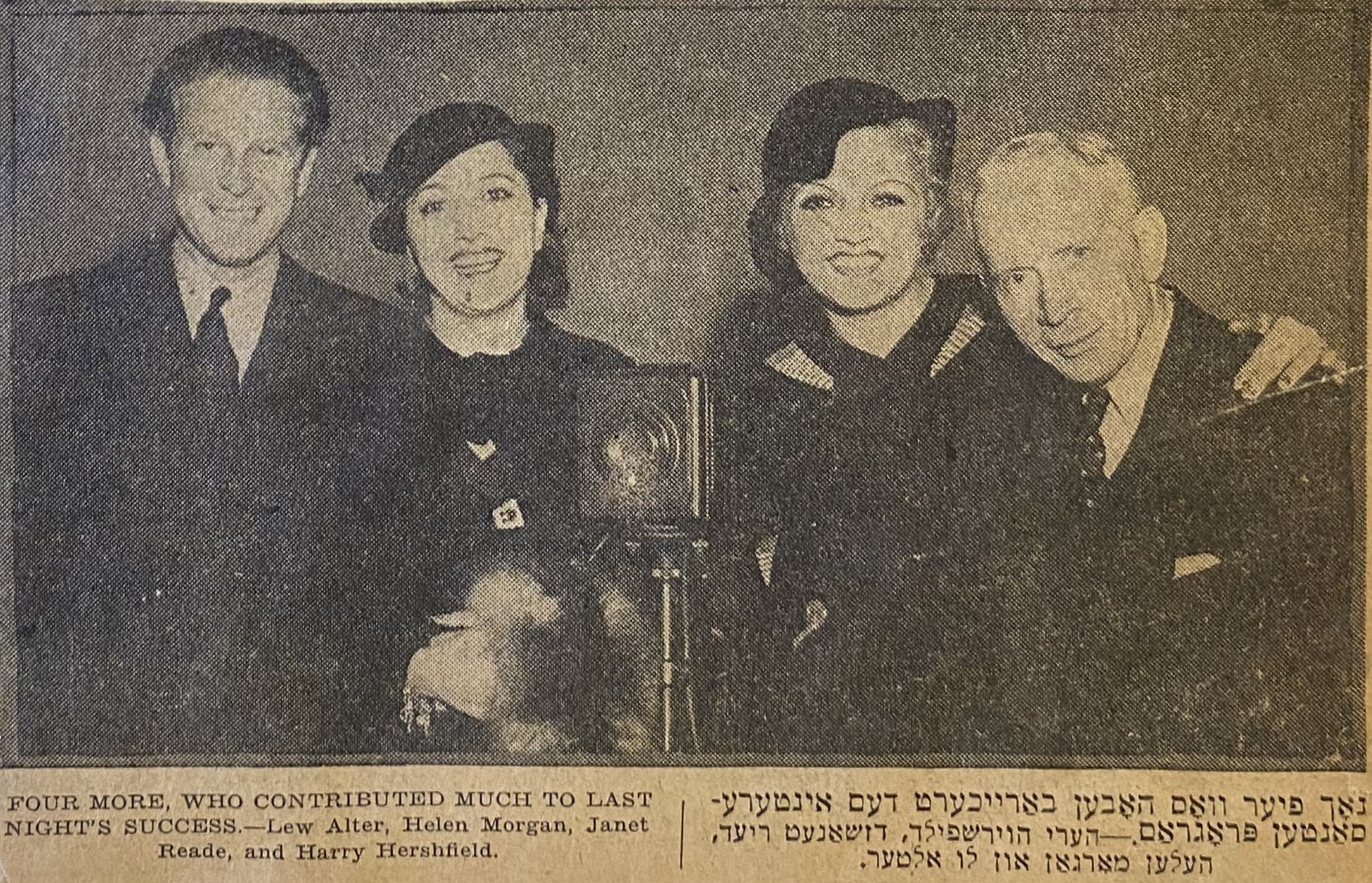
He believed in Morgan’s dream of playing Camille and wrote a musical version of the old warhorse as a potential Morgan vehicle. It was never produced on stage. When Morgan signed with Warner Brothers, Alter offered his Camille to the studio. Legend has it that Helen’s estranged husband, Maurice “Buddy” Maschke Jr. put the kibosh on the deal when he pushed for too much money for the package of property and star. Perhaps, but regardless, Warners passed on this Camille.
From the beginning, Helen included a mix of songs in her stage and cabaret act, even after Victor Records confined her recording chores to weepy ballads. Alter saw the wisdom of Morgan providing a varied program and contributed upbeat and even comic songs, like “Steak and Potatoes” and (Hi-Ho Lack-a-Day)”What Have We Got to Lose” to the Morgan repetoire.
During the 1934-35 season, even though her professional relationship with Lou was ending, Helen continued to champion him. In September 1934, while under contract to Brunswick records, Morgan waxed Alter’s “(I’ve Got) Sand in My Shoes” to accompany “When he Comes Home to Me.” The A-side was Morgan’s song in the Paramount film “You Belong to Me.” The Alter effort was from the film Convention Girl.
It is fitting that Helen’s last commercial recording would be of a Lou Alter tune. On January 9, 1935, Helen recorded “The Little Things You Used to Do” from her picture, Go Into Your Dance. For the flip-side, she sang Alter’s “I Was taken By Storm,” from the film Dizzy Dames.


Leave a Reply