… 1936, Sully’s Show Boat came to an end.
The what?
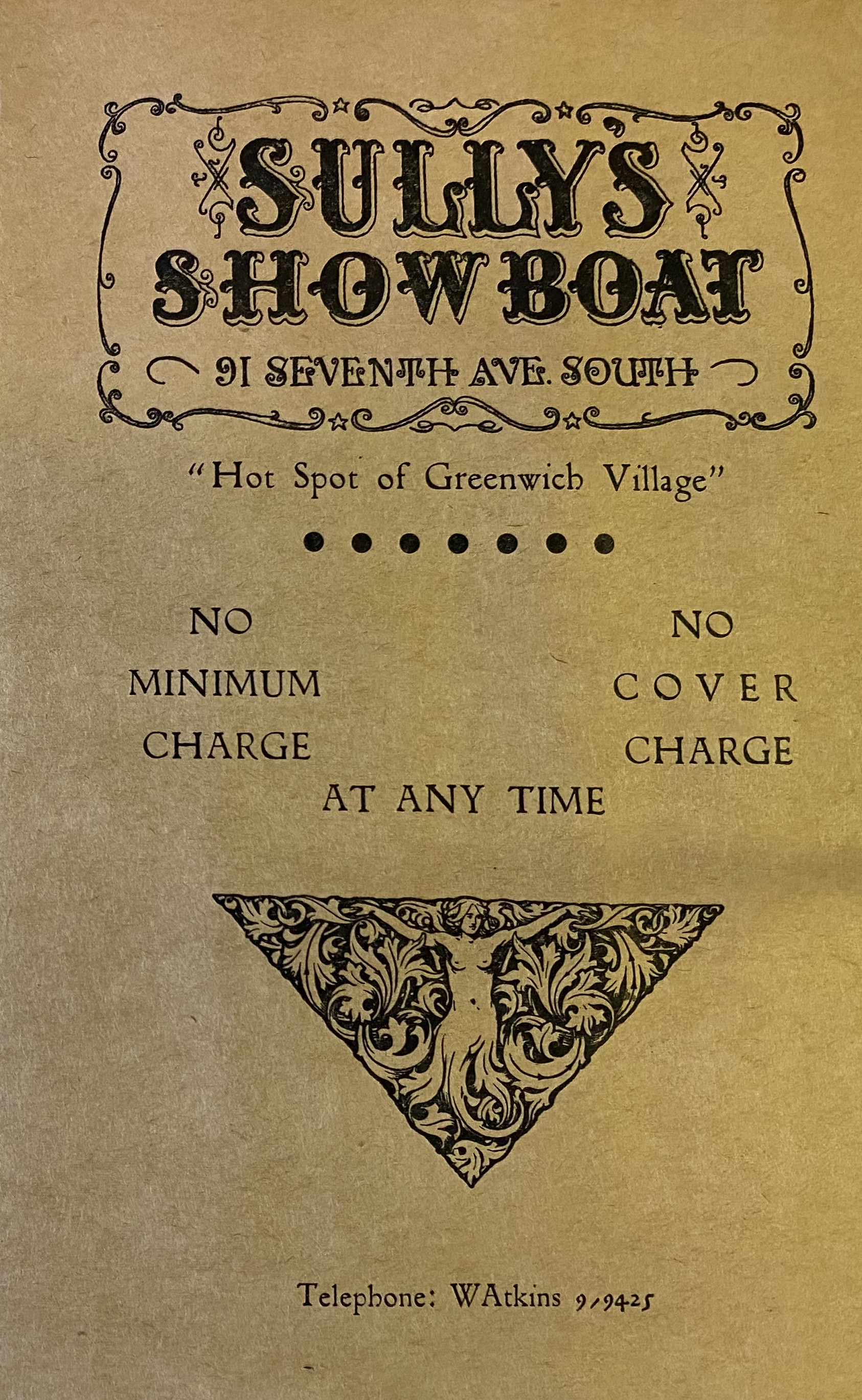
In March 1933, Joseph Urban’s original, classic sets for Ziegfeld’s Broadway production of Show Boat were consigned, like so many others, to the Globe Storage Warehouse Company. But not for long. Harold “Sully” Sullivan opened a Show Boat themed restaurant at 91 7th Avenue in Greenwich Village.
As would be done a few years later with the fittings from the White Star Liner Olympic, Cleon Throckmorton went to the source. He acquired the original Urban sets and incorporated them into his design.

He also recycled the bar from the old Prohibition-era Stork Club.
Sully’s Showboat opened its doors in December 1934 and quickly became a Village staple. Hall Johnson and his Choir headed the inaugural floorshow.
Other African-American musical acts followed, including Rudy Smith and the Four Cabin Boys.
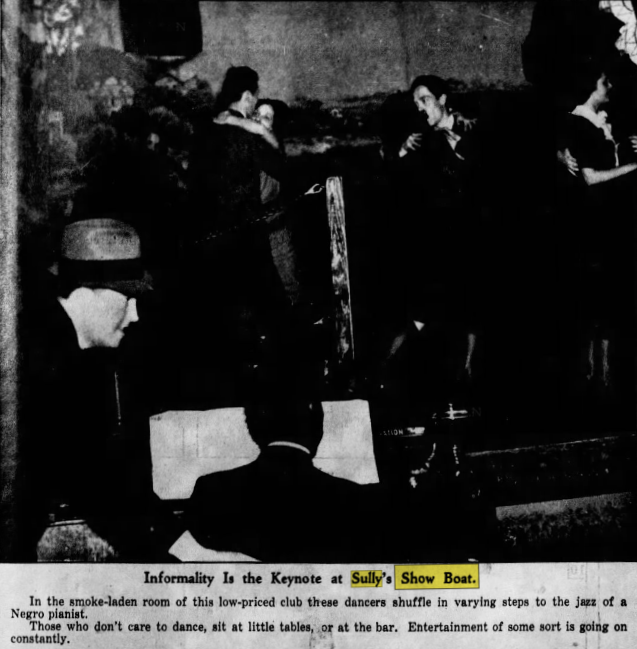
By 1936, the “southern” theme was largely abandoned, although the décor remained. In its stead was a varied floorshow with an emphasis on dance and strip-teases. Between shows, there was dancing for the customers, and silent comedy shorts.

Through it all was that long, long bar serving competitively priced beer and cocktails.
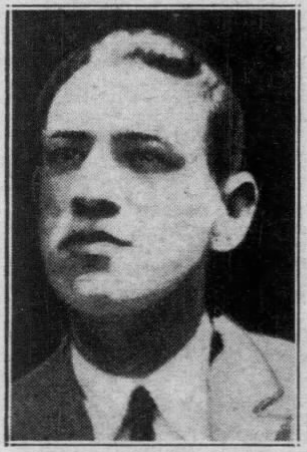
Everything changed in the early hours of September 21, 1936. Coming out of Hymie’s Bar in the basement at 55 Christopher Street at 4 a.m., Sully and four other friends were accosted by off-duty policeman James Bell, who demanded to know where he could get a drink. Sully told Bell everything in the Village was closed, but Bell insisted. The conversation morphed into a heated argument. Someone threw a punch at Bell and his buddy, fellow cop John V. Buckley, came to his rescue, turning the fight into a brawl. Sullivan hit Buckley, who fell down three steps and into a vestibule door, breaking six panes of the glass in the door. Buckley pulled his gun and fired. When the melee was over, Sullivan lay dying on the sidewalk, shot in the abdomen.[i] Buckley staggered to a nearby police station, surrendered his gun and requested medical attention. Buckley, Bell, and Patrolman Richard Maher were all suspended from duty, but when Buckley faced trial for first degree manslaughter, he was acquitted.[ii]
When the restaurant re-opened a year later as The Place, Urban’s sets, like Sully himself, was little more than a memory.[iii] Later, as the Limelight, the space enjoyed a longer tenancy, from the 1950s until, yes, another gun fight forced a shuttering of doors in 1978. From the early 1990s until 1922, the building housed the touristy Jekyll and Hyde.
This site serves as a companion to Helen Morgan: The Original Torch Singer and Ziegfeld’s Last Star, which was published on September 3, 2024.
[i] The New York Times, September 22, 1936, p. 1.
[ii] The New York Times, April 20, 1937, p. 22.
[iii] The New York Times, September 22, 1937, p. 49.
 The Helen Morgan Page
Leave a comment